

Leaders from 19 organizations gathered at the inaugural AAPS Student Mental Health Partnerships Summit
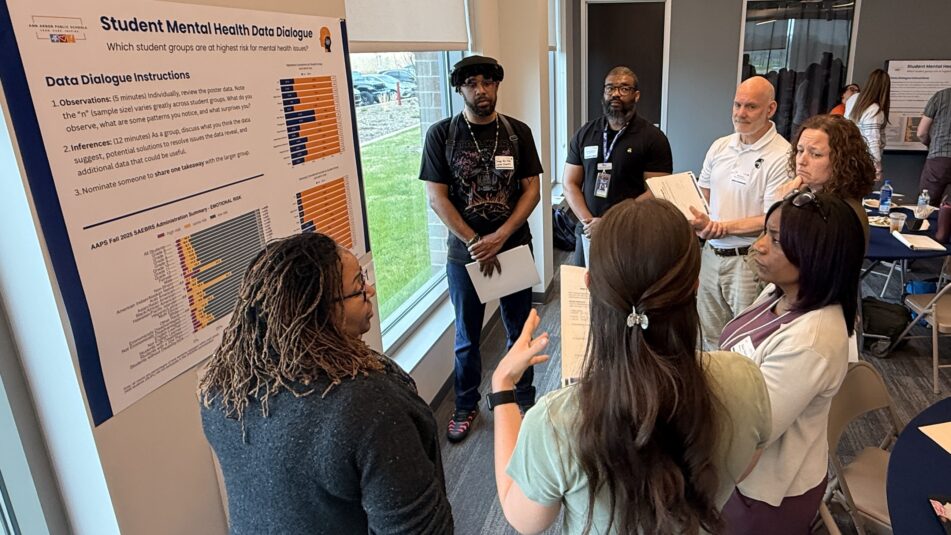
Representatives from 19 community organizations—counselors, crisis workers, social workers, program managers, and school administrators—came together Monday for the inaugural AAPS Student Mental Health Partnerships Summit.
Attendees included 30 district staff and leaders, along with 45 participants from local partner agencies that provide mental health promotion and intervention services to AAPS students and their families.
Superintendent Jazz Parks opened the day by underscoring the importance of those partnerships.
“We cannot stress enough how incredible our partnerships with you are,” Parks told the assembled group.
Parks recalled a turning point nearly a decade ago, when the district, painfully, recognized that student mental health could no longer be treated as secondary to academic instruction.
“I remember almost 10 years ago when quite painfully and tragically, we realized how we really had to prioritize student mental health and put it at the top of the list,” she said.
Parks noted that several of the partners who answered the call then were still in the room. “Seeing all of you representing 19 organizations is beyond what we’d hoped for.”
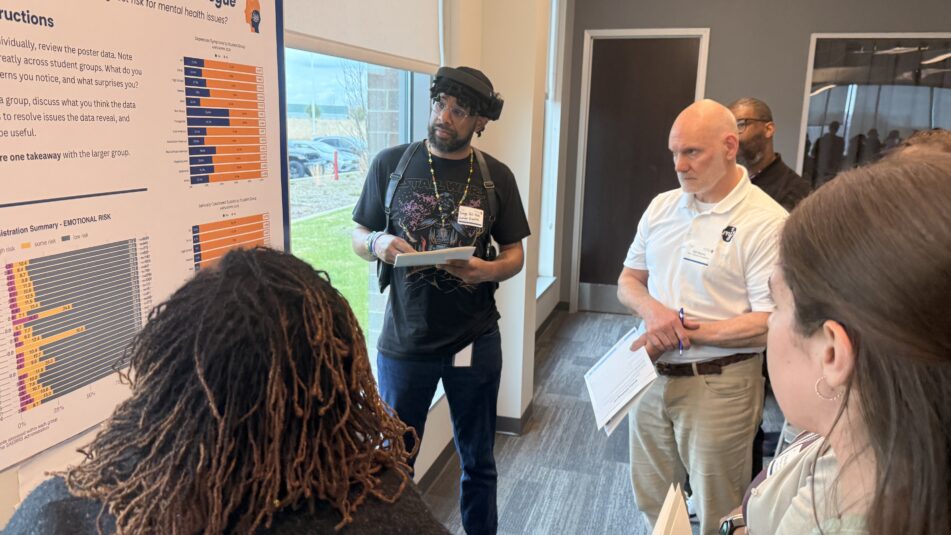
Using the MTSS — Multi-Tiered System of Support — framework as a guide, participants reviewed recent student well-being data, identified gaps in service, and committed to closer coordination. The agenda was deliberately collaborative. Lunch and networking gave way to shared data, dialogue, and the harder work of figuring out what more could be done.
Many said they appreciated AAPS’ invitation to the event.
Stephanie Salazar, Outreach & Education Manager for the Jenkins Family Community Outreach Program at the University of Michigan’s Eisenberg Family Depression Center, has been partnering with Ann Arbor Public Schools for nearly two decades. She described her excitement at seeing the data up close and connecting with peer organizations working on the same challenges.
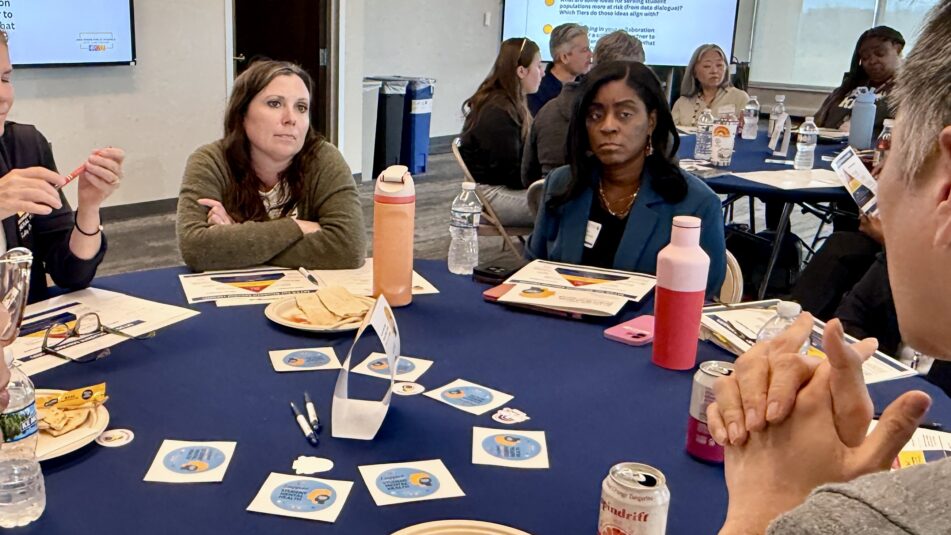
“A lot of times it’s hard to connect with everybody,” she said. “I think this is a great opportunity that they’re bringing everybody together to sort of work on the same issue.”
She pointed to real progress in reducing stigma since the Depression Center launched its peer-to-peer awareness program in 2009.
“I think back when we started, stigma was higher,” she said. “I have definitely seen that decrease.”
At the same time, the challenges facing students remain significant.
“It’s a hard time to be a student right now. There’s always going to be issues.”
Taylor Pahl, a program specialist at the Eisenberg Family Depression Center, came looking to better understand the district’s data and how the center’s Period of PEACE program could align with current needs.
“It’s also networks,” she said, noting the relationship-building, which was at the heart of the summit.
For Matthew Brunale, a youth specialist with the Washtenaw County Crisis Team, the value was structural. His team has been working to deepen connections with local schools, particularly in a field where programs can shift quickly, and communication gaps can leave students unsupported.
“The more we can communicate, the more we can maybe open a couple more doors to understanding what our kids are experiencing,” Brunale said, “the more we can better tailor our services to help them.”
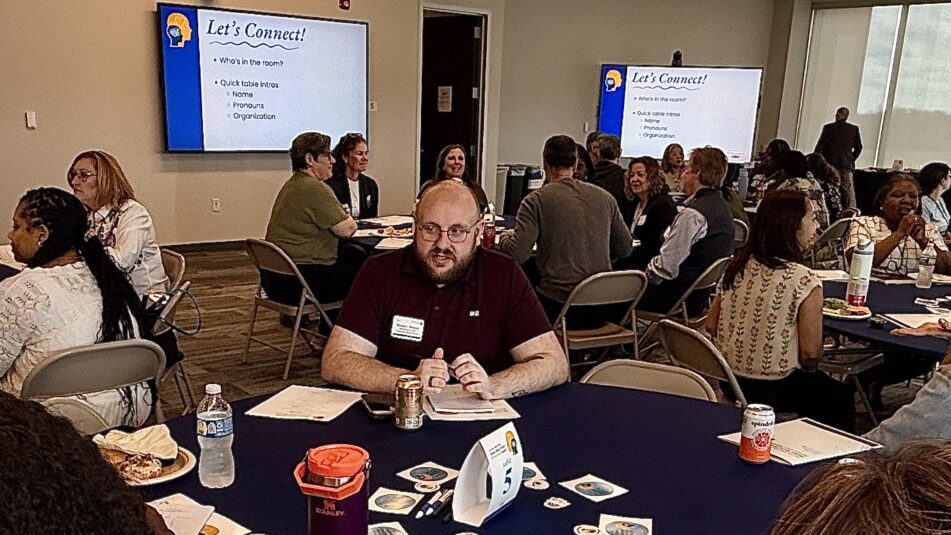
Access remains one of the biggest barriers, especially for families already facing obstacles. Kayla Smyrais, director of behavioral health at the Community Action Network, pointed to cost, paperwork, and lingering stigma.
“There’s a lot of stigma still in our communities about what that means” to see a therapist, she said.
Insurance gaps add another layer, but hesitation itself is still a factor, she said, noting: “I think people are still just a little scared.”
Her focus, like many others in the room, was on collective problem-solving.
“We’re never going to figure out the answer to any of these problems if we don’t come together to try to solve them,” she said. “It feels good to be in a room of people that we all know are here for the same reasons — to support the students, to support the families.”
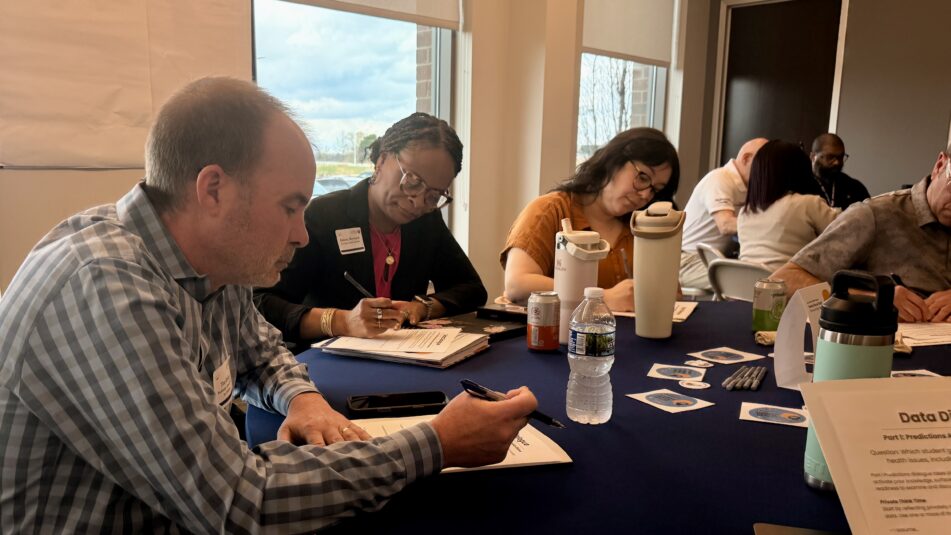
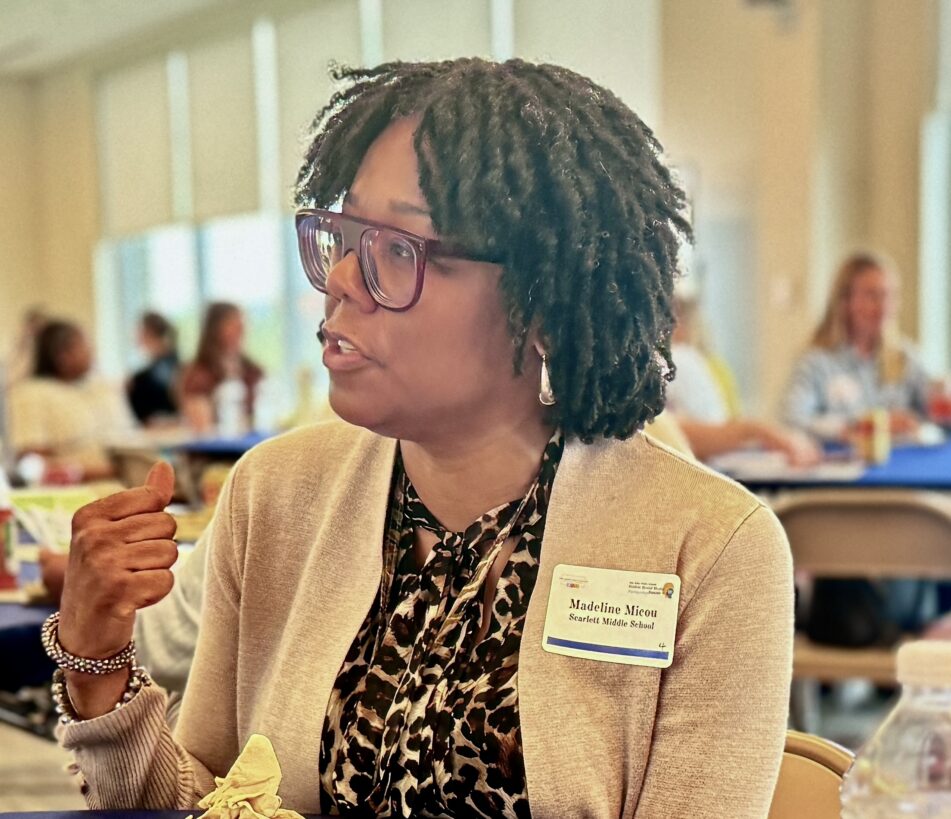
Inside AAPS, that need for coordination is deeply felt. Scarlett Middle School counselor Madeline Micou described a shift in how educators understand their students—one that recognizes the impact of trauma on learning.
“We cannot even think about educating our students without considering all their needs, holistically,” Micou said. “It truly does take a village to raise a child, to support our children. It takes all of us working together.”
For providers, the summit also offered a chance to share updates.
Caroline Butler, a counselor with Jewish Family Services’ Thrive Counseling program, noted that her organization had recently expanded its services to children as young as five and now offers counseling in multiple languages—precisely the kind of development that a shared gathering makes possible to communicate.
“This summit really came at just the perfect time,” she said.
Sage El-Yah, a program coordinator at the Corner Health Center, highlighted one initiative already bearing fruit: facilitated groups at Skyline, Huron, and Pioneer High Schools, where students can sit down in a structured setting and speak honestly about what is happening in their lives. Substance use discussions, El-Yah said, frequently open into broader conversations about mental health.
“It’s a beautiful space of being able to sit down and allow kids to be honest about what they have going on in their lives,” he said.
Trust, participants emphasized, is just as critical as access. Families need to feel confident in the resources offered, which takes time and coordination to build, said Courtney Vanderbilt, site director at the Community Action Network’s Creekside Court Community Center.
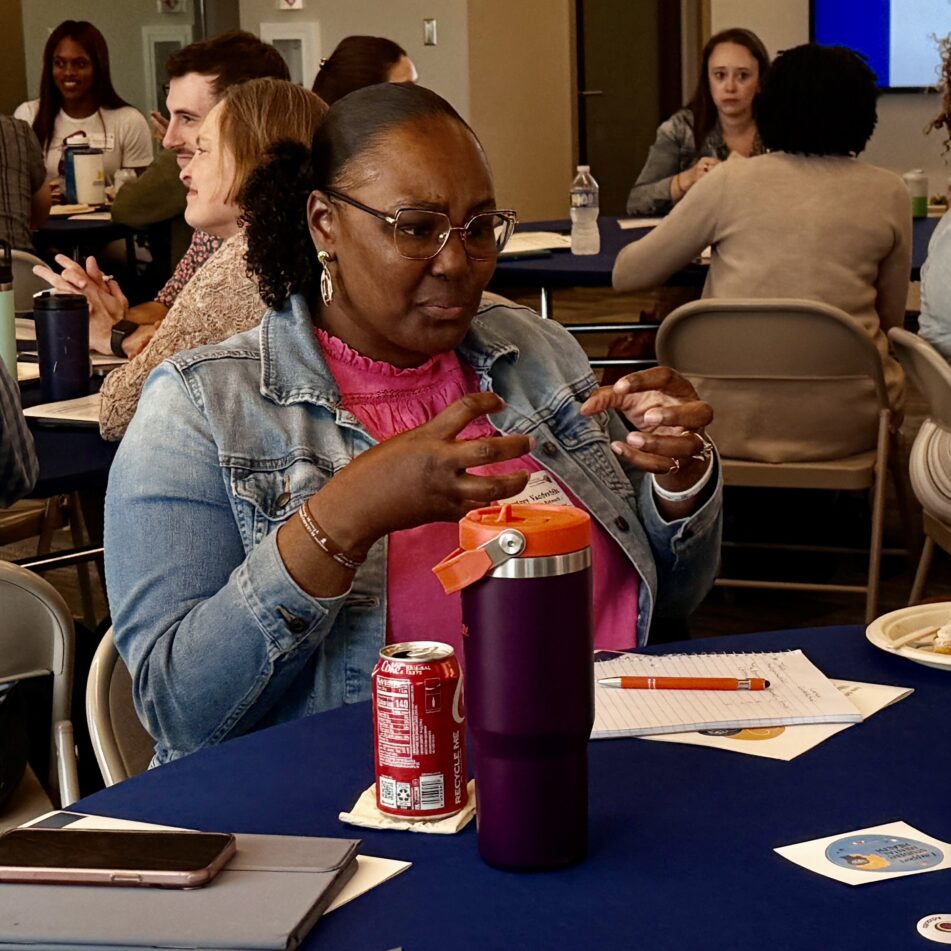
“Just being here is important for partners,” she said. “Coming together to see and compare what we’re doing to support one another in this work, for our students and our families—this is a serious matter. For some families, access is still an issue as is having families be able to trust the resources. So that’s work we need to take on more heavily together.”
Vanderbilt said she wanted to get more data to learn what she can do at the community center to support students who may not be participating in helpful programs offered at school.
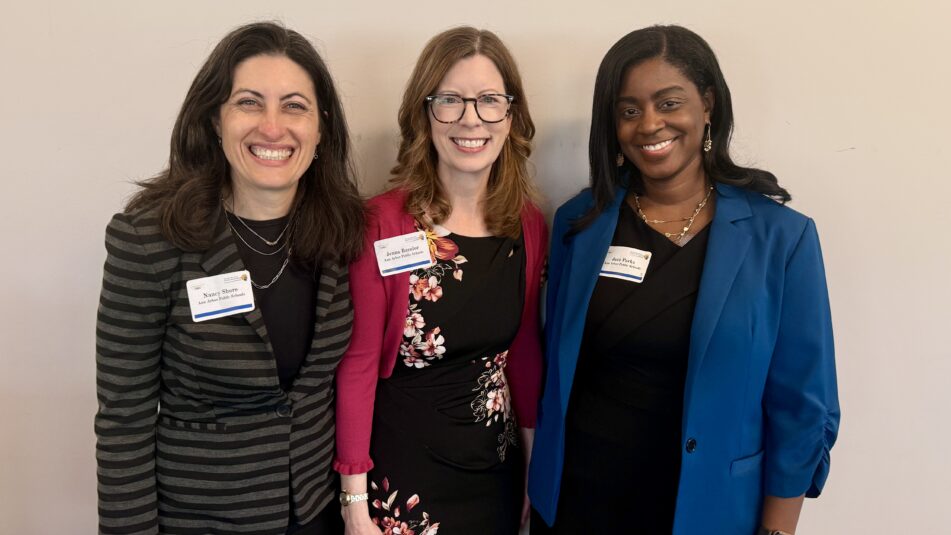
Following the summit, Jenna Bacolor, Executive Director of AAPS’ Community Division and Student Health & Well-Being, said the response was overwhelmingly positive, with both partners and staff appreciating the opportunity to learn about one another and discuss how to collaborate effectively to help students.
“We were thrilled that so many community partners were interested in convening around the common purpose of supporting student mental health,” said Bacolor. “Partners who attended provide a range of supports to our students, from mental health education to support groups to crisis intervention. We all want students to thrive, and know that if we work together, we can positively impact student mental health, behaviors, attendance, and academic achievement.”
She said she and co-facilitator Nancy Shore are reviewing the attendees’ ideas for next steps.
One thing’s for sure, she said: “There is interest in continuing to come together for more conversations and connections.”
Be the first to comment