


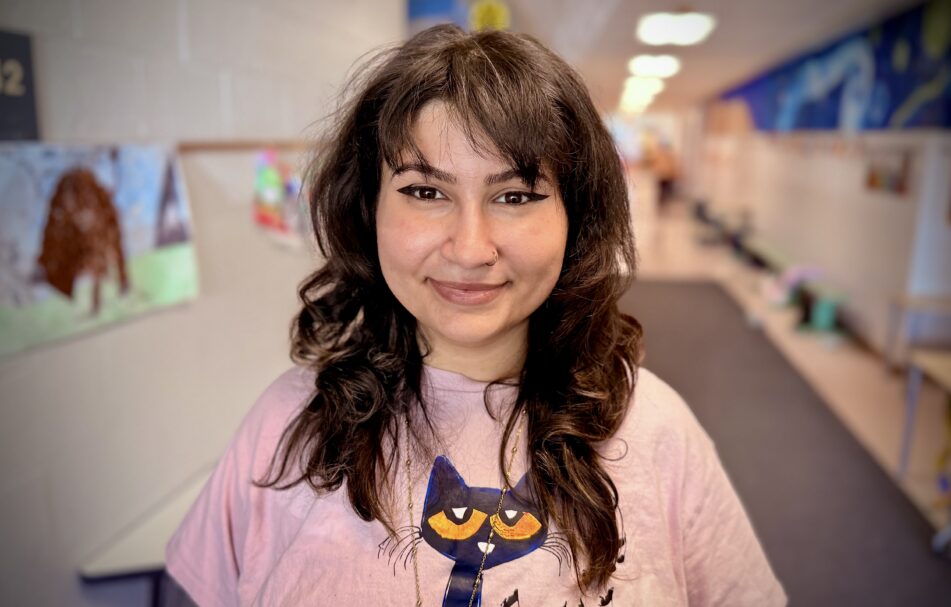
Lemisse Abdelbaqui grew up in Canton with her parents and three brothers. She attended Eastern Michigan University, where she studied Elementary Education and graduated in 2023. This is her second year teaching at Carpenter.
Principal Michael Johnson says Abdelbaqui is part of the fabric that makes Carpenter Elementary School a great place for all.
“Ms. Abdelbaqui is an exceptional teacher because she brings together the qualities families and students value most in elementary education: passion for learning, genuine care for children, strong preparation, and a growth-centered mindset,” he says.
In her spare time, Abdelbaqui enjoys finding ways to express herself creatively. She explores a variety of hobbies, including painting, crocheting, singing, and playing guitar. She is also an avid crossword puzzle enthusiast, often spending Sunday mornings unwinding with a puzzle. Additionally, she loves reading and poetry and hopes to write a book someday.
What initially drew you to teaching?
From a young age, I knew that I wanted to work in a field that allowed me to help others. I contemplated several different career paths in my high school years, from social work and therapy, to immigration defense law, and finally, teaching. It was always in the back of my mind, but I was worried about making the wrong decision.
One day, still anxious about my choice, I stumbled across a piece of writing I had from kindergarten. There was an “About the Author” section that my teacher had typed that read “Her goal in life is to become a teacher and help others, just as her teachers have helped her.” I was immediately moved to tears reading this, and I knew in my heart I made the right decision.
What are the most effective strategies you’ve found for helping students learn?
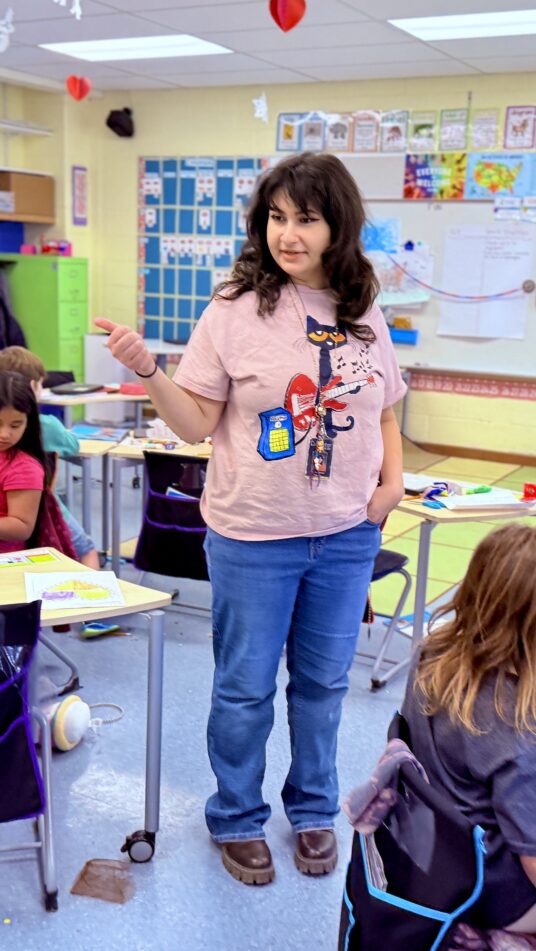
One of the most important things I learned from a college professor of mine was that if you don’t build strong bonds with your students, you will never be able to reach them in the way that you hope, and you can’t effectively teach or discipline a child that you have no connection to. Even as adults, we are not strongly compelled to listen to people who don’t know anything about us. Why would we expect children to be any different?
Forming strong relationships early on is pivotal to maintaining a positive classroom environment where students feel comfortable and encouraged to learn. I always try my best to cultivate an environment where students are not afraid to make mistakes and to remind them that when we try our best, we never truly fail.
Can you describe a specific breakthrough moment with a student that reminded you why you love this work?
I had a student once who really struggled with taking accountability and showing remorse for their actions. It was something we really worked on together and a focus for them throughout the school year. I don’t remember what they had done on this day in particular, but I remember an hour after the fact, they had come up to me and said, “I’m sorry I did that, Ms. Abdelbaqui.” It was something so simple, but the fact that they were still thinking about it after the fact, and they had made enough growth to give a sincere apology unprompted, brought a tear to my eye.
What role do families and cultural backgrounds play in your teaching approach, and how do you incorporate students’ home languages and cultures into learning?
I grew up in an Arab household, and I think being able to make connections to kids who are also from immigrant backgrounds is so important. It strengthens bonds and makes them feel more comfortable and seen. When I have students who speak another language, I always take it as an opportunity to learn from them as well. My hope is that maybe seeing their teacher struggle with a language that is not native to them might allow them to feel more at ease with their own progress and gain an understanding that everyone starts somewhere.
A big factor that went into my decision to have students call me by my full last name instead of “Ms. A” was that I wanted to show students with non-English names that you don’t have to make your name more palatable for others; they can learn how to say it! I have a classroom of 7-8-year-olds who learned how to pronounce “Abdelbaqui” in a week, so I want my students to know that their name is never as difficult as some people may make it seem, and it is never something they should feel ashamed of.
What do you like about working at Carpenter Elementary?
Carpenter is honestly such a special place, and I am so happy to be a part of this community. It is amazing to work at a school where you truly feel like everyone is on the same team. Everyone is passionate about what they do and at the end of the day we all want what’s best for our students. I love my colleagues, both grade level and beyond. I know I always have people I can turn to when I need guidance or support, and I feel so lucky to be a part of such a positive work environment.
What do you want most for your students?
To love themselves and to be proud of the person they are becoming.
How do you prevent burnout?
Don’t let your 5-9 become another 9-5! Let work be work and fill your time after work with things that leave you feeling fulfilled and allow you to lead a well-balanced life.
What have you learned from your students lately?
The Great Lakes hold six quadrillion gallons of water!
Was there a teacher who had a particularly strong influence on your career? If so, what did you learn?
My cooperating teacher, Mrs. Laura Schroeder from Smith Elementary School in the Plymouth-Canton Community Schools. So many things I implement in my classroom, I took from her. She did such an amazing job in really guiding me on my path and allowing me to find my own teaching style. She always took the time to talk to me about my lessons and to openly reflect on the day and what went well or what I wished could have gone differently. I am always grateful for the guidance she gave me at that time and the foundations it set for my career.
Be the first to comment