

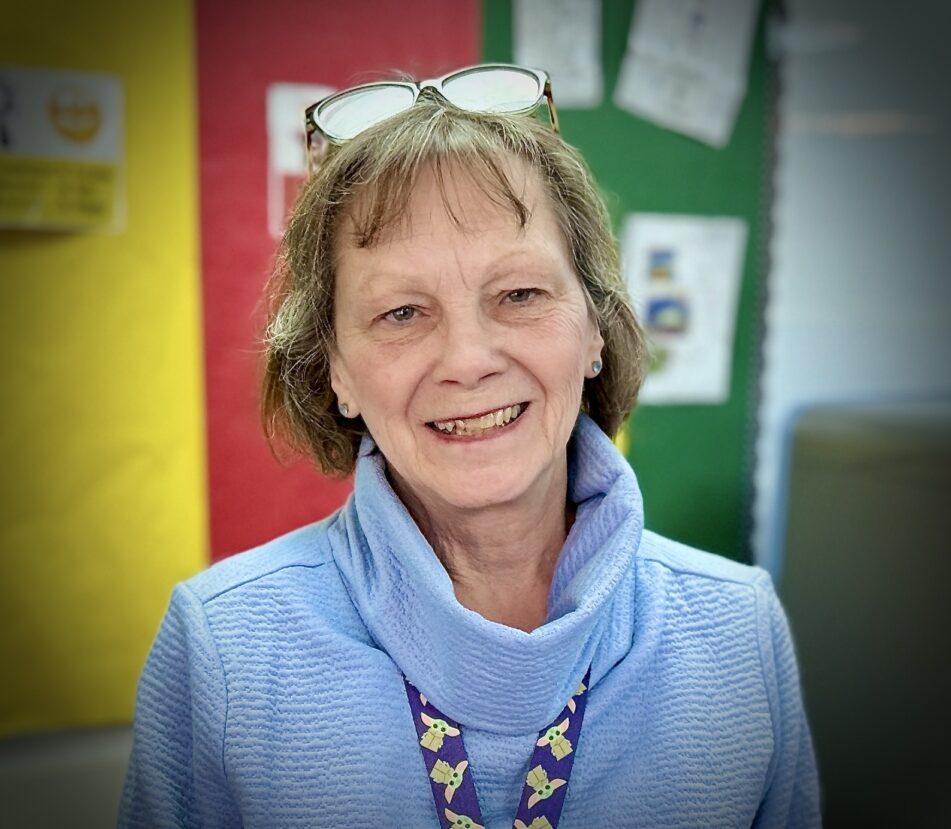
Donna Kolokithas grew up in Allen Park, where she developed a strong connection to education and community. She attended the University of Michigan, earning a Bachelor of Arts degree in Psychology with a focus in Speech and Hearing Sciences. She then continued her education at Eastern Michigan University, where she received a Master of Arts degree in Speech-Language Pathology, along with an
Elementary Education teaching certificate, with endorsements in Speech and Early
Childhood Education.
She began her professional career as a Speech-Language Pathologist with South Lyon Community Schools, and later worked with the Livingston Educational Service Agency in Pinckney Schools. She went on to serve in Region V (Washtenaw County) as an Early Childhood Coordinator before transitioning into a role as an Early Childhood Special Education (ECSE) teacher for the Chelsea and Manchester School Districts. She later joined Ann Arbor Public Schools as a Teacher Consultant and Resource Room Teacher. She also remains a certified and licensed Speech-Language Pathologist.
For the past 13 years, Kolokithas has worked at Allen Elementary as a Teacher Consultant and Resource Room Teacher, Building Inclusion Coach, and PALS (Peer-to-Peer) Coordinator, supporting inclusive practices and student success.
Before that, Kolokithas worked at Lawton for six years, and Haisley for two. She also spent six years in Chelsea/Manchester, seven years at Livingston Educational Service Agency, and two years in South Lyon for a total of 35 years teaching.
She lives in Brighton with her husband, Nick. Together, they have four children and twelve grandchildren who live in the surrounding areas, keeping them closely connected to family and community.
What first inspired you to become a Resource Room teacher, and what continues to motivate you each day at Allen Elementary?
My path to becoming a Resource Room Teacher was shaped by my background as a Speech-Language Pathologist and my work in early childhood and special education.
Throughout my career, I have seen how early, intentional support and strong relationships can make a lasting difference for students with diverse learning needs. I was inspired to move into the resource room setting because it allows me to work closely with students while also collaborating with teachers and families to remove barriers to learning and promote meaningful inclusion.
What continues to motivate me each day at Allen is the opportunity to support students as they grow in confidence, independence, and self-advocacy. I am energized by the collaborative culture at Allen—working alongside dedicated staff who are committed to doing what is best for students.
As a Resource Room Teacher, Building Inclusion Coach, and PALS (Peer to Peer) Coordinator, I am motivated by seeing students access their learning, form connections with peers, and experience success in both academic and social settings. Knowing that our work helps create a more inclusive and supportive school community is what drives me every day.
How do you approach meeting the diverse learning needs of your students while helping each of them feel confident and supported?
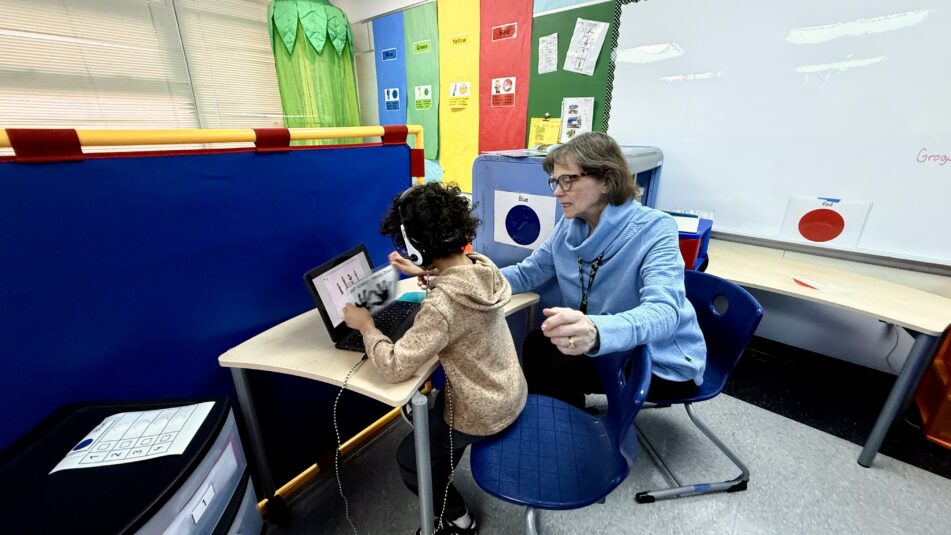
I approach meeting my students’ diverse learning needs by first building strong, trusting relationships and taking the time to truly understand each student’s strengths, needs, and learning style. I use IEP goals and data to guide instruction while remaining flexible and responsive to students’ needs in the moment. Differentiation is key—this includes adjusting instructional methods, materials, pacing, and output so students can access learning in ways that work best for them.
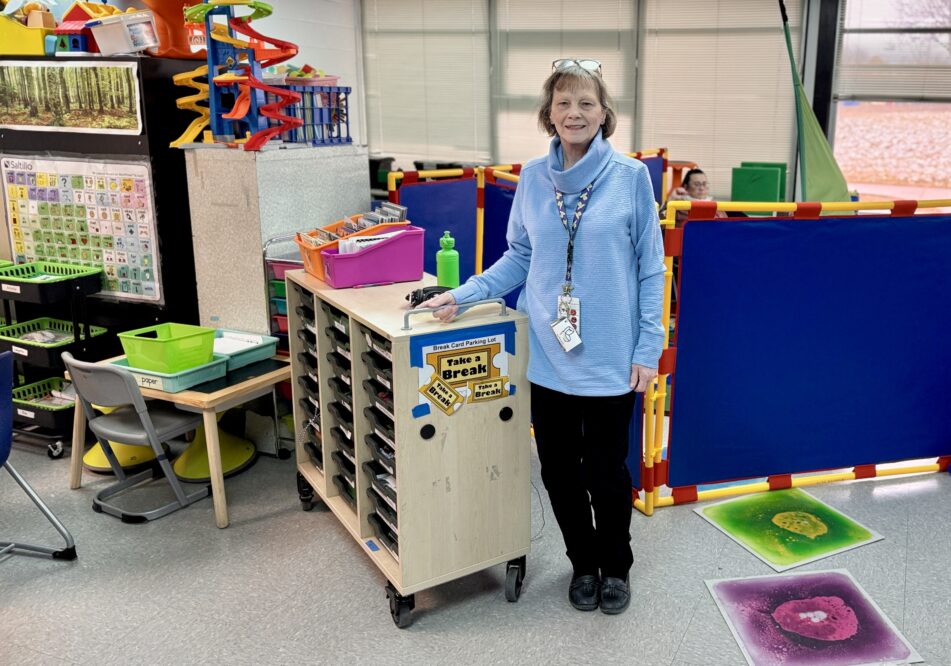
Equally important is creating a safe, supportive environment where students feel valued and confident. I focus on celebrating progress, no matter how small, and teaching students to recognize their own growth. By using visual supports, structured routines, and clear expectations, I help reduce anxiety and build independence. I also emphasize collaboration—working closely with classroom teachers, support staff, and families—to ensure consistency across settings. When students feel understood, supported, and successful, their confidence grows, and that is at the heart of my approach.
Can you share a moment from your career that reaffirmed for you that you were exactly where
you were meant to be?
One moment in my career that truly reaffirmed that I was exactly where I was meant to be involved a student I worked with who had significant behavioral, learning, and communication challenges. She found a sense of belonging through our Peer-to-Peer program, where students in her grade received training on how to support classmates with communication differences. Through this program, she was able to continue learning alongside her peers, participating not only in classroom activities but also in social and extracurricular experiences. Her peers supported her, and just as importantly, she supported them as well.
Years later, when she was in high school, I learned that she had competed in the Special Olympics ice-skating championship. One of her peer partners skated alongside her during the competition. Together, they won the gold medal two years in a row. Even more meaningful is that they continue to remain close friends as young adults. Seeing how intentional inclusion, peer support, and genuine relationships can impact a student’s life far beyond the classroom reaffirmed for me why this work matters. Inclusion is not just a program or a strategy—it is about connection, belonging, and creating opportunities that last a lifetime.
What does “exceptional service” mean to you in the context of working with students and families?
To me, “exceptional service” in special education means ensuring that every student has equitable access to learning while feeling a true sense of belonging within the school community. It involves using IEPs as living documents to guide intentional, data-informed instruction and supports, while always honoring each student’s strengths, communication style, and individual needs. Exceptional service means advocating for inclusive practices that allow students to learn alongside their peers whenever possible, with appropriate supports in place.
In working with families, exceptional service means building collaborative partnerships grounded in trust, transparency, and respect. It includes clear communication, shared decision-making, and ensuring families feel heard and empowered as active members of the IEP team. By working closely with general education teachers, support staff, and families, exceptional service ensures consistency across settings and promotes meaningful inclusion, independence, and long-term success for students.
How do you build trust and meaningful connections with students who may be struggling academically or emotionally?
I build trust with students by creating a safe, consistent environment where they feel respected and understood. I take time to learn each student’s strengths, interests, and communication needs, especially when they are struggling academically or emotionally.
By using clear expectations, visual supports, and achievable goals, I help reduce anxiety and build confidence. Most importantly, I listen, validate their feelings, and show up consistently so students know they are supported and can take risks in their learning.
What have you enjoyed most about working for AAPS, and at Allen in particular?
What I have enjoyed most about working for AAPS is the opportunity to serve a diverse community and work alongside dedicated students, families, and staff. I value the district’s commitment to inclusion and equity, and I appreciate being part of a community that embraces and celebrates differences.
At Allen, in particular, the warm and welcoming environment truly stands out. The staff and families are supportive and collaborative, and the administrators are approachable, helpful, and encouraging. I especially enjoy my role as the Building Inclusion Coach and working with students through the Peer-to-Peer program. Being able to promote meaningful inclusion and see students build connections with one another makes Allen a very special place to work.
What strategies or practices have you found most effective in helping students overcome challenges and celebrate their progress?
The strategies I have found most effective include setting clear, achievable goals and breaking learning into manageable steps so students can experience success early and often. I use data-informed instruction, visual supports, and differentiated output to help students access learning in ways that match their strengths. Consistent routines and explicit feedback help reduce anxiety and build independence.
Equally important is celebrating progress, not just outcomes. I intentionally recognize effort, growth, and perseverance, helping students see their own progress and build confidence. When students understand that their challenges do not define them and that growth is expected and supported, they are more willing to take risks and continue moving forward.
I focus on setting clear, achievable goals and breaking learning into manageable steps so students experience success early. Using differentiated instruction, visual supports, and consistent routines helps reduce anxiety and build independence. I celebrate effort and growth along the way so students recognize their progress and gain confidence in their abilities.
How do collaboration and teamwork with other teachers and staff play a role in your work in the Resource Room?
Collaboration and teamwork are essential to my work in the Resource Room. I work closely with general education teachers, support staff, and related service providers to align instruction, supports, and IEP goals across settings. Through ongoing communication and shared problem-solving, we ensure consistency for students and create inclusive learning environments where they can be successful throughout the school day.
What is one misconception people often have about Resource Room teaching that you wish they
understood better?
One common misconception about Resource Room teaching is that it is a place where students are separated from meaningful instruction or lowered expectations. In reality, the resource room is a highly intentional, data-driven environment focused on building skills, confidence, and independence so students can successfully access the general education curriculum. The goal is always to support inclusion and help students thrive alongside their peers.
What advice would you give to educators who want to make a lasting, positive impact on students who need extra support?
My advice is to start by building relationships and truly listening to students and families—trust is the foundation for growth. Maintain high expectations while providing the right supports, and celebrate progress along the way. When educators stay patient, reflective, and collaborative, they create a meaningful, lasting impact for students who need extra support.
What would surprise co-workers to know about you?
What might surprise my co-workers is that I love roller coasters. I enjoy the thrill and the challenge—there’s something energizing about stepping outside of your comfort zone, which is a mindset I also bring into my work with students.
Favorite meal at your favorite local restaurant:
While it’s not a local restaurant, our favorite place to go as a family is Frankenmuth. We love spending time there enjoying a great meal together, taking in the scenery, and making memories with our family—it’s as much about the experience as it is the food.
How do you spend your summers?
I spend my summers enjoying time with my family, especially my children and grandchildren. We love being outdoors—watching the grandchildren play sports, especially softball and baseball, visiting the zoo, going to the park, and having picnics. We also enjoy visiting amusement parks and riding roller coasters. I spend time reading, taking walks, and sewing, which helps me recharge and return to the school year refreshed.
Be the first to comment