


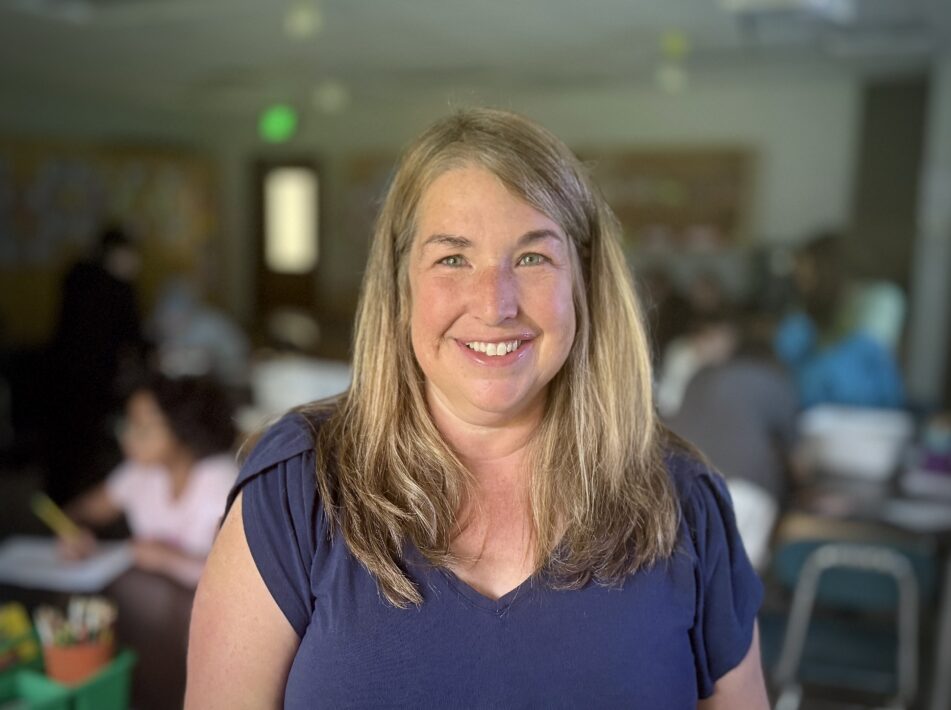
Scarlett Middle School science teacher Kristen Tabert was born in Southfield and raised in Brighton. She spent much of her childhood swimming and hiking at Kensington Metropark.
Tabert earned a bachelor’s degree in education and a master’s degree in school counseling from Indiana University in Bloomington, where she says she loved her college years. She then moved to Louisville, Kentucky, where she lived for 20 years.
She is married to Dustin Tabert, a science teacher at Slauson Middle School, and they have a 10-year-old son, Noah. The family also includes two dogs, a hamster, a leopard gecko, and six crayfish.
Drawn by the pull of lake life, the family moved back to Michigan in 2921 and now lives in Whitmore Lake.
What inspired you to become a science teacher, and what specifically drew you to working with middle school students?
I became a science teacher because I love helping students discover how amazing the world around them is. I was fortunate to have some wonderful science teachers who made learning exciting by allowing us to participate in experiments that were fun, interesting, and memorable. Those experiences helped inspire my own love of science and showed me how powerful hands-on learning can be.
I was drawn to middle school because these students are at such an important stage in their lives. They are naturally curious, full of questions, and beginning to discover who they are and what they are capable of. I love having the opportunity to encourage them to take risks, learn from mistakes, think outside the box, and believe in themselves.
What do you enjoy most about teaching science at the middle school level?
What I enjoy most about teaching science at the middle school level is the excitement and curiosity students bring to the classroom. For many of my sixth graders, this is their first opportunity to experience a true hands-on science class, and they come in so excited to explore, experiment, and discover new things. It is so much fun to play off that enthusiasm and channel their natural curiosity into meaningful learning experiences.
How do you make complex scientific concepts engaging and understandable for students?
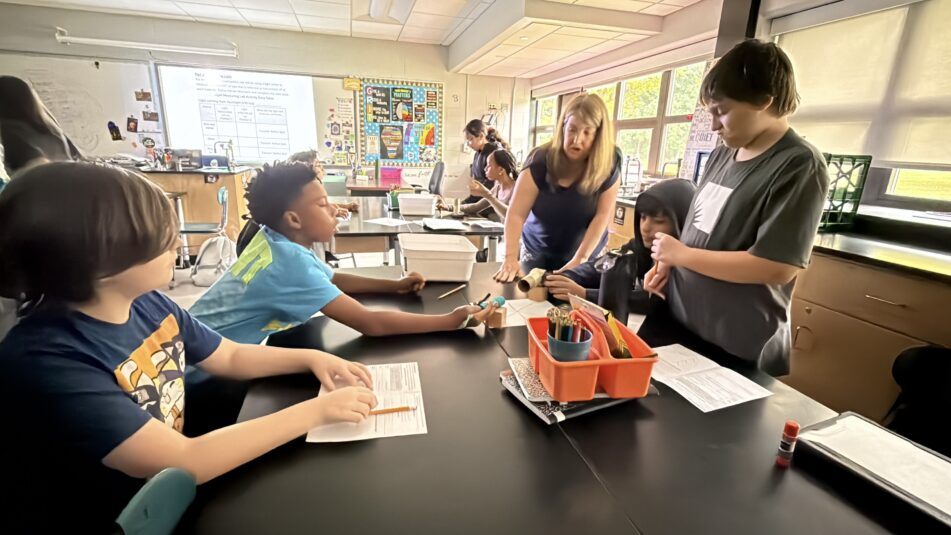
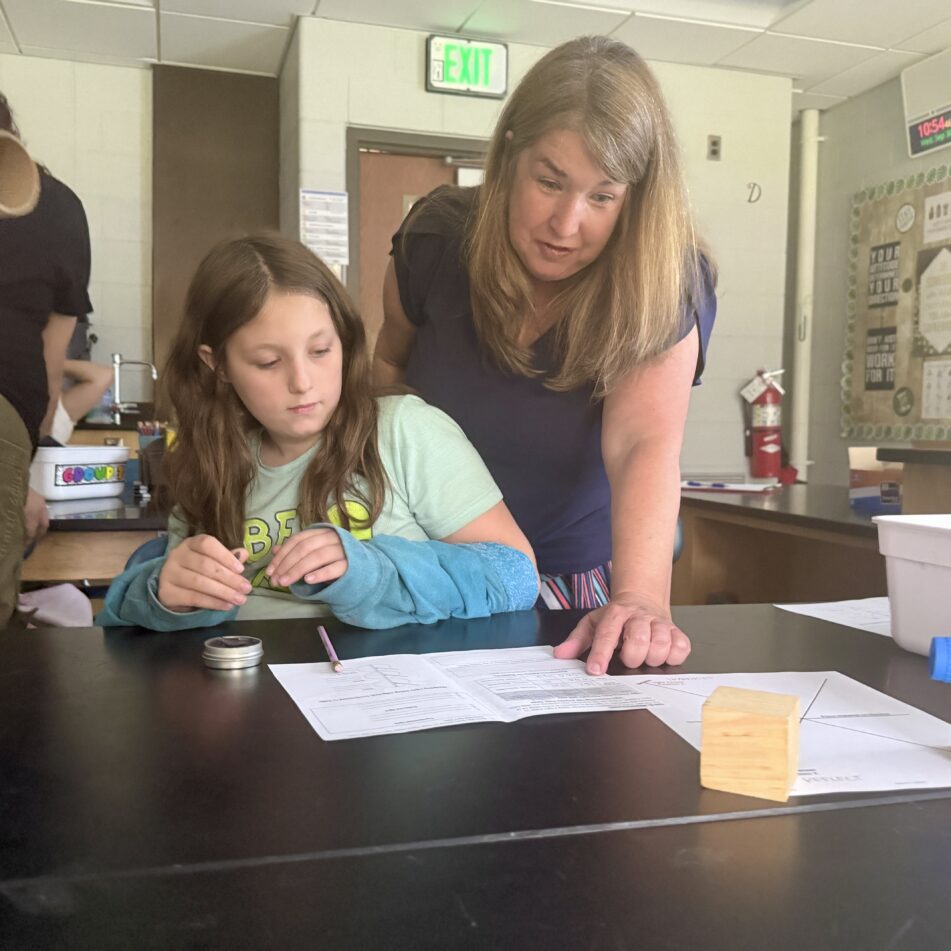
I like to break challenging concepts into smaller, manageable pieces. I use visuals, models, and collaborative activities to help students make connections. I also make complex scientific concepts understandable by planning lessons that are hands-on, relevant, and fun! I try to connect what students are learning to things they experience in their everyday lives, using real-world examples, demonstrations, experiments, and opportunities to explore concepts for themselves. Rather than simply telling students how something works, I want them to investigate, ask questions, make predictions, test their ideas, and learn from their mistakes
What is one hands-on experiment, project, or lesson that students especially look forward to each year?
One of my favorite lessons each year is introducing students to microscopes for the very first time. There is something so special about watching sixth graders take on the responsibility of using real scientific equipment. They feel trusted, important, and like real scientists! They are eager to learn everything about how the microscopes work, and you can feel their excitement building as they prepare to focus their very first specimen—a feather. The moment they finally get it into focus and see the tiny details they never knew existed, their reactions are priceless! Their eyes light up, and suddenly, something as ordinary as a feather becomes an incredible discovery. I love that moment because it captures exactly what I want science to be for my students: exciting, full of wonder, and an opportunity to discover something amazing for themselves.
How do you encourage students to stay curious and ask questions about the world around them?
I encourage students to stay curious by creating a classroom where their questions, ideas, and observations are valued. I want students to know that I am genuinely interested in what they think, and that their ideas are worth exploring. When a student comes up with a question or suggests an experiment, I try whenever possible to give them the opportunity to test their idea and see what happens. Even when an idea doesn’t work the way they expected, it becomes a valuable learning experience. I believe that when students see their own ideas being taken seriously, they begin to feel more confident sharing them and become excited to come up with new ones. My goal is to help students understand that science isn’t just about finding the right answer—it’s about asking questions, exploring possibilities, and being curious enough to find out why. I want them to leave my classroom feeling empowered to wonder, experiment, and never stop asking, “What would happen if…?”
What do you hope students take away from your class beyond science content?
I hope students leave my science class with more than just scientific knowledge. I want them to develop curiosity, confidence, perseverance, and a willingness to take risks. I want them to understand that mistakes are part of learning, that failure is often the first step toward discovery, and that asking questions is just as important as finding answers. Most importantly, I hope they leave believing in their ability to solve problems, think critically, work collaboratively, and make a positive difference in the world.
What do you like about working at Scarlett Middle School?
The Scarlett Nation staff feels like a family. We take care of each other, we learn from each other, and we have fun together! I am blessed to work at Scarlett.
Do you have any tips for classroom management?
1. Color-code science notebooks.
Use electrical tape to color-code notebooks by class hour, then store them in milk crates labeled by table number. When the first student at Table 2 walks into first hour, they can grab the four blue notebooks for their table, and class can begin immediately! No wasted time passing out materials.
2. Create a simple pencil checkout system.
Use magnetic clips to hang 8–10 pencils on the board. Students who need a pencil grab one as they enter and write their name in the empty spot where the pencil was hanging. At the end of class, you can quickly identify who borrowed a pencil and remind specific students to return it.
3. Make classroom cleanup a daily routine.
Assign specific cleanup jobs to each table and use the same system every single day. The first table to complete all its jobs gets to line up first! This makes the end of class quick, organized, and efficient while encouraging students to take responsibility for their classroom.
4. Have a system for everything—and stick to it!
The more routines you establish and consistently reinforce, the less time you spend managing transitions and the more time you have for teaching. Students thrive when they know what to expect, and your classroom will run much more smoothly!
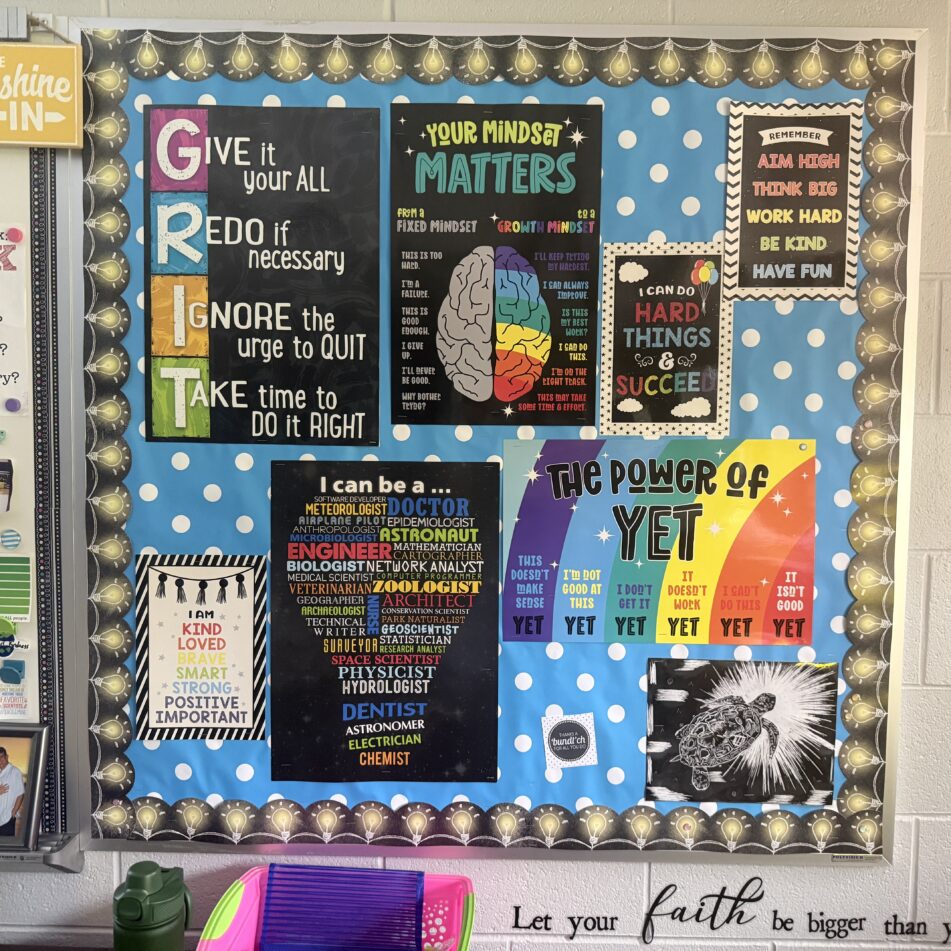
Your background is in school counseling. How does that shape the way you work with middle schoolers in a science classroom?
My experience in school counseling has made me a stronger, more intentional teacher because I have learned to view every activity through both an educational lens and a counseling lens. When designing a group project that involves teamwork and a presentation, I am not only thinking about how to meet curriculum goals and learning objectives, but also about the social and emotional needs of my students. I ask myself: Will this activity feel emotionally safe for everyone? How can I support students who struggle with collaboration? What alternative presentation options can I offer students who experience anxiety when speaking in front of others?
This dual perspective allows me to create learning experiences that challenge students academically while also supporting their emotional well-being. I want every student to feel seen, supported, and capable of success, and my counseling background helps me be more thoughtful about the barriers that might prevent them from fully participating.
Can you share a memorable moment when you saw a student become excited about science?
Our sixth-grade weather unit on hail is always a fun one! Last August, during summer break, a hailstorm hit Ann Arbor, and suddenly my phone was buzzing with notifications. Former students were emailing me photos of hailstones next to rulers to show their size! They were so excited to share their discoveries, and I loved seeing that their curiosity about science continued long after they left my classroom.
When you aren’t teaching, what activities, hobbies, or interests do you enjoy?
I love to hike, camp, and travel with family and friends. “Nature is good for the soul. It reminds us to slow down, breathe deeply, and find beauty in the little things.”
How do you spend your summers?
Lake life for a family with two teachers is quite magical. Most summer days are filled with swimming, fishing, bonfires, sleepovers, and lots of rest. We also have time for some epic adventures.
My family spent two weeks visiting national parks in Utah and Arizona last summer. It was amazing! The year before that, we camped all over the Upper Peninsula. We love spending time together outdoors and appreciate the beauty that this world has to offer.
Go-to meal at your favorite local restaurant?
Chicken Tinga Tacos and Loaded Queso from El Arbol Taqueria in Brighton. So, so delicious!
You and your husband both teach middle school science. Do you often talk shop?
We occasionally debrief on the day’s successes and challenges to collaborate and share insights. However, we intentionally limit work talk afterward to ensure everyone gets a proper mental break
Be the first to comment