


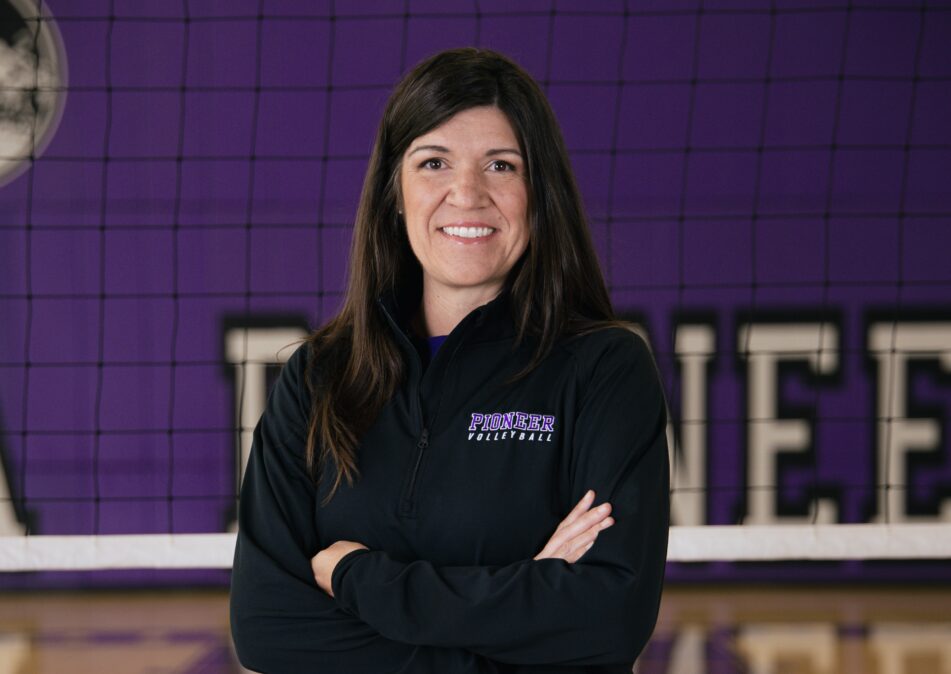
Allison Boone was born in Milwaukee, Wisconsin, and grew up in several places across the Midwest, thanks to her parents’ hobby of renovating historic homes. She went to high school in Kalamazoo, Michigan, and played collegiate volleyball at Spring Arbor University as a middle blocker and opposite, earning her degree in Communications. As a senior captain, she led the team in blocks and earned Scholar-Athlete recognition. After college, she coached middle school, high school, and club teams before moving to Washington, D.C., where she worked for a study abroad organization.
She returned to Michigan for her master’s in Higher Education at Eastern Michigan University, then worked in the University of Michigan Athletic Department. She went on to earn her PhD in Educational Leadership, with an emphasis in Organizational Development, while teaching leadership courses at EMU. Today, she is a leadership facilitator and consultant and has been the head varsity volleyball coach at Pioneer since 2021.
When she’s not in the gym, you can find her at the pottery wheel, on the trails at Matthaei, or reading research on leadership and generational trends. (She finds Gen Z fascinating!)
Pioneer High School Athletic Director Eve Claar is grateful that Boone is part of the Pioneer coaching team.
“Allison has really been amazing in terms of creating a really positive culture within our volleyball program that has only raised the level competitively of our program, ” she says, “but makes kids really buy in and want to be part of something special.”
What first drew you to coaching, and how did that path lead you to Pioneer High School?
I coached on and off after college, helping friends and former teammates with their middle school, high school, and club teams. When I moved back to Michigan from D.C. for my master’s at EMU, coaching took a back seat. I first worked in UM’s Athletic Department, then began my PhD in Educational Leadership, and eventually started teaching full-time at EMU. By 2021, as everyone was still finding their way back to each other after COVID, I felt a real ache to get back to coaching and give back to a community that had given me so much. I’d also just started my dissertation and figured I’d “have more time.” (I didn’t. It took me three slow years to write because I was having too much fun coaching!) But at the time, it was the perfect storm: Pioneer had posted its head coach opening about a day before I googled “volleyball coach positions in Ann Arbor.”
How would you describe your coaching philosophy, and how has it evolved over the years?
My philosophy has definitely evolved over the years. It’s had to. I grew up as an athlete under what you might call the “old school” model: rules, control, compliance, a “my way or the highway” mentality. That was the model I knew, but today it puts you out of touch with your student-athletes. Players want to feel part of something. They need to know their voice matters, that they belong, and that their hard work is contributing to something bigger. So I’ve become a lot less prescriptive and much more collaborative. I try to coach by asking more questions and doing a lot less telling.
Last year, a review of 50 studies found that team captains’ and peer leadership was nearly twice as strongly linked to team performance as coaches’ leadership. That was a huge wake-up call for me. I could pour all my time and energy into what I bring to the team, but so much of it comes down to what they bring to one another. My job is to help them grow and develop together.
You’ve spoken about your passion for the game of volleyball and your commitment to helping young women develop leadership skills. How does that show up in a typical practice or season?
The research tells the same story again and again: many women who are leaders share a common background and experience in sports. We know, both qualitatively and quantitatively, that athletics provide women-centered learning and development opportunities that make a huge difference in girls’ lives. And every coach knows we
We make time for what we value. Pioneer Volleyball values leadership development and team connection, so we build time for it into every season.
Five years ago, we started our Varsity Team Retreat, a weekend focused on growing as individual leaders and as a team. This year’s theme, “The stories we tell ourselves,” really landed. Players got honest with themselves and each other about the negative, self-limiting stories that keep us from holding back or playing small. We talked about the cost: those stories isolate us and keep us from the thing we all want most, which is connection.
Last season, we took the team to visit Coach Rod’s pottery studio (the great AAPS teacher and coach Steve Rodriguez) for a hands-on lesson in leadership. He reminded us that we tend to define a season by wins and losses, but what we remember most are the relationships, the experiences, and the energy of being part of something bigger than ourselves. I love creating these kinds of shared learning experiences for our team. To me, that’s one of the greatest gifts sports can give.
What does leadership “on and off the court” look like in practice for your players?
One of the things I’m most thankful my coaches instilled in me is the belief that being a student-athlete is a privilege and a responsibility. It means you’re held to a higher standard, and more will be asked of you. It’s up to you how you embrace that opportunity.
On the court, that means we communicate consistently, show confidence and belief in ourselves and our teammates through our words and our body language, bring energy and effort whether we’re on the court or on the sideline, and give high-fives generously.
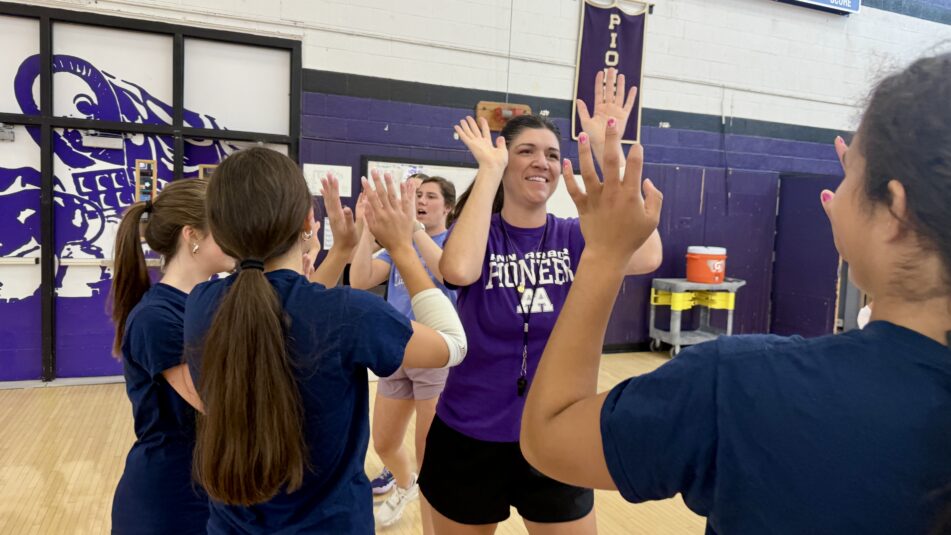
Off the court, it means we hold ourselves to a high standard in the classroom and in the community. We’ve earned team and senior academic all-state honors for six consecutive years. At our Playing for a Cause night this season, we raised over $1,000 plus donated items for Alpha House, a new program record. The team is also helping lead a kids’ craft night at Alpha House this fall. None of this happens without the amazing families who support our program, spending time tapping into their companies’ charitable gift matching or organizing volunteer opportunities for the team.
How do you balance building strong athletes with building strong young women who are prepared for life beyond high school?
For me, it’s not really a balance. I see the two as directly aligned, not at odds. Strong athletes become strong women who are prepared for life beyond high school. Focus, dedication, persistence, resilience, adaptability, and collaboration are hallmarks of successful athletes and successful people, and we try to help players recognize that learning while it’s happening. This season, we’ve talked about two ways to train, an idea Erin Virtue, Head Volleyball Coach at U-M, shared with me: like a tiger in the zoo, or a tiger in the wild. How does each one get its next meal? How much does each one learn over the course of its life? The zoo tiger is safe and fed, but it never has to figure anything out for itself. The tiger in the wild has to adapt, problem-solve, and keep going when things get hard. So our takeaway is to embrace the discomfort and uncertainty that come with growth, and not expect everything to be handed to us. Lean into the opportunity to train in the wild! That mindset won’t just make them better volleyball players. It will carry them through college, careers, and whatever comes next in life.
What has been the most rewarding moment of your coaching career at Pioneer so far?
Too many to name just one! 🙂 But this one is a great snapshot of what we’re building at PVB. Three years ago, one of our senior captains surprised the team and coaches by presenting every player with a framed photo at the end of the season. A parent had captured the image right after we won an epic rally against Skyline: all six players on the court with their arms up, and our entire bench on its feet, screaming and celebrating together. We didn’t end up winning the match, but the W’s and L’s aren’t what stick with us the longest. She wanted each of us to remember what we’d built together that season. Last summer, the other captain from that team texted me to check in. She told me how things were going at Carnegie Mellon, and that she keeps that photo on her desk as a reminder. We have that in common: mine is on my desk, too. That’s what’s rewarding: being part of the kind of inspiration and connection that outlasts a single season.
Pioneer athletics has such a strong tradition of excellence. What do you think sets the program, and the school’s broader sports culture, apart?
Yes, it does! As a coach, I find that incredibly motivating. Seeing colleagues who are equally dedicated to and thoughtful about their craft is inspiring. It’s like being part of a team again, where greatness inspires greatness. I’ve found the coaches at Pioneer to be incredibly collaborative and open-minded in their support of one another. Over my six seasons, I’ve found a great community with legendary coaches like Jane Nixon, Mo-Jo Murrett, Stefanie Kerska, Nancy Shafer Boudreau, and many others. In a field often defined by hyper-competitiveness, our AD, Eve Claar, has created an environment in which coaches view collaboration and mutual growth as opportunities rather than threats. It’s refreshing to be part of such a healthy sports culture. And it works: Pioneer is currently ranked the top athletic department in the state of Michigan!
What were your goals for the program this season, and what would you consider a successful year?
Growth is consistently our key driver and our primary goal. Growth tells you whether the process is working. We’re lucky because our conference and region are extremely competitive for volleyball, so we don’t have to travel far for great competition. That can also be challenging for a developing program, because all the hard work doesn’t always show up in the record right away. But when you focus on growth, suddenly you start seeing small wins all around you. This year’s freshman class is amazing: we have two freshman impact players on Varsity, several strong contributors on JV, and our Freshman team is having an unbelievable season. Varsity has taken more sets from conference opponents than in any season in the past 10 years. Our winning percentage has grown every year, and last year we achieved our goal of getting back to being a winning program. This season, we’ve already beaten last year’s record and jumped considerably in the state Division 1 rankings. So a successful year, to me, is one where we keep that growth going, and where players can look back and see how far they’ve come.
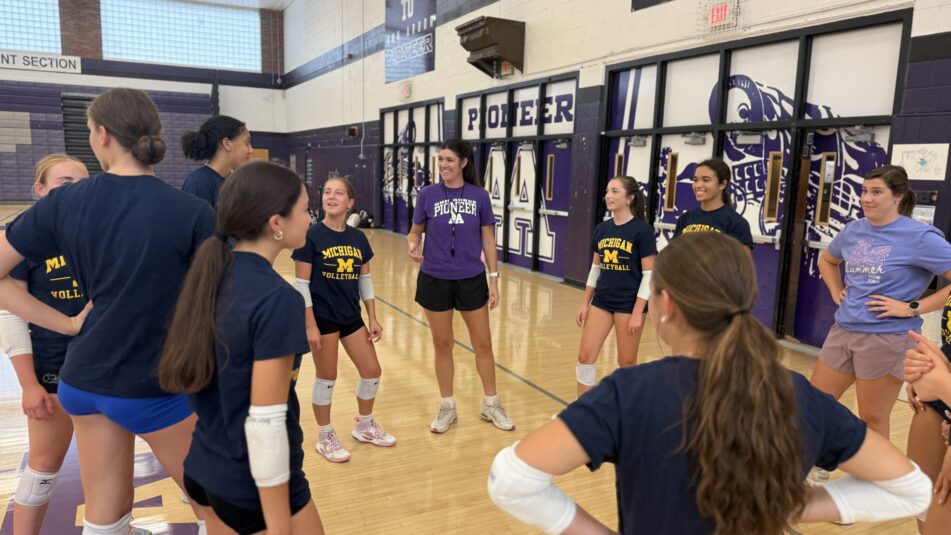
What is your role at Eastern Michigan University and how did that experience shape your approach to coaching at the high school level?
I taught leadership courses in the Department of Leadership and Counseling in EMU’s College of Education, first as a Doctoral Fellow and then as a full-time instructor and advisor for the Interdisciplinary Leadership Minor. Today, I continue that work as a leadership facilitator and consultant called LifeLabs Learning. It’s been fascinating to move from spending all my time in the heady, research-based world of academia to spending more time in the experiential, intuitive world of sports. I love what both worlds have to offer!
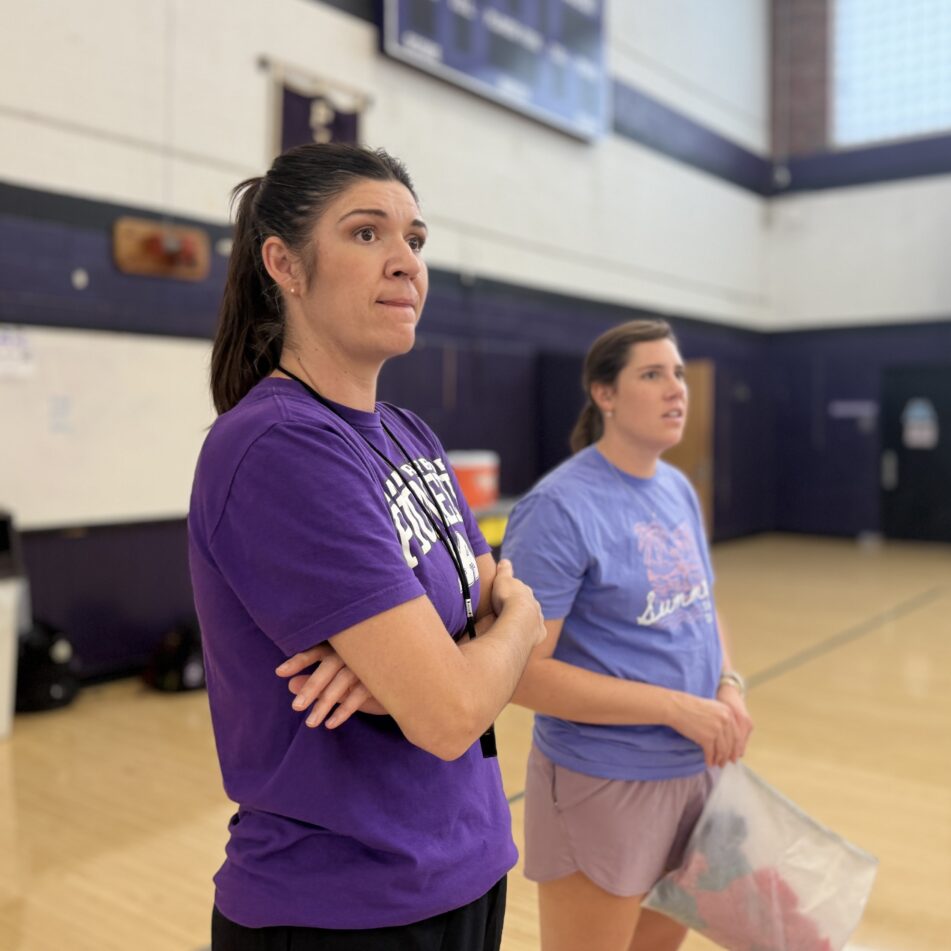
In my first few years coaching, I couldn’t stop making PowerPoints for things I wanted to talk to the team about. Don’t get me wrong, slides are great! But over the years, I’ve learned to lean more into individual approaches and development. There have to be universal team standards, but there’s no one-size-fits-all way to learn abstract things like game strategy, intensity, and high-level physical skills. As I reflect back, some of my best teaching moments looked a lot like coaching: guiding, not telling; facilitating, not overpowering; letting the learning unfold on its own. I’m a better teacher because I coach, and a better coach because I teach!
Outside of coaching, what do you enjoy doing in your free time?
A hobby that’s grown slowly but steadily over the past several years is pottery, particularly wheel throwing. It’s another way I can practice slowing down, putting my full attention into something, and not getting too attached to the end result. Just like in sports, results aren’t guaranteed. It’s the process and the journey that become the real joy. Every now and then, Coach Rod leaves me a little note of encouragement or points out how much I’ve grown. Once a coach, always a coach! 🙂
Who has had the biggest influence on you, personally or professionally, and why?
I truly couldn’t name just one! If I keep it specific to volleyball, it might be my sports hero growing up, Gabrielle Reece (professional beach volleyball player and fitness icon). Though we’ve never met, I read Gabby’s autobiography in 8th grade, and it was one of those rare experiences where something just clicks, and you immediately start thinking and feeling differently. I’m 6’0″ and grew most of that during middle school. It was uncomfortable. I always felt different and like I stood out (literally!), and I was embarrassed a lot. Gabby talked about her own struggles and insecurities growing up, and how she decided to use them as fuel, learning to love and embrace that part of herself. It was like a whole new way of thinking opened up for me. She gave me permission to see my height not as a struggle, but as a competitive advantage. It’s incredibly powerful to discover that something you mistook for a weakness might actually be one of your greatest strengths. I stood taller after reading her story, literally and figuratively. That’s what I hope sports can do for every kid!
What’s one thing your players might be surprised to learn about you?
Ha! I don’t know if there’s much they’d find surprising! Maybe just how superstitious I can get with little things around games, especially during playoffs. It’s mostly fun and games…but no washing clothes during playoffs!
Be the first to comment