

Huron’s Diploma Programme (DP) and Career-related Programme (CP) cohort students traded classrooms for shovels to improve the environment
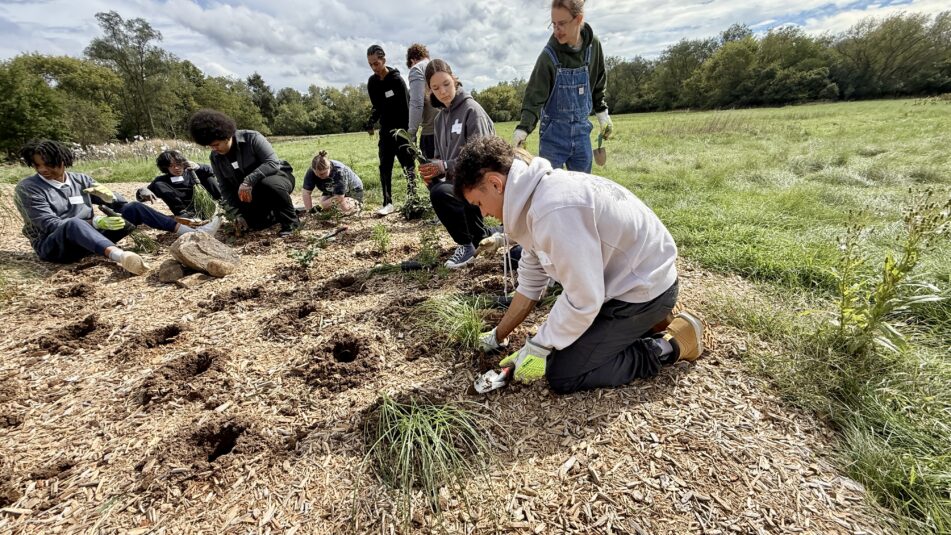
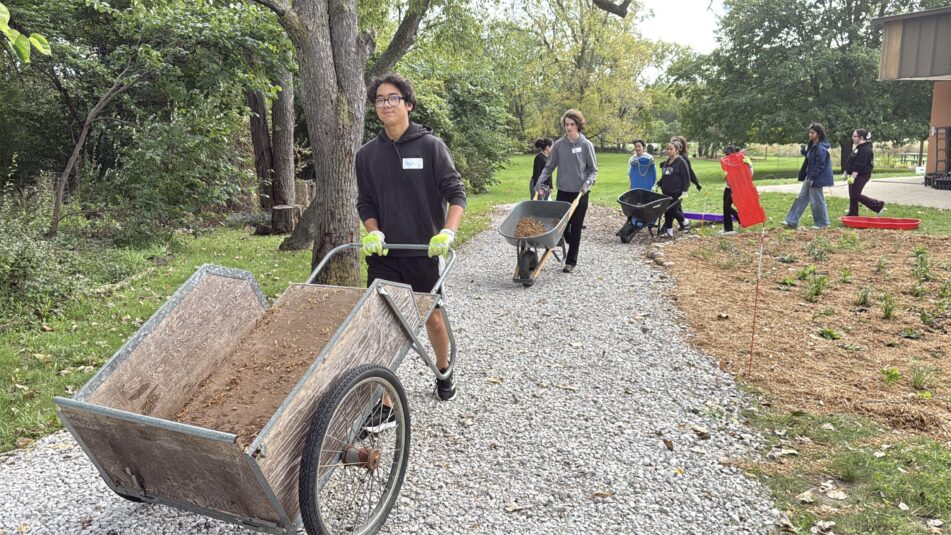
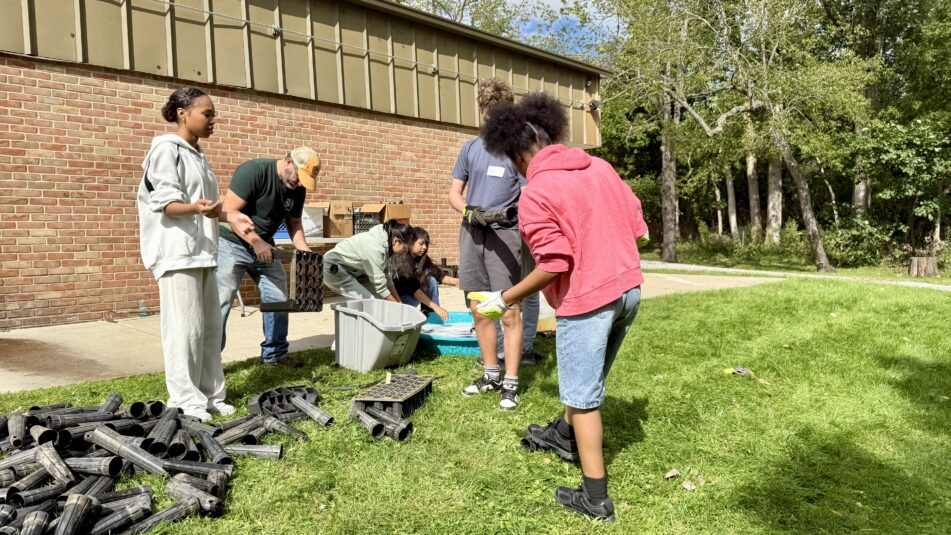
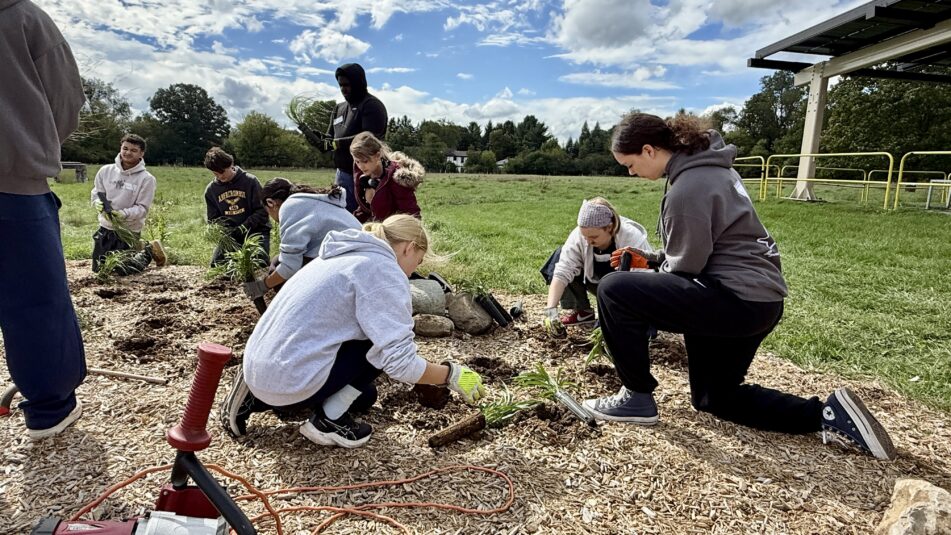
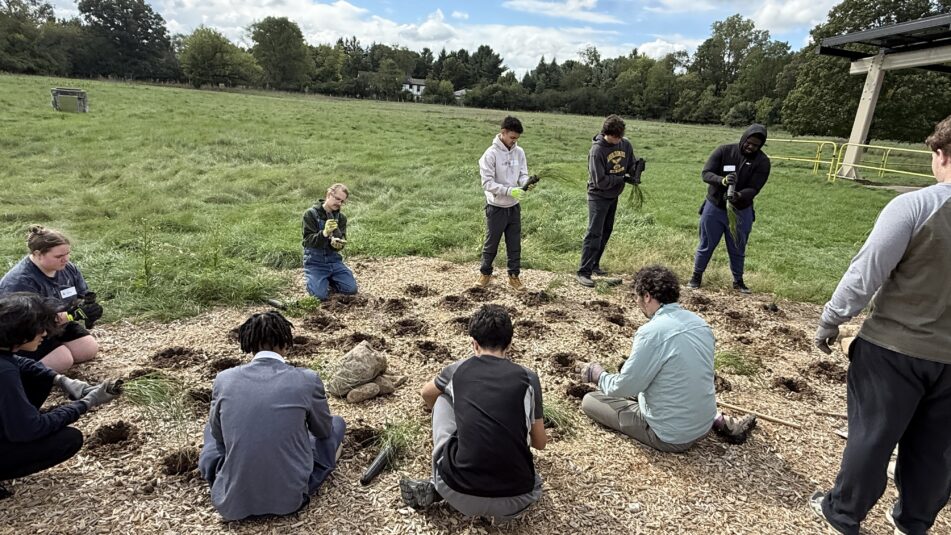
On a crisp fall day Wednesday, 140 Huron High School students traded their classrooms for shovels, mulch, and native plants, spending a couple of hours working at the Freeman Environmental Education Center.
The 11th- and 12th-graders in Huron’s International Baccalaureate (IB) Diploma Programme (DP) and Career-related Programme (CP) gathered at Freeman for the school’s annual fall “Day of Service,” continuing a partnership that connects the service requirements of the IB experience with hands-on work in the community.
“The focus is for our students to reflect on learning outcomes from working with the community to make a significant improvement to the environment right in our hometown,” said Todd Newell, Huron’s IB Facilitator for the CP/DP programs.
For the students, the work was practical, but the experience was also personal.
Huron senior Noe Volet, who also took part last year, said there is something rewarding about simply spending time helping the environment.
“I mean, it’s just good to help the environment a little bit. Do some service. You know, you feel good after working a little bit,” Volet said. “Helping, it just feels good.”
Volet said he remembered working on trees during last year’s service day and noticed that the Freeman grounds already looked different this year.
“It definitely looks better than last year,” he said.
Senior Josh St. Amie also remembered working in the forest during last year’s event. This year, he said, the biggest takeaway was knowing that the students were helping their community.
“I feel pretty good because we’re helping out the community,” St. Amie said.
For junior Sansita Sachin, the day offered another benefit: a chance to spend time outdoors with friends while doing something positive.
“Today I wanted to come here to give back to the community and just enjoy this time outside with my friends while it’s still nice out,” she said.
That combination of service, teamwork, and outdoor learning is exactly what makes the event valuable to Freeman, according to AAPS Environmental Education Program lead teacher Coert Ambrosino.
Ambrosino said Freeman greatly appreciates the continued partnership with Huron’s IB program because it provides students with a meaningful setting for community service while giving Freeman a powerful boost in manpower.
“It provides a context that is meaningful for the students to do some community service, for them to work together productively for the good of the environment and a public place,” Ambrosino said. “And for us, it allows us a huge amount of people power to make progress on some of the restoration-based education projects we have going on on campus.”
Those projects aim to increase biodiversity, manage invasive species, and improve access to the Freeman Environmental Center, an Ann Arbor Public Schools natural area.
On this year’s service day, students were spread across the property, tackling a long list of jobs.
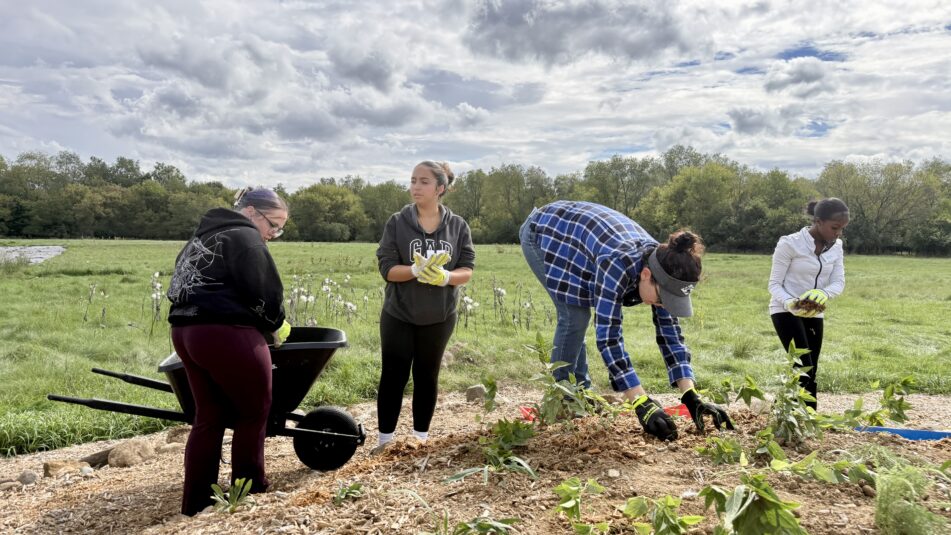
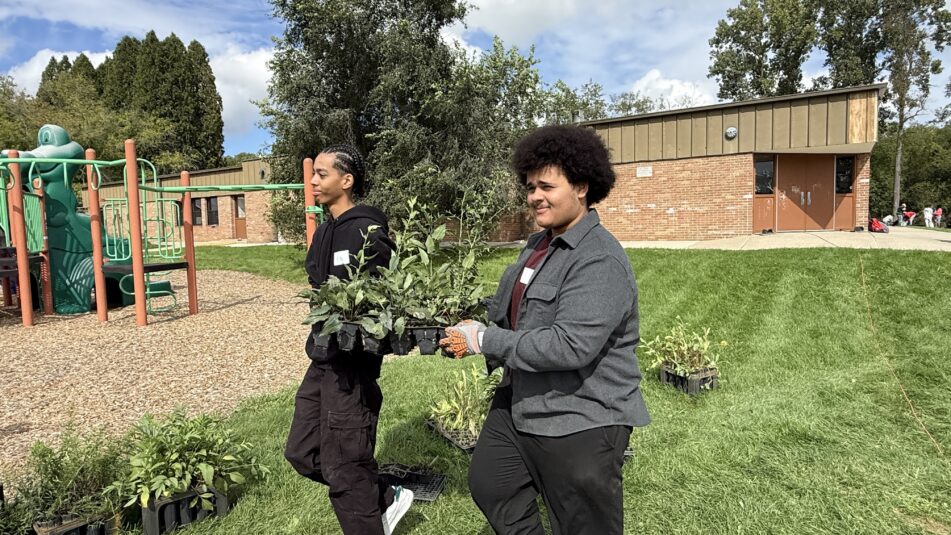
Ambrosino said students planted roughly 800 native plants grown in Freeman’s native plant nursery. The plantings went into a rain garden and a new prairie area, where a former turf-grass field is being converted to native Michigan prairie.
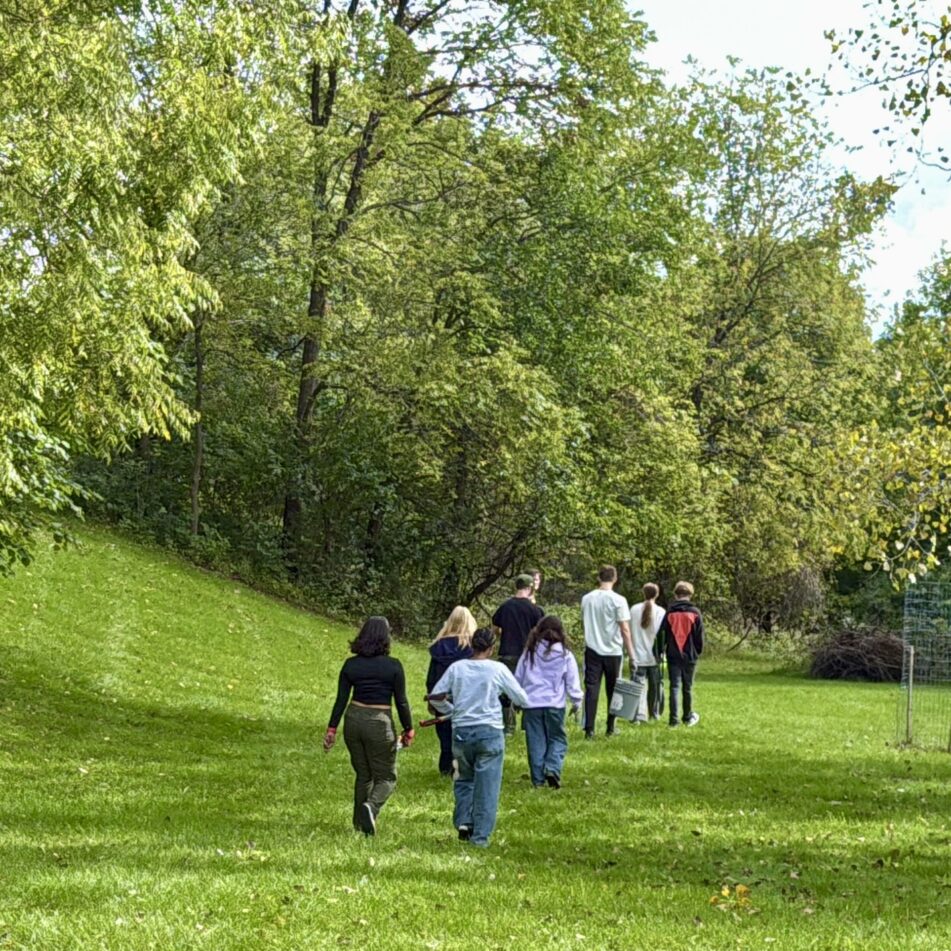
Students also cleared trails where trees and branches had fallen, helping prepare the property for second-grade field trips scheduled to begin the following week.
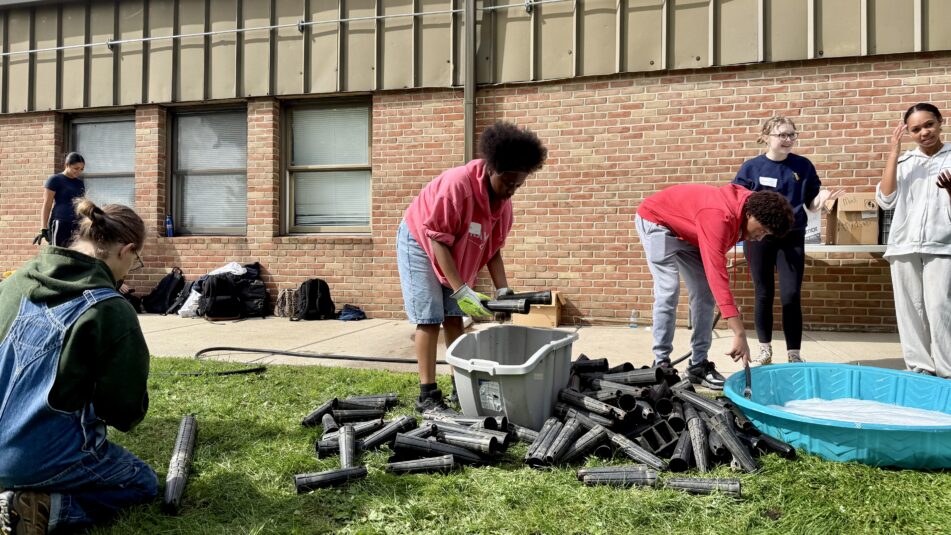
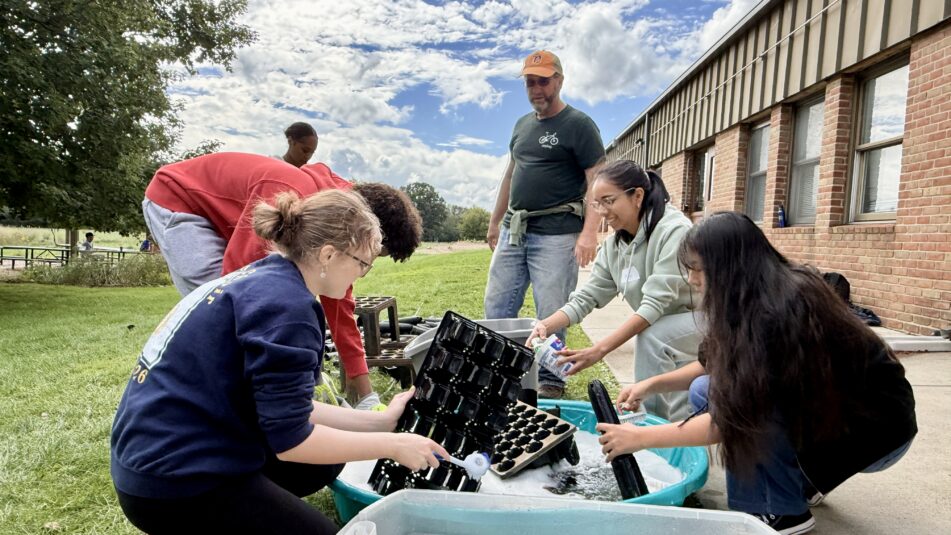
Other groups added mulch around newer plantings to help retain moisture and suppress weeds, cleaned the nursery and equipment so they could be stored and reused next year, and returned to young trees planted during previous service days. Around those trees, students cleared competing vegetation, added fresh mulch, and reinforced or reinstalled protective cages designed to keep deer from damaging the young trees.
For Ambrosino, that last piece is especially meaningful because it gives students a chance to see the long-term results of their work.
Huron students participate as juniors and return as seniors, allowing them to revisit projects they helped complete a year earlier.
“You remember what you did last year, see those trees? They’ve taken root. They’re growing,” Ambrosino said, describing the kinds of connections students can make when they return. “Look at that. You’re helping to restore native plant biodiversity that will provide habitat services for years to come.”
Huron English teacher Kris Zager, who also teaches in Huron’s Diploma Programme, has participated in the event for several years and said it has become something she looks forward to every fall.
“It’s a great experience every year,” Zager said.
Students, she added, inevitably come away with stories from the day—some about learning to use the tools, others about getting much dirtier than they expected, and plenty involving a little friendly competition over who did the most work.
“They always get a little playfully competitive with it and have some good stories to tell,” Zager said.
Zager also said students learn about why Freeman exists and the role it plays in giving younger students opportunities to experience native landscapes and learn about local animals and the environment.
For Ambrosino, the Huron partnership similarly reflects Freeman’s dual role as both a natural area and an outdoor learning space.
The work students completed this fall will continue to support the center’s restoration efforts and help keep the property ready for the elementary students who will use it throughout the school year.
Although there are no other major student service events currently scheduled at Freeman this fall, Ambrosino said the center is always looking for groups that want to volunteer, including National Honor Society groups and other community organizations.
And there is another opportunity for students and families coming up soon.
Freeman will host a BioBlitz on Monday, Sept. 28, from 1 to 4 p.m. during a no-school day. High school students are invited to attend on their own, while elementary and middle school students are invited with a parent or guardian. Rather than focusing on restoration work, the BioBlitz will have participants observe flora and fauna across the Freeman property and enter their findings into iNaturalist. The goal is to create a snapshot of biodiversity at the center in 2026.
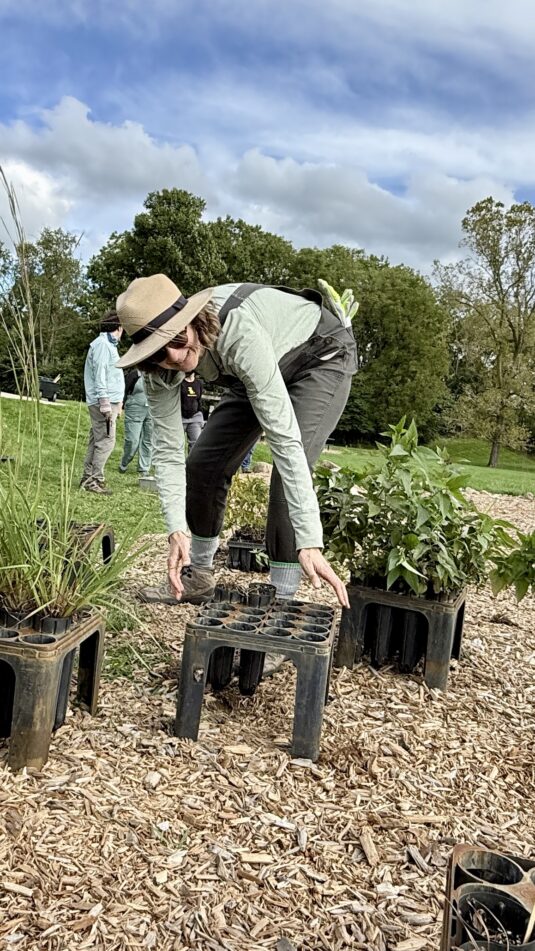
Ambrosino said a large group of community volunteers and naturalists will be on hand to support small groups of students and families as they collect data throughout the campus.
“We’re going to collect a ton of data out on the campus,” he said, inviting the community to take part in the event.
Be the first to comment