

Pioneer High School alumni Olivia Gregory and Melody Hassani return to AAPS to lead inclusive classrooms at Skyline
By Jo Mathis/AAPS District News Editor
Olivia Gregory and Melody Hassani first connected as students at Pioneer High School, where they had enrolled in Peer Connections, an elective designed to build meaningful relationships between students with and without disabilities.
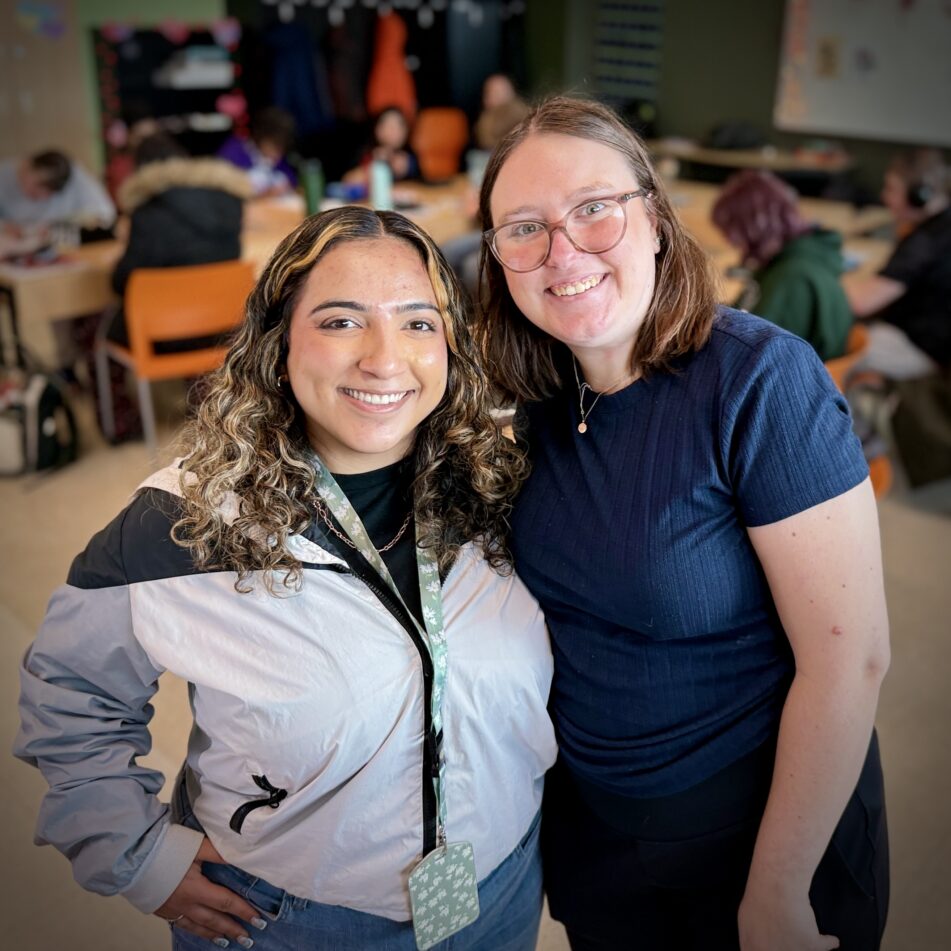
Inspired by that class, they’re now working side by side at Skyline High School with the same goal: promoting inclusion for students with special needs. Gregory and Hassani both teach in Skyline’s self-contained programs serving students with cognitive impairments, having returned to the district as educators committed to carrying forward the very philosophy that once shaped them.
“John Conley’s Peer Connections changed my life, and now it has given me the opportunity to change the lives of others,” says Hassani.
For Gregory, who grew up volunteering, signing up for the Peer Connections elective felt natural. On the first day, she remembers sitting in a small group with Conley and completing a survey about comfort levels and placement preferences.
“I remember answering yes to everything,” she says, adding that she didn’t care what the students’ engagement levels were, but just that she wanted to be there.
The class became a fixture in her schedule for the next three years. But the real impact didn’t fully sink in until later, when she began working alongside parents at Special Olympics events and learned firsthand how much the class meant to families.
While attending Central Michigan University, Gregory often returned to Conley’s classroom to observe. Watching him teach from the front of the room, rather than from a peer’s seat, changed her understanding of the craft.
Observing him, she says, was “like watching Michelangelo paint.”
Hassani recalls that when she first enrolled in Peer Connections, special education students were mostly isolated from most of their general education peers at Pioneer.
“I had no experience being around people with special needs,” she says. “Over time, I learned how to seek commonalities rather than differences. While some students were able to play games and engage in silly conversations with me, others challenged me to get creative. One of my most memorable experiences from that first year was the day a nonverbal student reached out and touched my hand, indicating that we were friends. We developed a very special bond, and he is still my lifelong best friend to this day.”
She took Peer Connections throughout the remainder of her time at Pioneer, and watched as the program grew tremendously and Pioneer experienced a massive cultural shift toward inclusivity.
“By my senior year (in 2016), a student with Down Syndrome was so popular that he got elected homecoming king, and the entire school was chanting his well-known catchphrase (“Oh yeah!”) as he was crowned king. “
After high school graduation, she knew special education was her calling.
Gregory and Hassani now lead Skyline’s Peer Connections program, modeling much of it after the structure they experienced at Pioneer: beginning-of-term surveys, intentional placements, disability awareness activities, and community-building events.
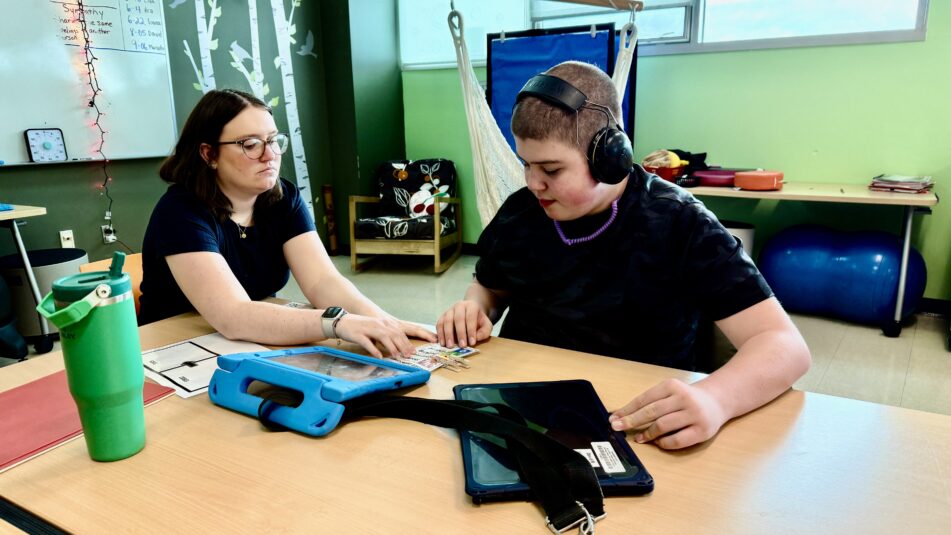
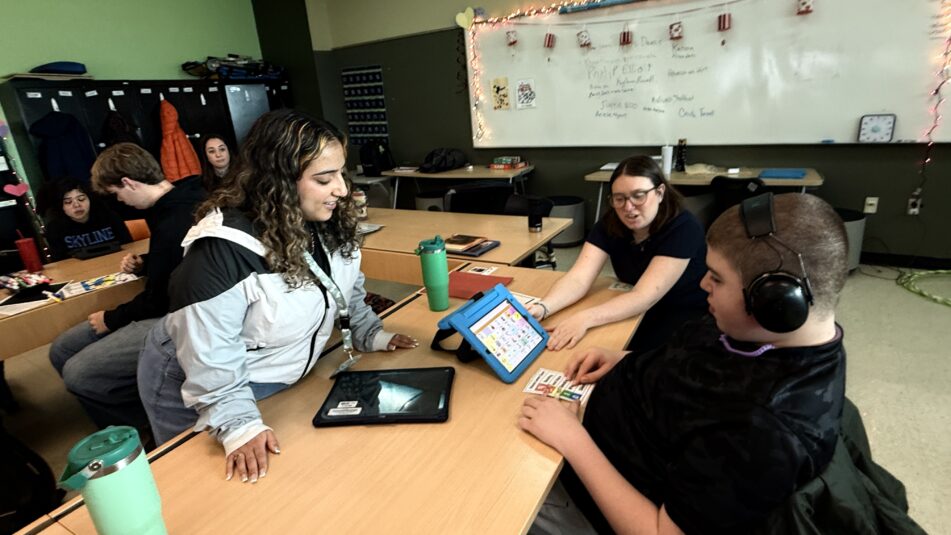
Gregory says that stepping into the teacher role has deepened her appreciation for the work she once witnessed as a teenager. And she hopes her students—both those on her caseload and those serving as peers—leave her classroom feeling safe, valued, and prepared. She wants her students with disabilities ready for the real world, surrounded by authentic friendships. And she wants peer students to understand that inclusion is community, not charity.
“The relationships that students build with peers are mutually beneficial,” Gregory said. “While I was their peer, they taught me many things, like compassion and kindness. I can only hope that my students get that same experience.”Hassani was a student teacher under Conley’s mentorship before joining Skyline’s staff.
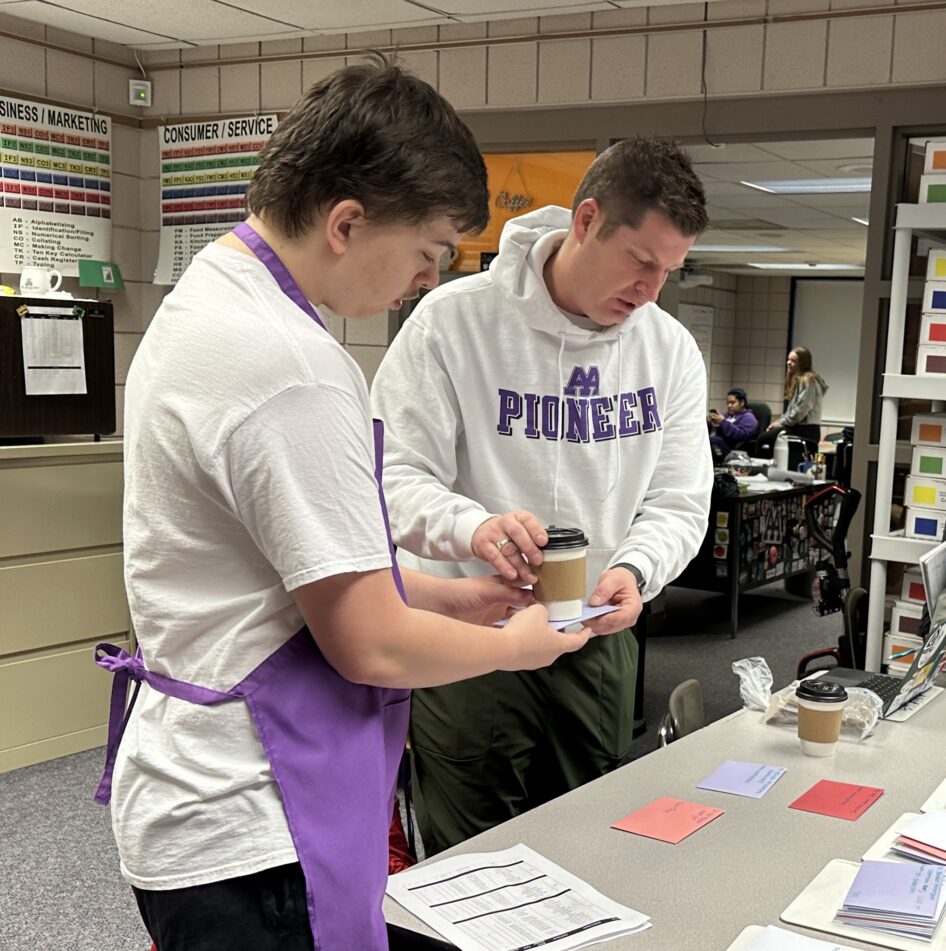
“It was amazing to see all that he has accomplished with the program in a 10-year span,” she says. “Because of him and Peer Connections, friendships between special education and general education students have become the norm at Pioneer. Self-contained classrooms now have peers all throughout the day, and even students who don’t take the peer connections class choose to spend their free periods or lunches in Conley’s classroom.”
District leaders see their journeys from students to special education teachers as something bigger than individual career choices.
AAPS LRE Compliance Coordinator–Secondary Jessica Lucke says their story represents the long-term impact of intentional inclusion.
“Their story is more than a career pathway,” she says. “It’s a reminder that inclusive programming, when done with care, intention, and consistency, can leave a lasting imprint on everyone involved and come full circle. The relationships built in inclusive spaces shape how students see themselves, each other, and what is possible. When districts invest in these experiences, they are not only supporting students in the moment; they are also quietly developing the next generation of educators who carry those values forward into their own classrooms and across other fields and trades.”
This video is from 2016, when Melody Hassani was a senior in the Peer Connections program, and one of her friends, Donald Armstrong, was voted homecoming king in a landslide.
Be the first to comment