


Moe Nagpal will join 52 other school system leaders in a nine-month program focused on cleaner indoor air and more energy-efficient school buildings.
Moe Nagpal, capital programs manager for Ann Arbor Public Schools, has been selected for the 2026-2027 School Air Quality Fellowship, a nine-month program run by the Center for Green Schools at the U.S. Green Building Council.
Nagpal is one of 53 school system leaders chosen from 53 districts across 25 states. The Center announced the cohort on Sept. 17. Fellows work in facilities, environmental health and safety, business operations, and sustainability, and were selected based on their district-wide responsibility for indoor air quality, the expected impact of their 2026-2027 projects, and geographic representation across the country. Together, the participating districts serve more than two million students.
The program runs from September 2026 through May 2027 and provides training, technical assistance, and peer support as participants build practical plans for cleaner indoor air and more energy-efficient school buildings. Nagpal will receive personalized training and technical assistance from indoor air quality and energy management specialists, which he will apply to assessing, planning, and monitoring air quality across AAPS schools. Fellows also receive paid access to a professional credential and travel support to attend the 2027 Green Schools Conference and School Facilities Leadership Summit in Austin, Texas.
Nagpal said the work responds to conditions districts across the country are facing.

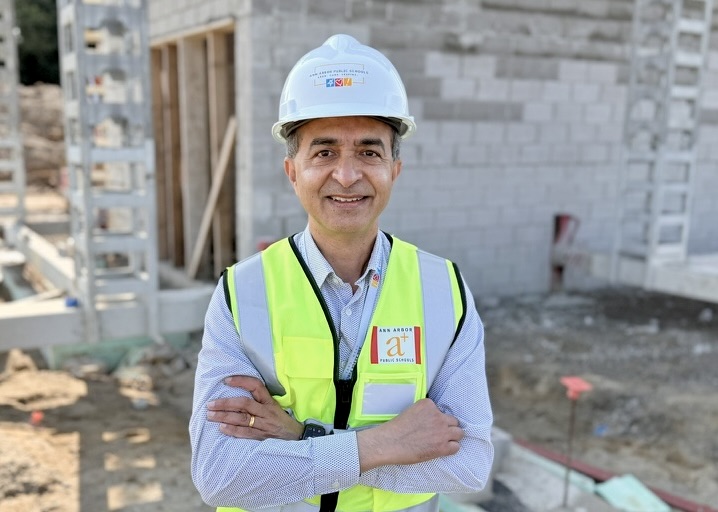
“Smoke, pandemics, respiratory illnesses, and new state indoor air quality requirements have increased the need for managing indoor air quality,” he said. “Effective indoor air quality management can support student and staff health, reduce absenteeism, improve building operations, and extend the useful life of heating, ventilation, and air-conditioning equipment.”
He also pointed out what better ventilation means inside a classroom.
“When we provide good indoor air quality and adequate ventilation, we create better conditions for students to learn and perform,” Nagpal said. “Research has found associations between better-ventilated classrooms and improvements in concentration, schoolwork performance, and some academic measures. It’s one more reason why the quality of the learning environment matters.”
During the fellowship, participants use the School District Energy Efficient Indoor Air Quality Management Plan Toolkit to develop district-specific plans that address air quality alongside energy use and operating costs. The Center for Green Schools developed the free toolkit with the American Lung Association, Go Green Initiative, and the University of Utah. It includes sample plan language, case studies, and an editable template that districts can adapt.
For AAPS, the fellowship extends commitments the district has already made. The Capital Bond Program calls for healthy learning environments with clean, well-ventilated air while advancing energy efficiency, carbon reduction, and the use of durable, low-toxicity materials. Those aims overlap with the district’s Environmental Sustainability Framework.
Be the first to comment