

Sophomore Katelyn Dybdahl called `a ray of sunshine’ as she confronts health challenges while remaining an essential part of the Skyline girls’ swim team
Story and photos by Jo Mathis/AAPS District News
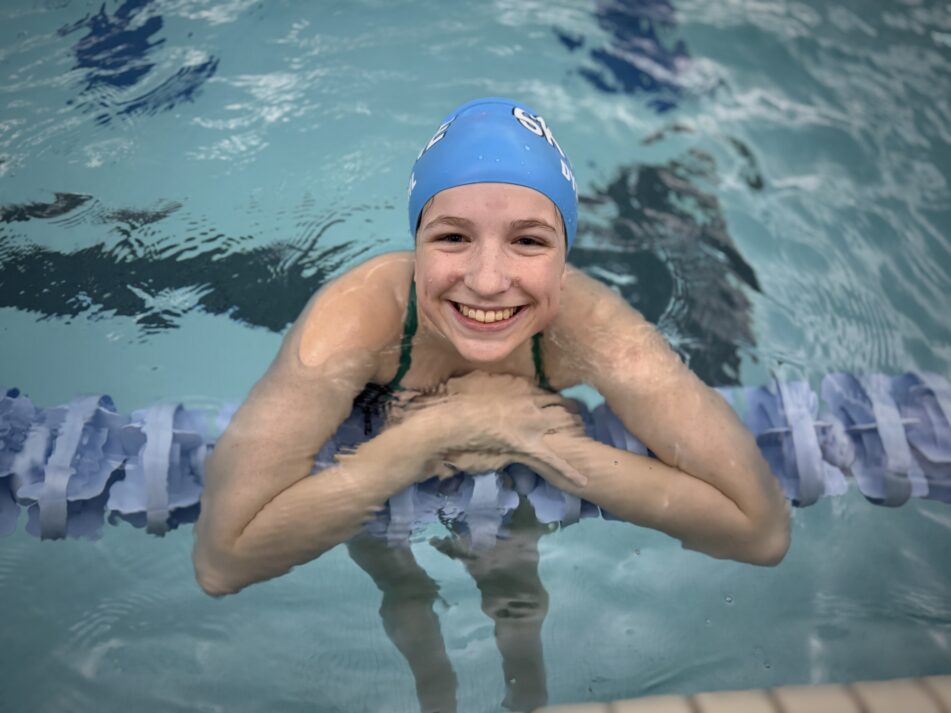
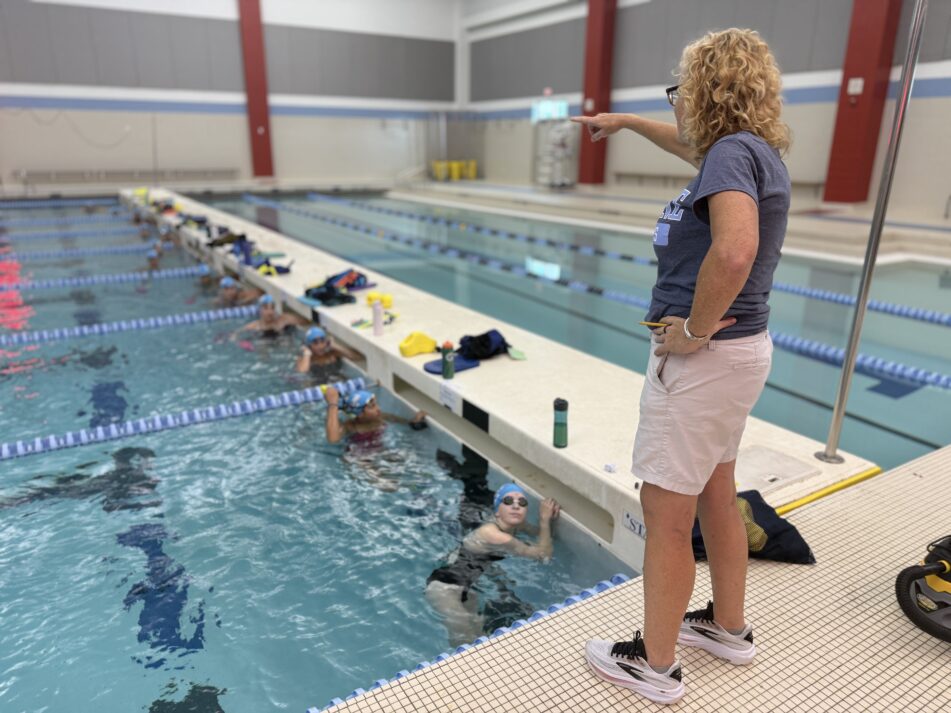
The Skyline High School girls’ swim team began practice last week, and among the swimmers, one return has meant the most to coach Maureen Murrett: sophomore Katelyn Dybdahl, whom Murrett called “a ray of sunshine” on the pool deck.
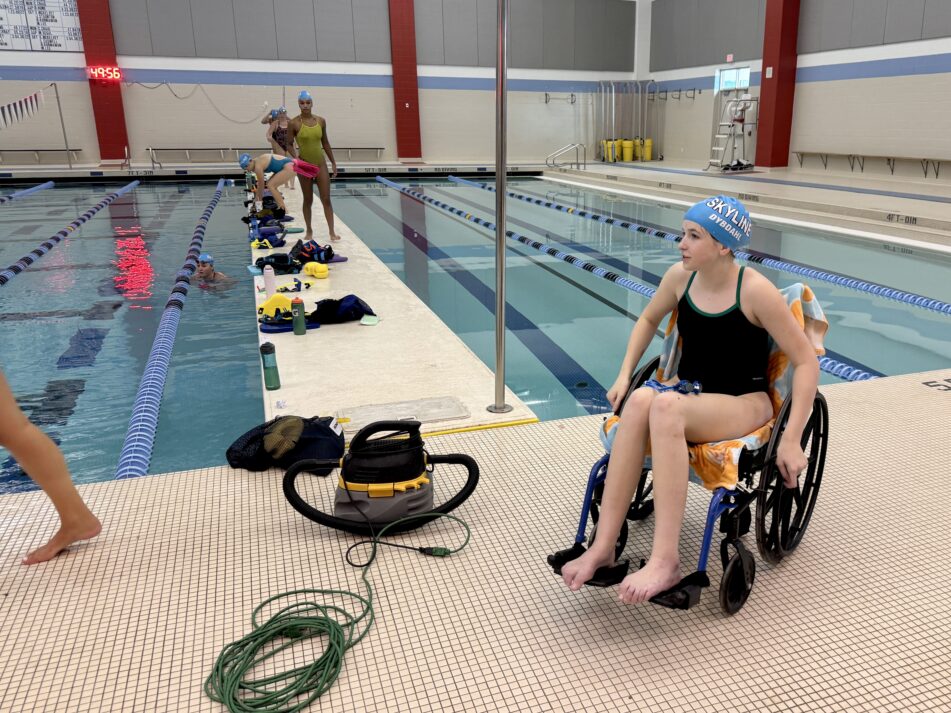
She made the Skyline team as a freshman last year, only to spend most of the season in hospitals and pain clinics around the country after a flare-up in her health. Dybdahl lives with several conditions, including spina bifida, migraines, a connective tissue disorder, dysautonomia, sensory processing disorder, and chronic pain. Her paralysis, which requires her to use a wheelchair, is new within the past year; most of her other conditions have been present since birth.
This week, though, she showed up to every practice, ready to take on the fall season with her teammates.
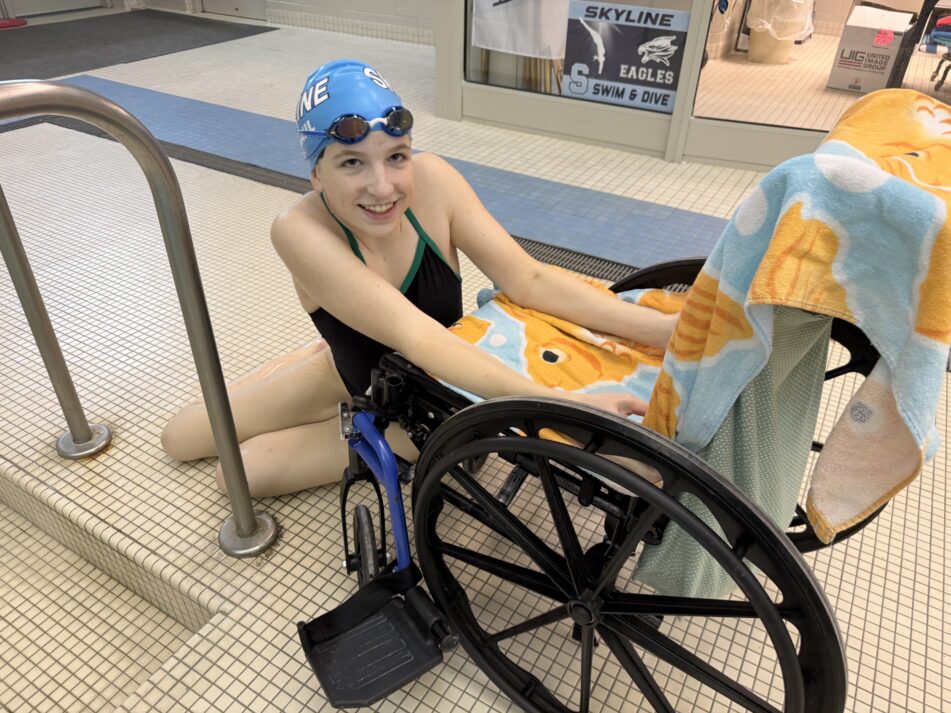
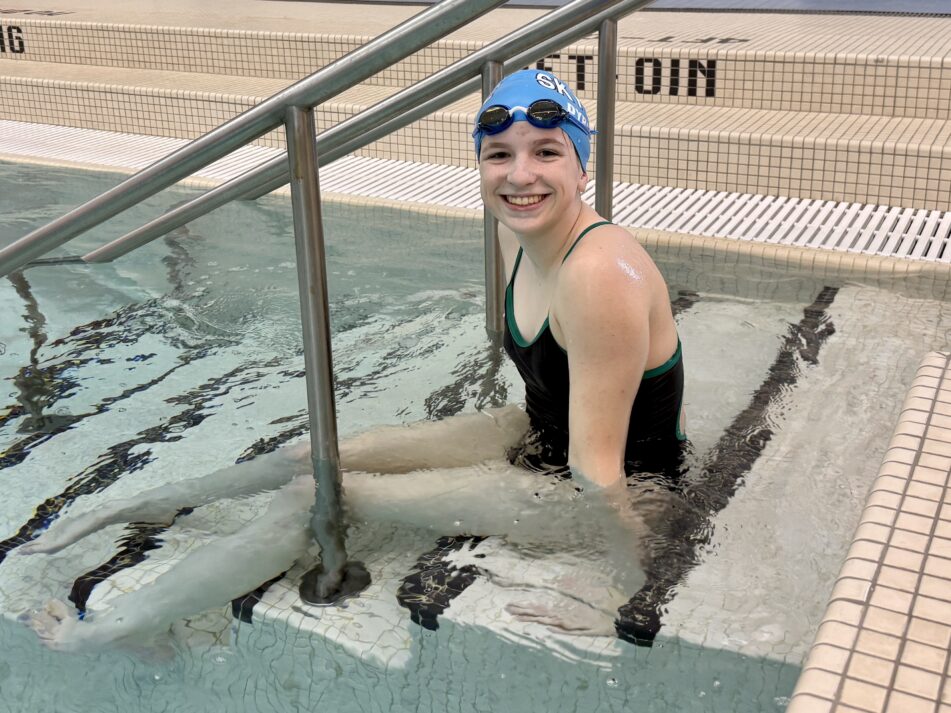
Skyline swim coach Maureen Murrett said Dybdahl has become an essential part of the team.
“She inspires her teammates in and out of the water with her work ethic and positive mindset,” Murrett said. “Her teammates clearly see that she uses a wheelchair, but I don’t think they see her that way. It really shows that our team is so much more than a group of people that swim together every day. Each person has a role, and each person adds value to the group.”
Murrett put it simply: “Every day she is with us is a victory.”
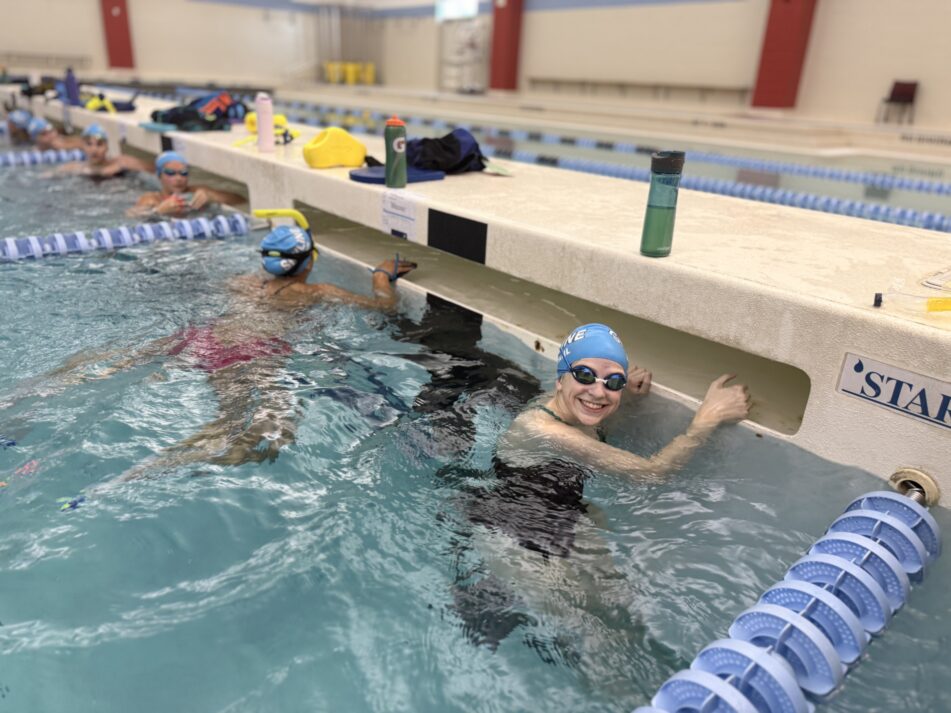
Katelyn didn’t start swimming competitively until the summer after eighth grade, but she had loved the water for as long as she could remember — so much so that her mother nicknamed her “little minnow.”
Before swimming, soccer had been Katelyn’s main sport, and she worked with physical therapists to build the strength needed to compete at the travel level. Over time, though, soccer began to take a toll on her body. Swimming gave her a new way to keep competing and challenging herself while doing something she genuinely loved.
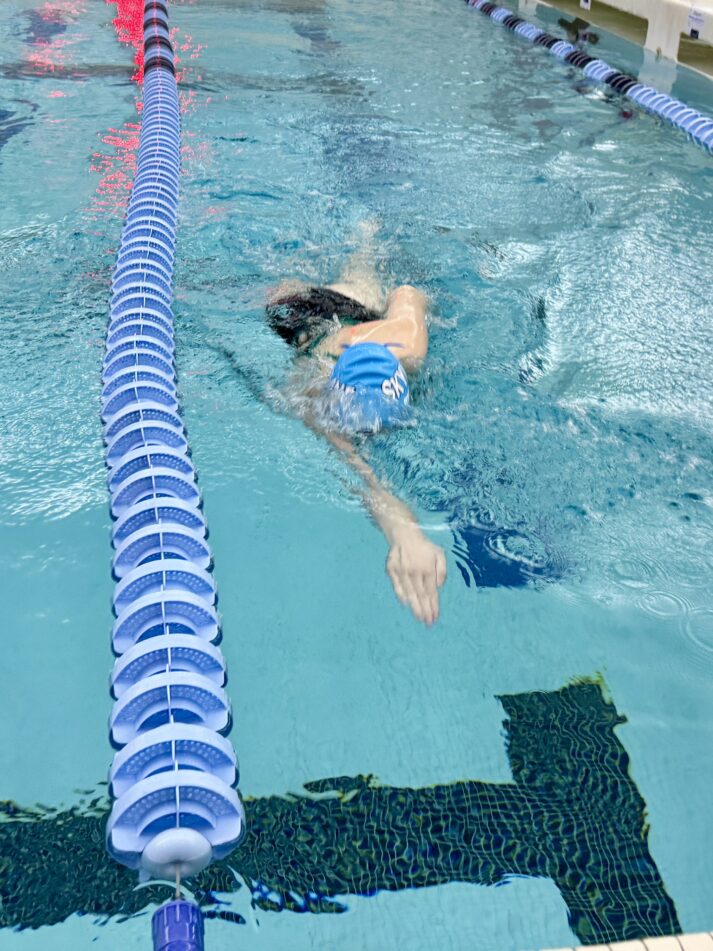
In the water, Katelyn primarily swims freestyle and backstroke, with freestyle as her main stroke. She can’t move her legs, but she generally chooses not to use a pull buoy unless the rest of the team is using one, and she sometimes shortens the distance she swims during practice to match what her body can handle that day. If she pushes too far, the setback can keep her out of practice for a while.
“These adaptations do not mean that I am not challenging myself,” Katelyn said. “They allow me to participate in the sport while also respecting what my body needs. To me, adapting is not about doing less; it is about finding a way to keep doing something that I love.”
She is always the last to finish a race, both because she is new to the sport and because she cannot get out of the blocks, flip turn, or push off the wall like her teammates. She said that reality can occasionally make racing less enjoyable, but most of the time she focuses on a different kind of competition.
“I tend to race myself,” she said, “trying to achieve my best time.”
Learning to listen to her own body, Katelyn said, has been one of the most important lessons swimming has taught her. She knows to recognize the difference between the discomfort of pushing through a hard set and the kind of pain that means she needs to stop.
“You have to recognize when your body is telling you that you are tired, when something is simply difficult, and when something may actually be causing harm,” she said. “Ultimately, you are the person who knows your body best. Learning to listen to it is not giving up; it is understanding how to keep moving forward safely.”
She credits much of it to the people around her: coaches who adjusted practices to fit her needs without ever making her feel singled out, and teammates whose support showed up in small, steady ways rather than grand gestures.
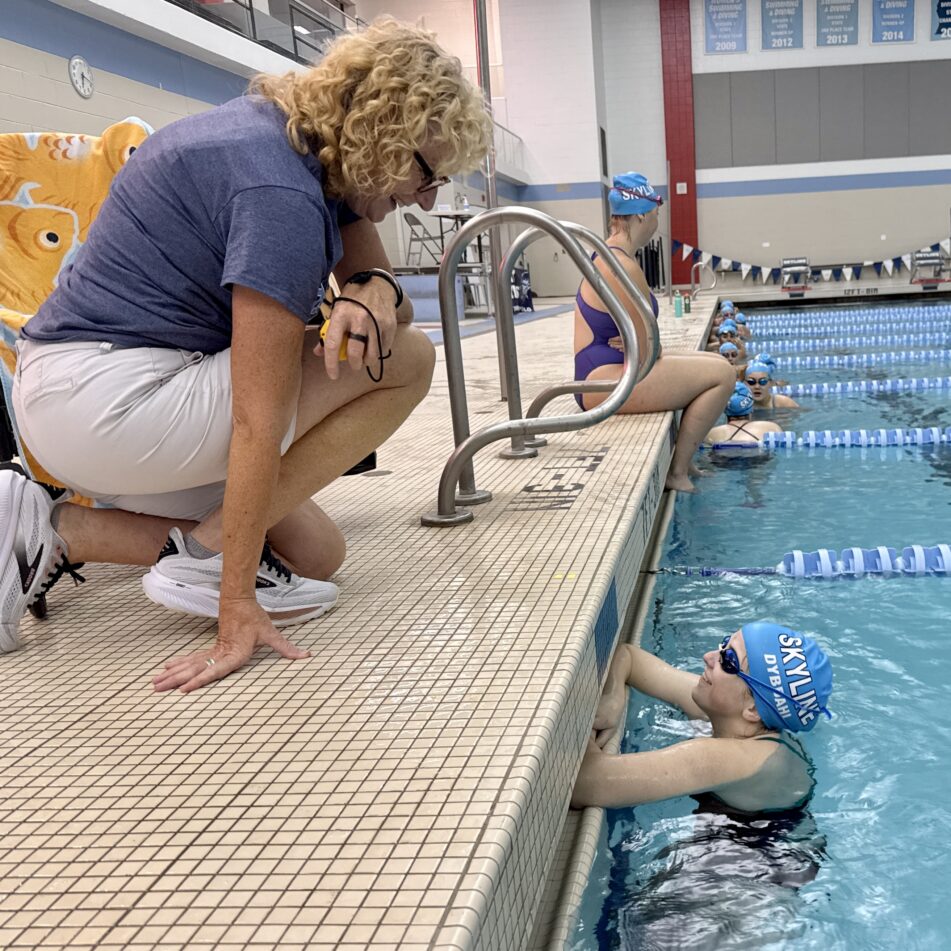
“My coaches and teammates have been extremely supportive throughout my time on the swim team,” she said. “My teammates have also helped me in many small but meaningful ways. Sometimes that means holding a door open for me. Other times, it means encouraging me through a difficult set or simply being there when I need support.”
Those gestures, she explained, mattered more than they might seem from the outside. A held door, a word of encouragement mid-set, a teammate who simply stayed close when things got difficult all add up to a sense of belonging.
“Having teammates who are willing to help without making me feel different has made me feel like a true part of the team,” she said.
Living with chronic illness has also changed how Katelyn sees other people, she said. A missed deadline, a short temper, or someone who seems distracted no longer reads to her as simple carelessness.
“My empathy has grown simply for everyone,” she said. “If someone is late, I don’t assume it was poor management, but instead, what if they had something or someone to take care of? Or if someone is in a bad mood, maybe there is pain, and they’re just not simply grumpy.”
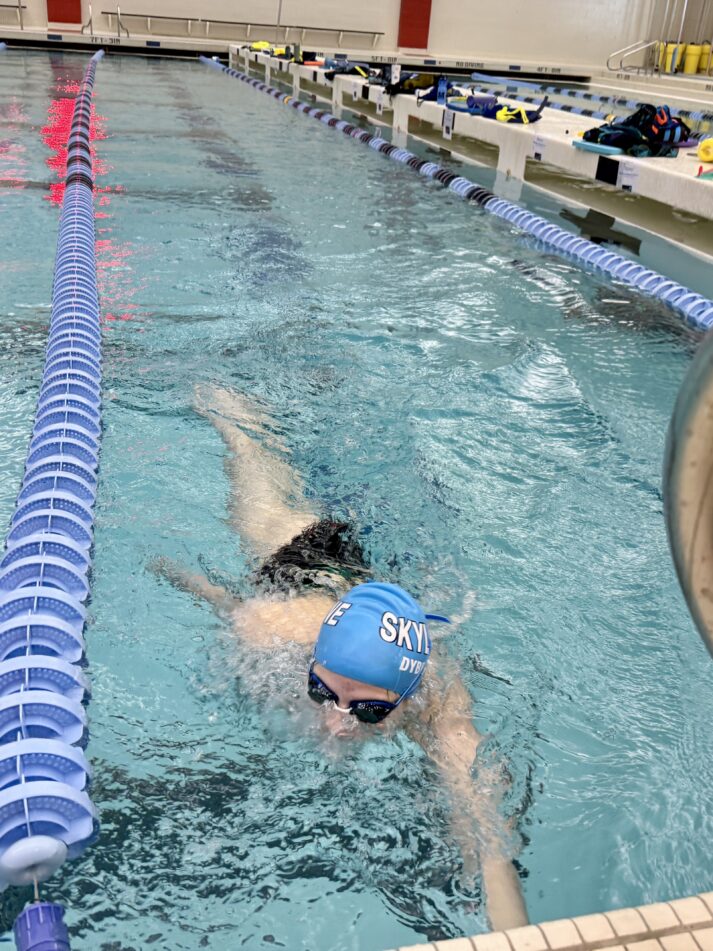
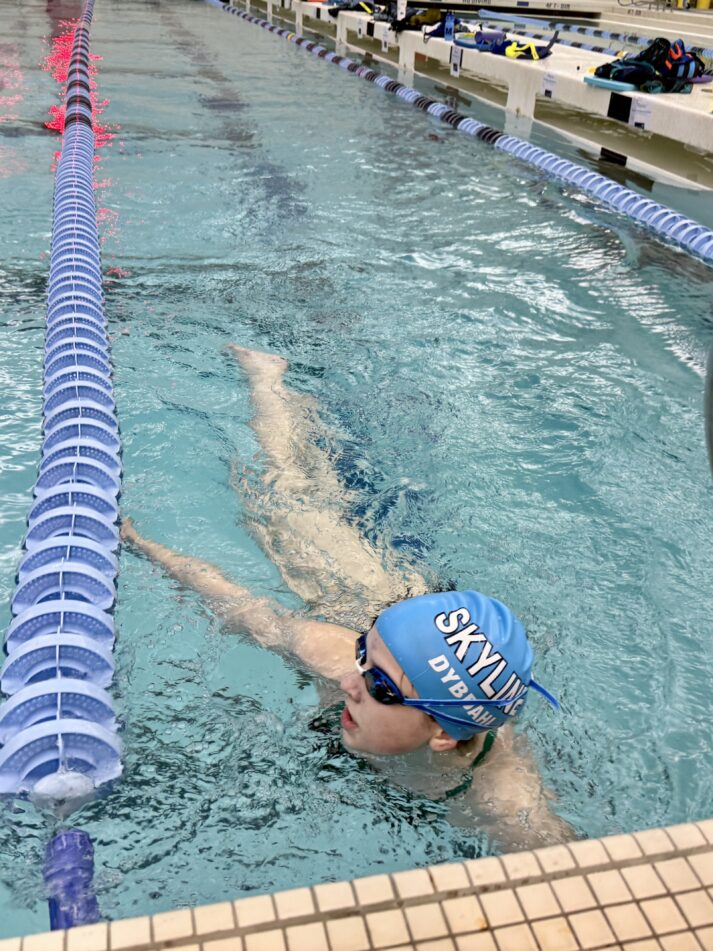
Outside the pool, Katelyn enjoys spending time with her large blended family that includes a brother, a sister, two stepsisters, two stepbrothers, a half-sister, and a half-brother, along with her rabbit and cat, Pebbles and Cookie. She attended Ann Arbor Open from kindergarten through eighth grade before coming to Skyline, and she spends her time outside of school swimming, reading, painting, and playing board games with her family. Carcassonne and Pandemic are among her favorites.
Teammate senior Sofia Delis, the team’s co-captain, says Katelyn is an inspiration to the entire team.
“I admire her so much and really look up to her for showing up every day,” said Sofia. “It’s really grounding to see. We all complain about, like, Oh, we’re so tired. But Katelyn’s still showing up every day. So it really gives you some perspective.”
Katelyn said she hopes her story encourages other students with physical, mental, or emotional disabilities to pursue whatever they set their minds to, without assuming in advance what they are or are not capable of.
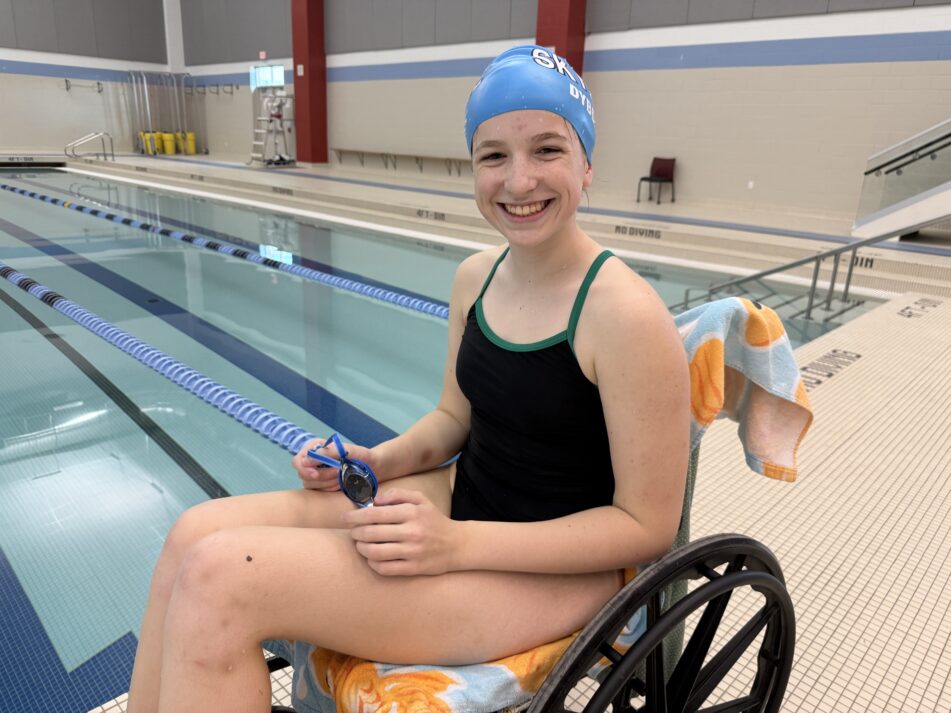
“Ultimately, I want people to understand that having to do something differently does not mean you cannot do it,” she said. “There are often ways to adapt, change the approach, or find a different path toward the same goal. I like to think that nothing is impossible, although I recognize that this is not always completely realistic. Every person’s story is difficult, complex, and beautiful in its own way. We may not be able to accomplish something in exactly the same way, but that does not mean we cannot accomplish it together. Sometimes, reaching the same destination simply requires taking a different path.”
Be the first to comment