

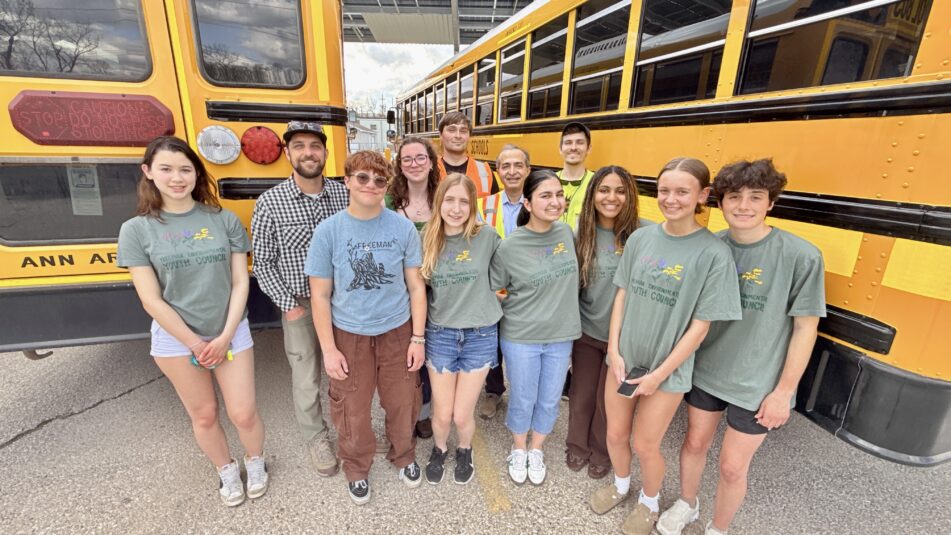
The Freeman Environmental Youth Council members take a closer look at electric buses, while Ann Arbor Public Schools advances its push toward a cleaner transportation fleet
Video, photos, and story by Jo Mathis/AAPS District News Editor
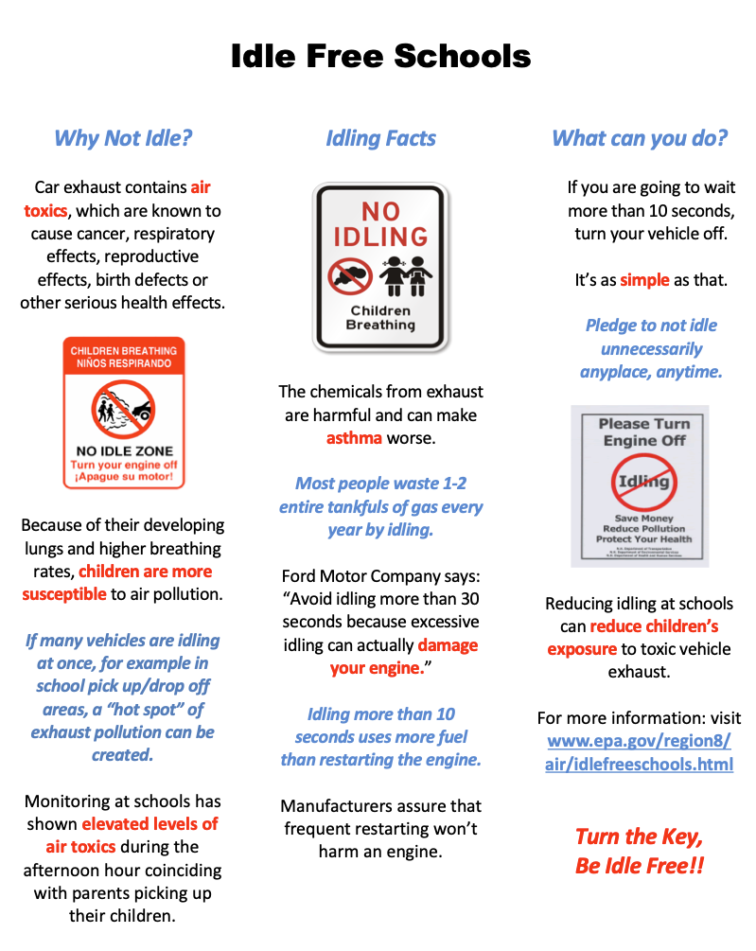
The Freeman Environmental Youth Council is turning student concern into action, pairing an idling-reduction campaign with a deeper exploration of how Ann Arbor Public Schools’ electric buses can improve air quality on and around school campuses.
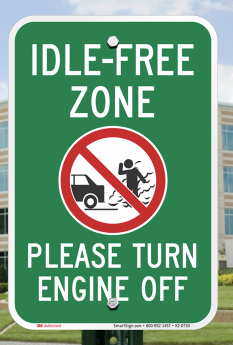
The effort just received a boost from a $4,300 Sustaining Ann Arbor Together neighborhood grant, which will fund anti-idling signage across district campuses and printed materials to encourage AAPS families to adopt transportation habits that reduce emissions at schools. The signs will be installed along school driveways and in high school parking lots to coincide with the campaign’s planned launch at the beginning of the school year.
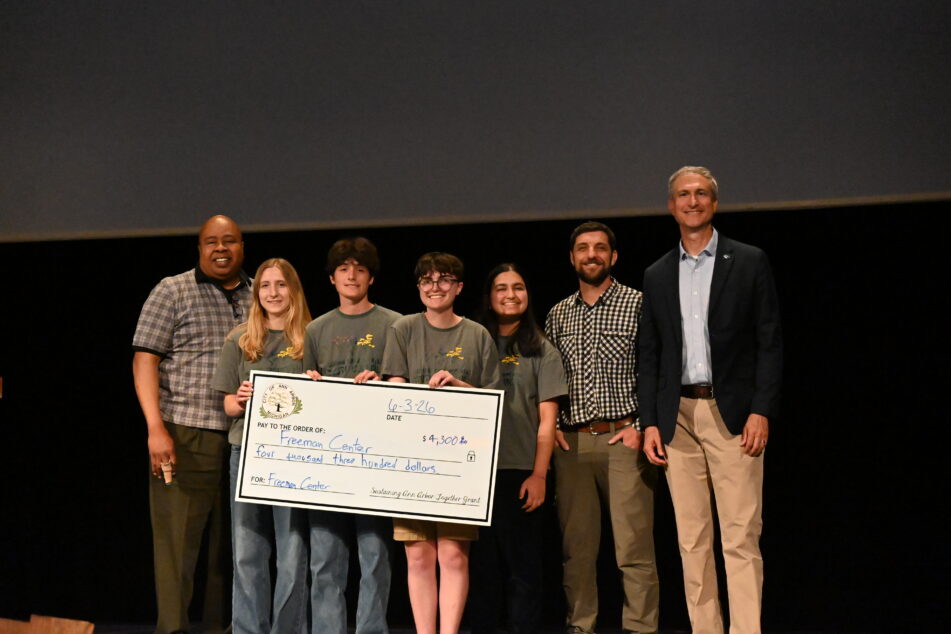
The 26-member, districtwide council brings together students from AAPS high schools to address environmental issues affecting young people now and in the future. Its Advocacy & Action subcommittee is leading an idling-reduction campaign that includes informational materials for principals, families, and student drivers; a voluntary pledge for households; forthcoming on-campus signage; and efforts to encourage transportation options that reduce reliance on individual gas-powered vehicles.
As part of this work, students are also promoting the district’s bus system, learning more about bus idling guidelines, and tracking progress toward electrifying the school bus fleet.
The students’ work aligns with the Freeman Environmental Youth Council’s broader mission of student leadership, environmental literacy, and action projects across the district’s high schools. The district is working toward eliminating direct carbon emissions by 2035, with electric buses playing a major role in that plan.
Youth-led campaign
The students’ work on idling reduction is meant to lower emissions and improve air quality on school grounds, says Coert Ambrosino, AAPS Environmental Education lead teacher and the council’s adult liaison. He said the effort is necessarily broad because students and families get to school in different ways, and bus service is one important part of the solution.
Testing out an electric bus
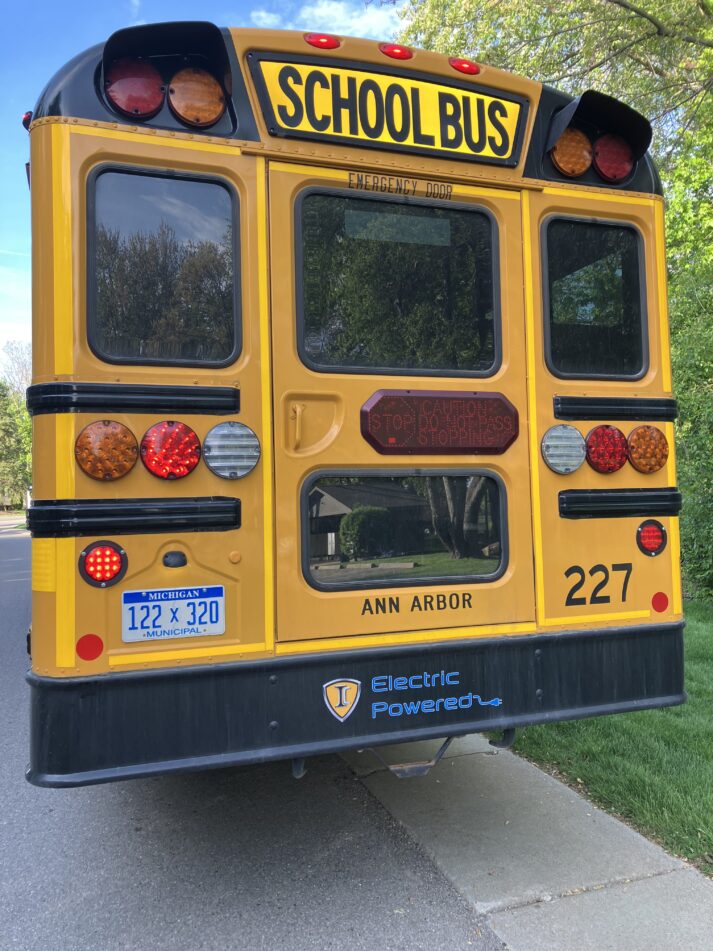
Students recently rode one of AAPS’s electric buses and learned about the district’s growing bus electrification effort. The new buses do not create tailpipe emissions while operating, and the district has been adding electric vehicles as part of its long-term sustainability goals. The bus ride gave students a firsthand look at what cleaner transportation feels like and how quiet electric buses are compared with diesel buses.
Nathan Weidmayer, an AAPS bus driver, said he “drastically prefers the electric ones” because they are so quiet compared with diesel buses. He said the low rumble of diesel can be constant and tiring, while the electric buses are quiet all the time.
Student voices
Pioneer junior Elif Saglik described her experience on the Freeman Environmental Youth Council as an opportunity to have a voice and make tangible environmental change. She explained that the idling campaign succeeds by showing how idle time accumulates and by using signage as a gentle reminder to turn engines off.
For Pioneer 2026 graduate Peyton Peters, the council’s work began with the idea of placing anti-idling signs in pickup lines and parking lots before growing into a broader pledge campaign targeting both parents and high school drivers. Peyton added that student-to-student outreach may be the most effective approach, as it feels more personal than signage alone.
“We started with the idea of putting idling reduction signs in pickup lines and parking lots, then began thinking about other ways to reduce transportation emissions at our schools,” Peyton said. “One idea was creating a pledge for parents and student drivers that explains why idling is harmful and encourages them to be more aware of it throughout the year.”
Aurora Janovic, also a Pioneer grad, pointed to ongoing discussions about expanding parent involvement through PTOs, newsletters, and school-specific communication—especially at the elementary and middle school levels, where parents oversee most drop-offs and pickups.
“We also talked about getting more parent involvement by working with PTOs and sharing information through school newsletters, especially at elementary and middle schools where parents are usually responsible for pickup and drop-off,” Aurora said.
Heather Shriberg, a recent Skyline graduate, highlighted the lingering stigma around bus use in high school despite Ann Arbor’s walkability and transportation options. She stressed the need to shift student attitudes and recognize the value of walking, biking, and riding the bus.
Julianne Wu, a 2026 Pioneer graduate, emphasized that riding the bus helps foster social connections that can’t be lost when families drive separately. She noted that electric buses, in particular, give students a chance to build friendships with neighbors and classmates while sharing the same commute.
Reaching families directly, she explained, is essential because idling is often driven by parents’ habits.
Districtwide impact
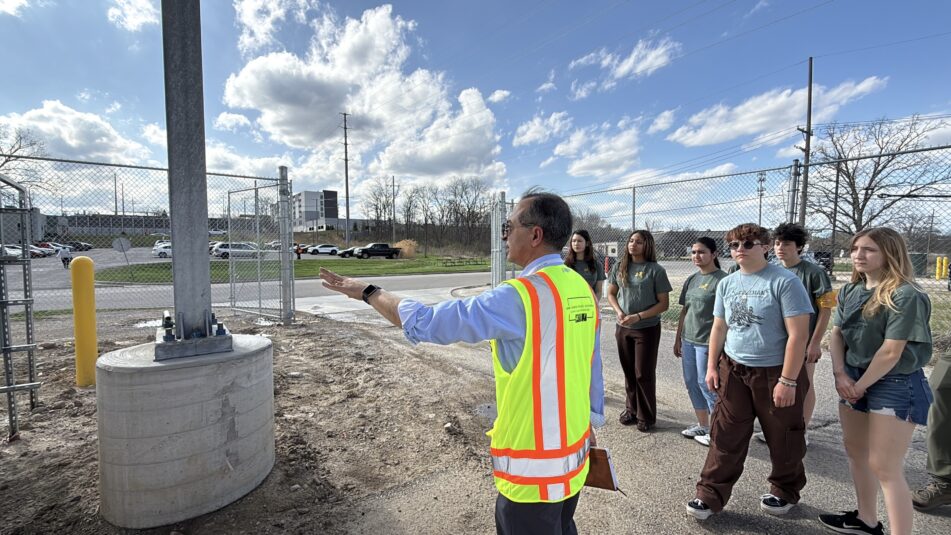
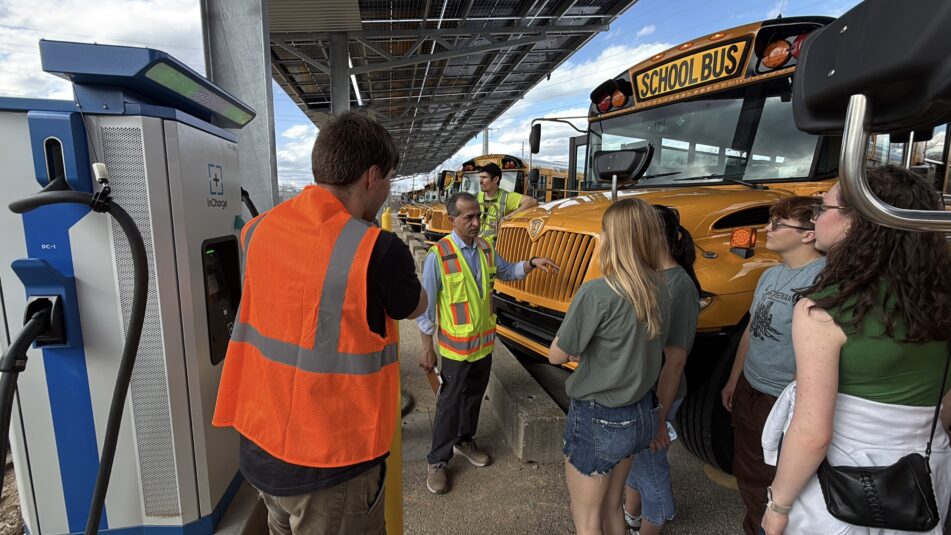
Moe Nagpal, AAPS capital programs manager, said the district currently operates eight electric buses and is adding 16 more over the next year.
Nagpal also pointed to the infrastructure behind the buses, including charging systems and solar power, as part of the transition to cleaner transportation. He said electric buses reduce exhaust emissions at the point of use, and they can be much less expensive to operate than diesel buses.
AAPS families and staff can look for more information on the idling campaign at the start of the next school year.
Be the first to comment