

Math tutoring is now offered alongside a comprehensive range of academic subjects.
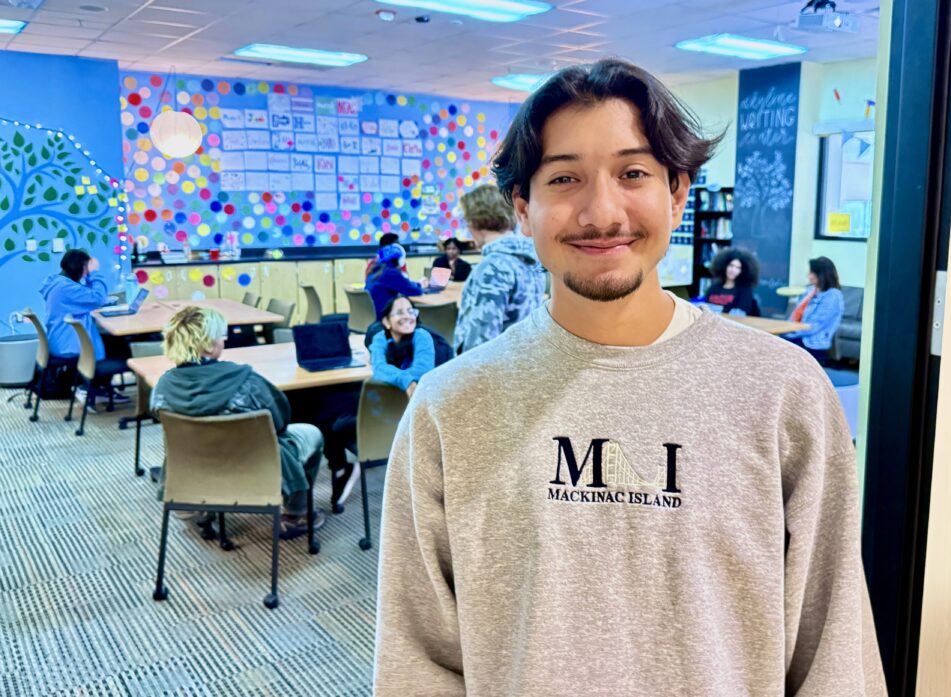
Diego Hurtado says a lot has changed since he was a Skyline High School sophomore two years ago. Approaching someone to receive or offer help back then felt overwhelming, and because English is his second language, he wasn’t sure he’d fit in as a tutor at the Skyline Learning Center when a teacher suggested he become one.
Since then, he’s discovered that helping others has helped him find his voice. He realized that students coming in for help were often just as nervous as he was, which made it easier to connect with them. That confidence has spilled over into other areas of his life, transforming him from someone who described himself as “really awkward” into a more comfortable communicator.
The Skyline Learning Center is a student-led, peer tutoring center that has become a vital resource across the school, serving students at every level. Last year, the center expanded its tutoring subjects to include math alongside all other subjects, and the results have been impressive. This school year alone, over 500 students have walked into the center, tutors work with their peers in 18 different classes each week, and nearly 50 submissions have come through the online writing lab.
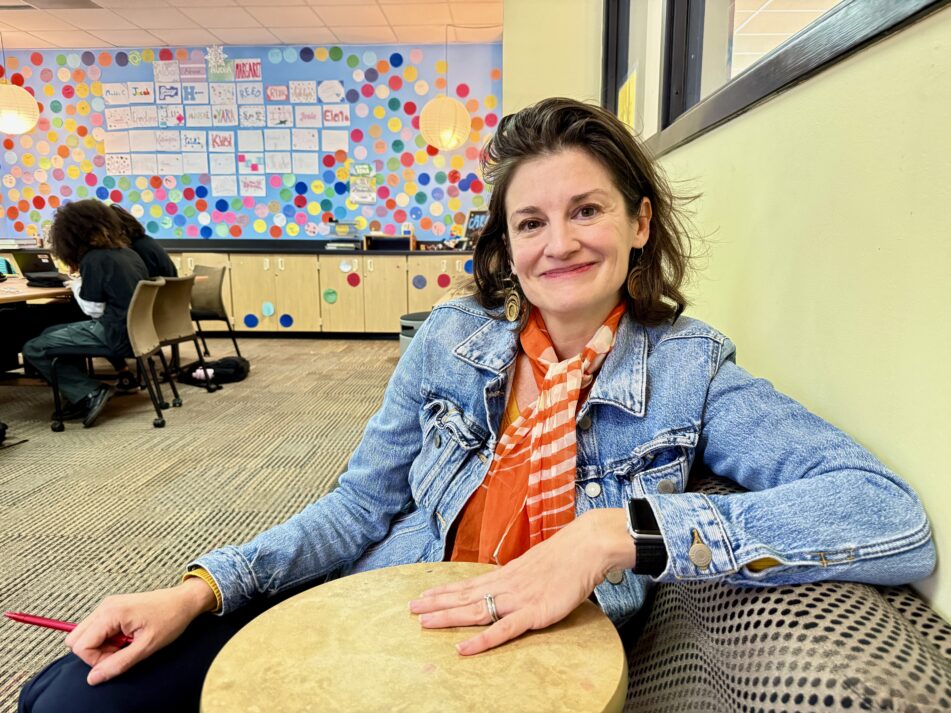
“I think this is just such a valuable program, because we are a resource for students all over the school,” says Alaina Feliks, the center’s director. “We work especially with a lot of heavily impacted students, including students who are in ninth grade, who are in Algebra One. And then we work all the way up to seniors who are writing their college essays for Harvard.”
The power of peer learning
What sets the Skyline Learning Center apart is its foundation in peer tutoring. Students receive help from classmates who have successfully navigated the very courses they’re currently taking—tutors who intimately understand the challenges, the teaching styles, and the specific hurdles that come with each class.
Diego specializes in English and Spanish, working with many students on writing assignments. He’s particularly focused on building their confidence by encouraging them to find their own voice. “A lot of people in writing feel like they just don’t have a good writing, like voice or like storytelling, and they’re very against it,” he says. He reminds students that their work doesn’t need to match some idealized standard, saying: “Just because it doesn’t look like something your teacher would hand, it doesn’t mean it’s bad writing.”
Diego looks forward to his first-hour shift at the learning center, calling it his favorite class. While he enjoys the tutoring itself, he appreciates that the class also provides time to work on his own projects and assignments.
Benefits that go both ways
The benefits extend far beyond helping other students with their assignments. “It’s very helpful to see all these assignments and help people with them, because they also give you review for your own things,” Diego says, adding that even when he’s helping someone with Algebra One while taking more advanced math courses himself, reviewing foundational material reinforces his own learning.
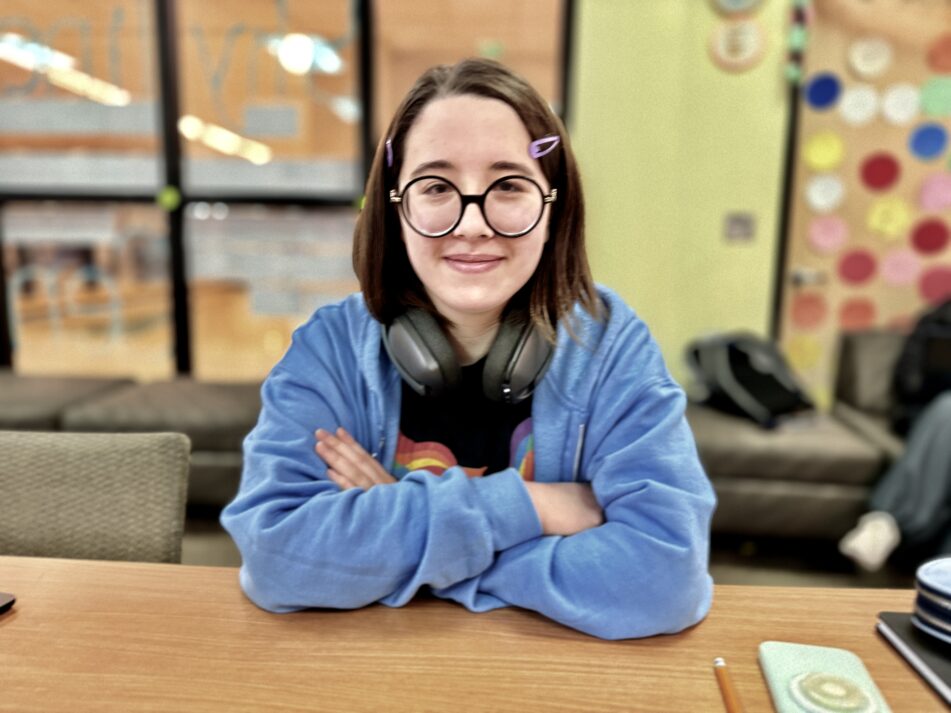
For senior Isabel Yuan, tutoring at Skyline Learning Center has offered an unexpected advantage: it’s made her more comfortable seeking help herself. Isabel didn’t use the center much before becoming a tutor, but her experience on the other side of the desk changed that perspective. Now she sometimes asks fellow tutors for assistance with challenging courses such as AP Music Theory and math.
The program requires tutors to complete mini-lessons during Sky Time, Skyline’s advisory period, covering topics such as using open body language to put students at ease and strategies for helping English language learners. This training helps tutors like Isabel, who mainly assist with English and writing, occasionally support students in history classes, even if it’s been years since she took the course herself.
On Thursdays, Isabel is assigned to an Algebra 1 classroom where she circulates among students, checking in and offering assistance.
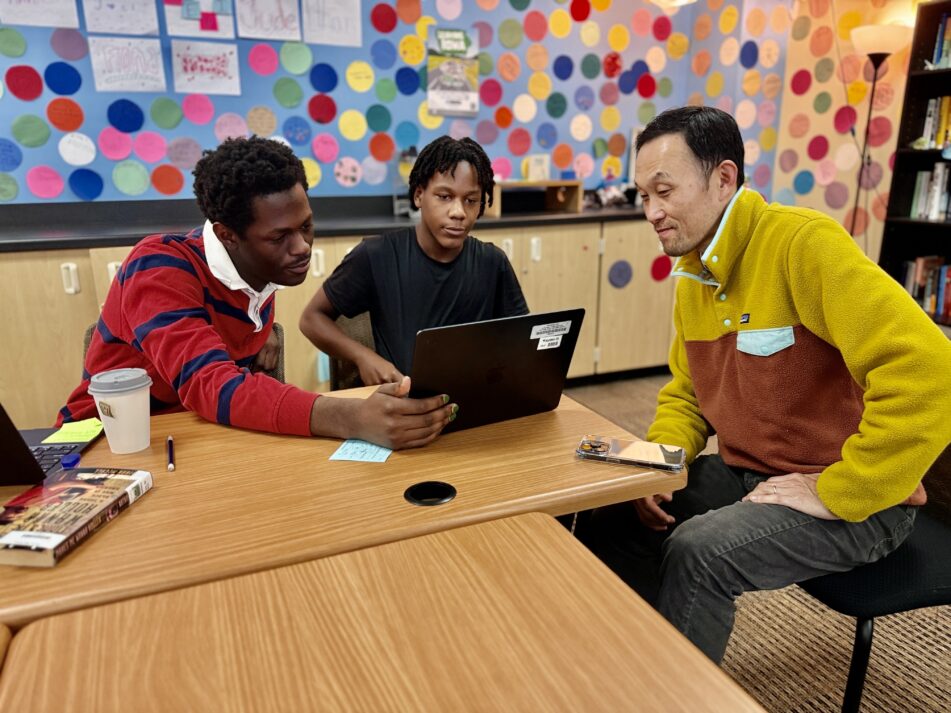
Young Park: The Center is an essential part of Skyline’s support system
According to resource teacher Young Park, the Skyline Learning Center has become an essential part of the building’s support system. Trained peer tutors step into classrooms—often in supported classes where one teacher simply isn’t enough—and function as seamless extensions of the staff.
“They bring their knowledge, their expertise, and the fact that they’re fellow students. Other students relate to them more easily,” Park explains.
Most tutors are juniors and seniors working with freshmen and sophomores, and they are available every hour of the school day. They go through an application and interview process, and staff can recommend strong candidates. Students can join as early as 10th grade, and the course counts as an elective credit.
Teachers use the program in several ways: by sending students to the Learning Center for help, encouraging students to drop in on their own, or inviting tutors directly into classrooms. What began years ago as the school’s Writing Center has now expanded to include math and other academic areas—something Park notes is rare among local high schools.
The impact, Park says, is unmistakable. He’s watched quiet, hesitant students become engaged and confident after working with peer mentors. One recent example involves a freshman with limited English proficiency who struggled in both language-heavy classes and math. With a tutor’s consistent support—using translation tools, patience, and one-on-one guidance—the student moved from near-silence to full participation.
“That’s something one teacher can’t always accomplish alone,” Park says.
Feliks agrees.
“Because peer tutors are in a unique, non-hierarchical relationship with students,” she says, “they can help break down barriers to learning.”
Be the first to comment