


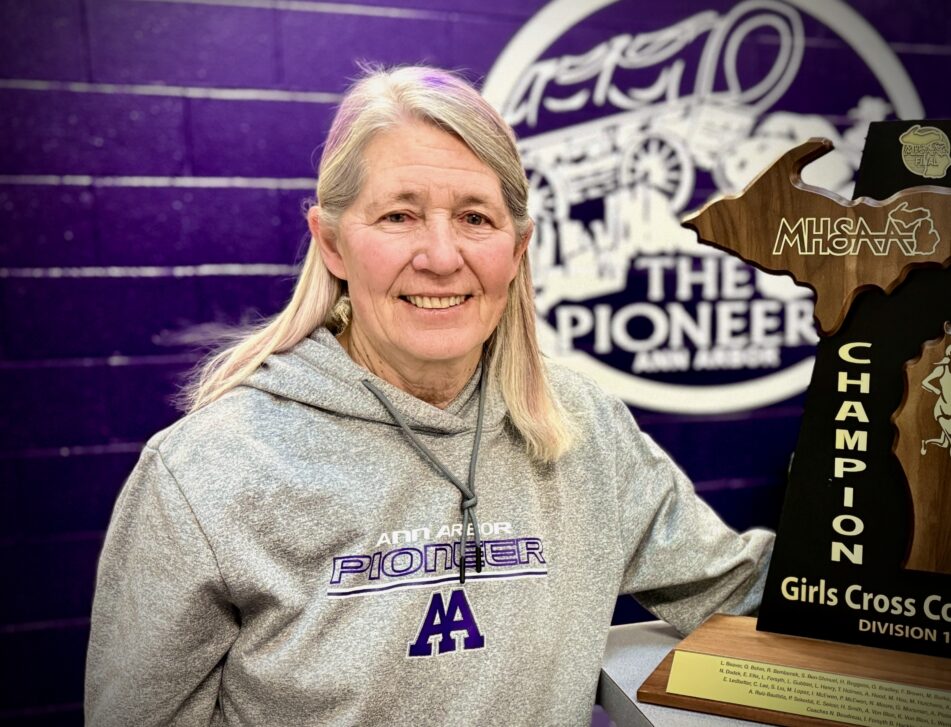
Nancy Shafer Boudreau was raised in North Canton, Ohio, and graduated from North Canton Hoover High School in 1969. She graduated from the College of Wooster in Wooster, Ohio, with a Bachelor of Arts degree in 1973. After teaching high school in Washington, D. C. for two years, she enrolled at the University of Florida, where she earned a master’s degree in Statistics in 1977 and a PhD in Statistics in 1980.
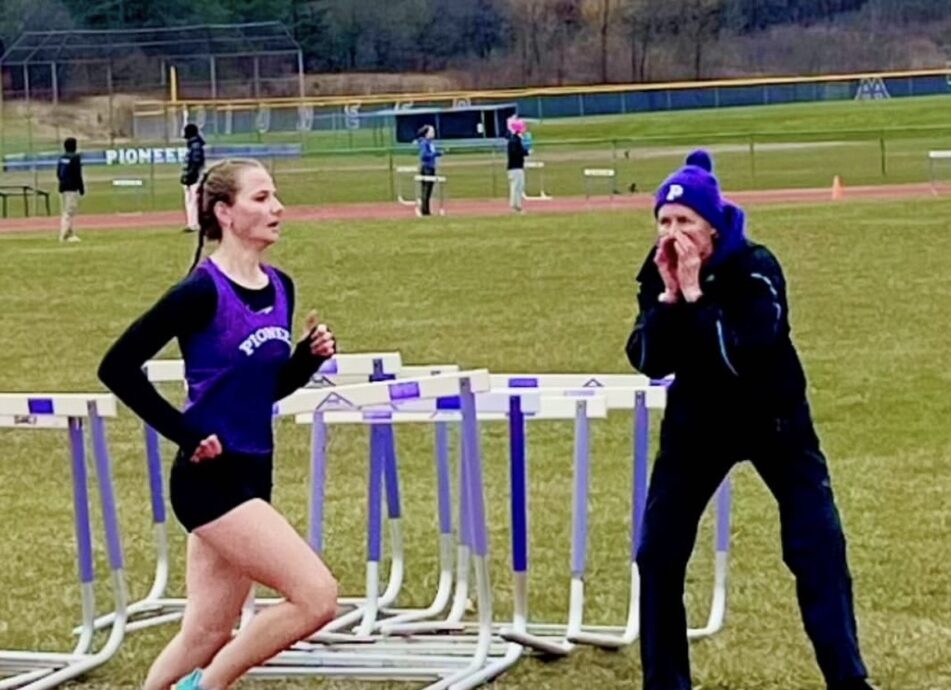
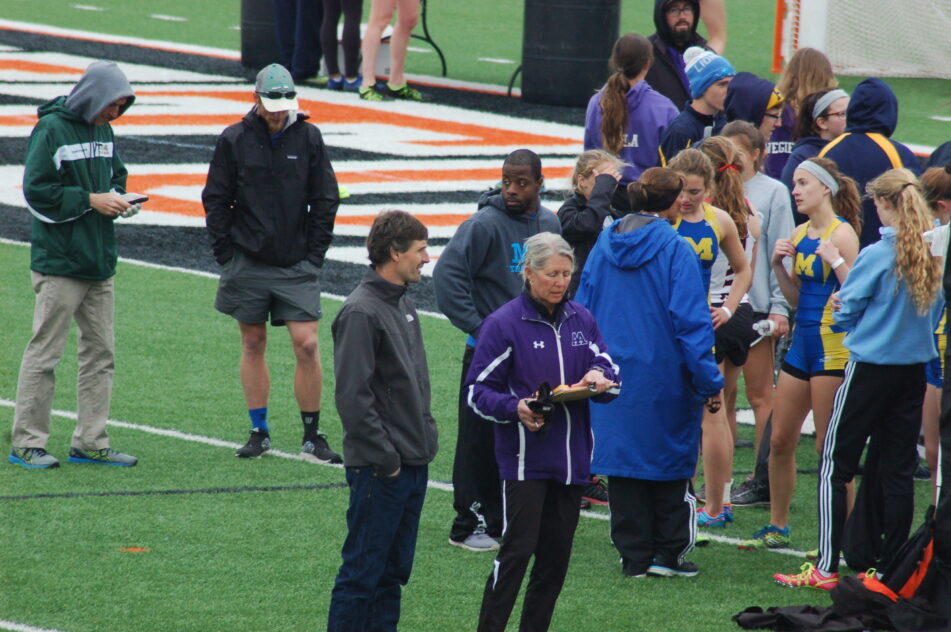
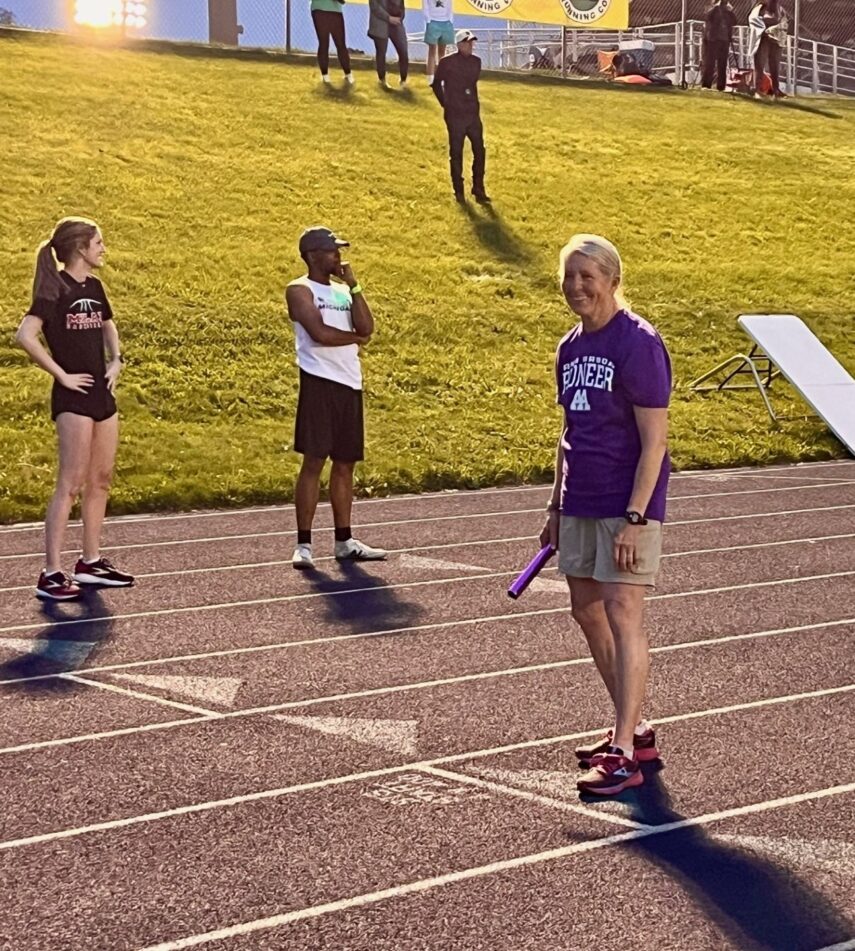
She has been the girls’ head coach of both cross country and track at Pioneer High School since 2015.
“Nancy’s knowledge of the sport and her care for the athletes is an inspiration to all,” says fellow Pioneer coach Maureen (Mo-Jo) Murrett. “She shows up every day shining a spotlight on her teams, looking for ways to help them succeed. It’s never about her.”
What drew you to coaching cross country and track at Pioneer, and what has kept you passionate about it over the years?
When I was in high School, there were not many sports opportunities for girls. We had one track meet a year: a county meet. The events included 50 yd dash, 75 yd dash, 100 yd dash, 220 yd dash, and 440 yd dash, plus field events: high jump, running long jump, standing broad jump, and softball throw. In my freshman year, I did the standing broad jump and ran the 50-yard dash.
A teacher at another school, Mr. Shelley, decided to start a girls’ track club the summer after my freshman year, but did not invite me to join. I called him up during the summer and asked if I could join the team, which I did in the fall of my sophomore year. This teacher did not get paid for coaching the team. If he had not decided to start this club, I would never have had an opportunity to run track.
Because he gave me the opportunity to chase my dream, I decided to give my time to help others, too. I started teaching at Bowling Green State University in the fall of 1980 and volunteered to coach both track and cross country.
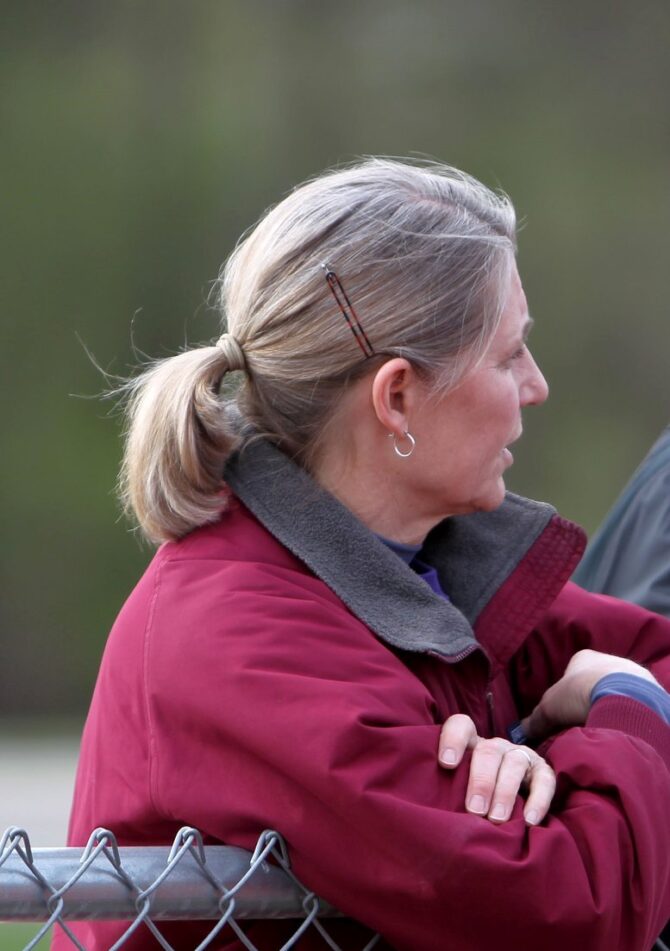
After I got married and moved to Ann Arbor, I volunteered to help coach the Tappan Middle School track teams while my daughters attended Tappan from 2004 to 2009. After my older daughter graduated from Pioneer, I became the assistant girls’ cross country and track coach at Pioneer. When Coach Westfield passed away in the summer of 2015, I became the girls’ head coach of both cross country and track. I just love coaching the girls and watching them grow into better runners and wonderful young women.
Do you prefer one sport over the other?
As a runner, I much preferred running track. As a coach, I much prefer coaching cross country. In cross country, everyone races the same distance. It is so much easier to work with kids when they are all doing the same thing. In track, there are so many different events; it is much harder to come up with workouts for them all.
Are you a runner? Of which personal races/accomplishments are you most proud?
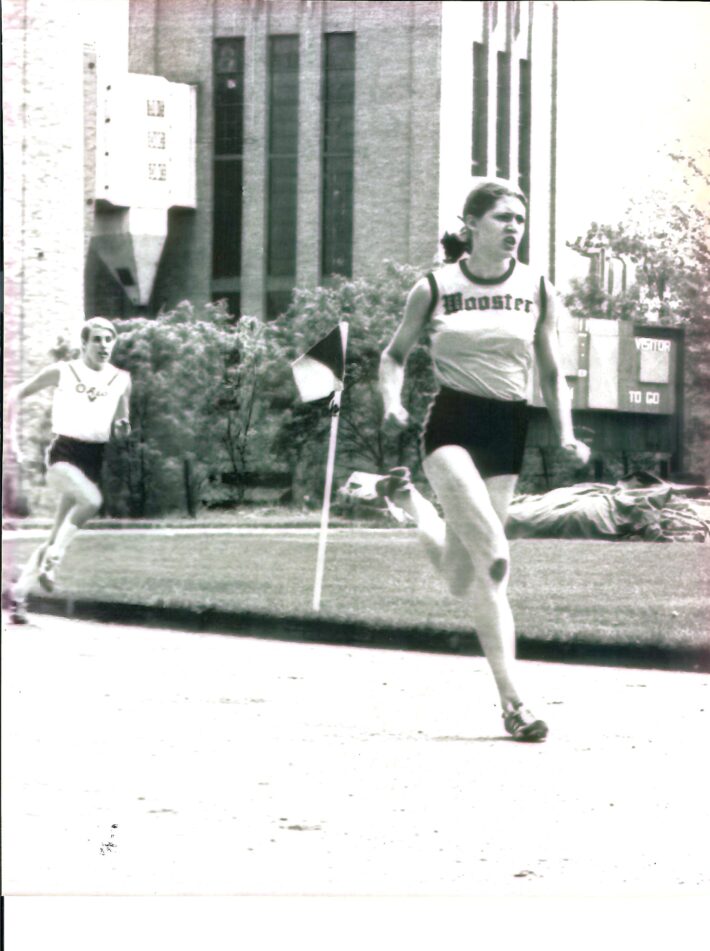
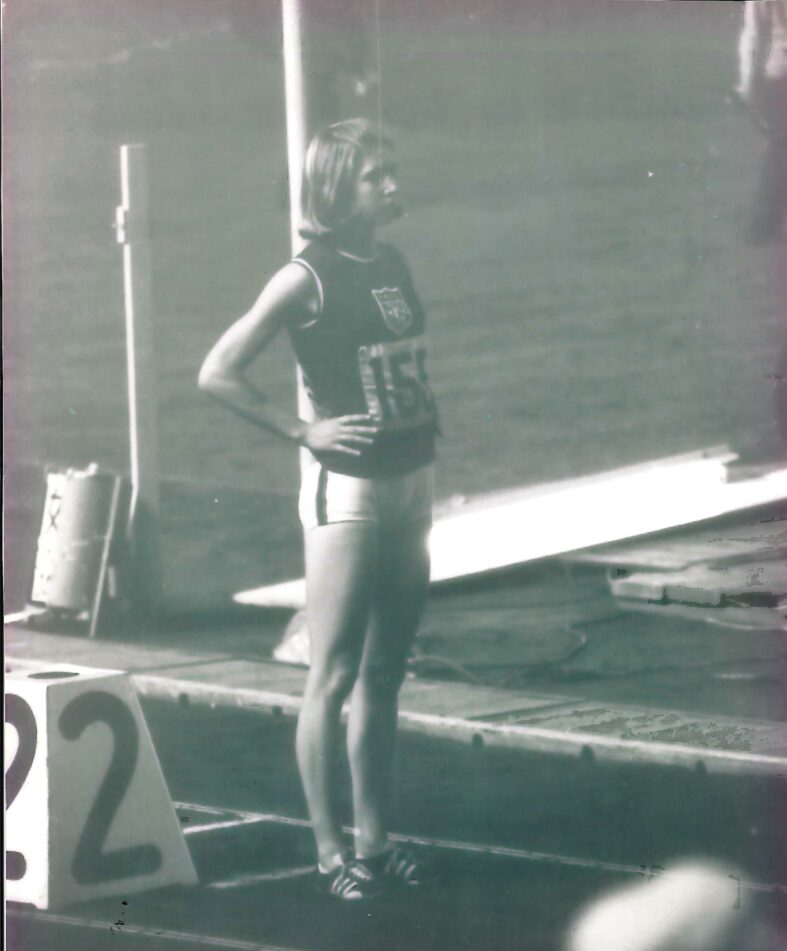
I watched the 1964 Olympics on TV and decided that I wanted to run. I was so lucky that Mr. Shelley decided to start the track club. I went to the Girls 14-17 AAU Nationals in 1967 and won the 880 yd run. I also ran in the women’s division and placed 5th in the 800m. In 1968, I qualified for the 1968 Olympic Trials. At the trials, I finished 4th in the 400m – but only three women made the Olympic team. Also, 1968 was the last year the Olympics did not have the women’s 4×400 relay. In 1969, I finished 2nd at the Nationals in the 800m run and made the U.S National team that ran against the Soviet Union in Los Angeles. The team then went to Europe, where I competed in Germany, England, Norway, and Poland, and finally competed in Japan. In 1972, I ran in the Olympic Trials, where I finished 4th again, this time in the 800, and missed the Olympic team by one place. In 1973, I qualified for the U.S. National team in the 800m and competed in the Soviet Union, Italy, and Senegal. I also made the U.S. team that competed in the University Games in Moscow.
Naasza Dudek just won the national championship—can you walk us through what you saw in her as an athlete when she first joined your program, and how you’ve watched her develop?
We were lucky enough to have Natasza’s older sisters in our program for four years while Natasza was in grade school. I never met Natasza while her sisters were at Pioneer, but we knew that she was a runner and ran for the Ann Arbor Track Club. We also knew that she was really fast. After her last sister graduated from Pioneer in 2021, Natasza and her mother went back to Poland. We hoped that Natasza would come back to Pioneer for high school. We were so happy when we got an email from her mother indicating that Natasza was enrolled in Pioneer at the end of the first week of school in 2024. Natasza missed our first meet of the season, but was our first finisher in our second meet. No one from the Pioneer team has beaten Natasza in a cross country race. Natasza has a drive that is pretty remarkable. In her freshman year, only three girls were able to beat her, and they were all seniors.
Your program has produced numerous top-level runners. What do you believe are the key principles or practices that have made Pioneer’s cross country and track teams so consistently successful?
We try to treat everyone on the team the same, from the fastest to the slowest. Everyone is important to the team’s success. Once we started having success, I think the upcoming runners saw that and bought into it. I think the new runners sense that if they work hard, they can have success, too.
How do you balance pushing athletes to reach their potential while also ensuring they maintain a healthy relationship with the sport and avoid burnout?
With the success that we have had, we really do not have to push the athletes – they push themselves. They see others having success, so they push themselves to do better. I think we are very open with the athletes, and they are not afraid to talk to us about what is going on. If someone is having a bad day or struggling with something, most will come to the coaches and let us know what is going on. We can then make any necessary adjustments for that day or week, etc.
What’s a typical training week like for your varsity athletes, and how do you individualize training plans for runners with different strengths, goals, and abilities?
Our training is very basic. We usually run a hill workout on Mondays. Everyone does the hill workout, but some run more repeats than others. On Tuesdays and Thursdays, we have the athletes run a distance run. These runs can vary from 2 miles to 6 miles. We put the athletes in groups depending on their abilities. The stronger athletes run longer and faster. The newer athletes run shorter and slower. On Wednesdays, we usually run an interval workout on the campus cross-country course. The intervals range from 400 to 1200, with short rest. We again put the athletes in groups of similar abilities – the stronger athletes tend to run more and faster intervals than the newer athletes. On Fridays, we generally have the athletes run a little longer than on Tuesdays and Thursdays if we do not have a competition on Saturday. Saturdays are again steady runs similar to Tuesdays and Thursdays. We always have the athletes take off running one day a week.
Can you share a moment in your coaching career—perhaps a race, a breakthrough, or a challenge overcome—that particularly stands out to you?
I think winning the State Championship in 2017. This was my second year as head coach after Coach Westfield passed away. We had an incredible team that year. We qualified athletes for the state meet in every running event and all 4 relays. Unfortunately, we did not have any athletes qualify in any field event. However, we had athletes score in six of the eight running events, and all four relays placed. The team title came down to the last event of the meet, the 4×400 relay. We were leading Oak Park by 10 points going into that last event. Oak Park was the prohibitive favorite to win the event and get 10 points. Thus, Pioneer had to finish no worse than 8th for one point. We were seeded 2nd in the final to Oak Park. However, our second-fastest girl was injured and could not run. At the last minute, we told the alternate athlete that she had to run. Luckily, the girls came through with a 5th-place finish and their fastest time of the year to snag the State Championship Team title by four points over Oak Park.
Beyond physical training, what mental and emotional skills do you work to develop in your runners, and how do you approach that aspect of coaching?
We have lots of team talks with the girls. These talks cover topics such as fueling the body, pressure before big competitions, and more. We also talk to each girl individually about their competitions, what they should work on in a specific race, and how they can improve.
How has your coaching philosophy or approach evolved over your years at Pioneer, and what have your athletes taught you along the way?
I have learned never to underestimate any athlete. I have seen many athletes come out for the team that at first did not appear to have much talent. However, after a couple of years, some of these athletes have surprised me and become some of our best competitors. One of my favorite athletes made our top seven in cross country by her senior year, after her best finish as a freshman was 13th on the team. In her sophomore year, her best finish on the team was 9th, and in her junior year, it was 8th. From her freshman year to her senior year, she improved her best time by over 3 minutes. Our team made the State Meet in cross country that year. The night before the state meet, we had a team meeting of the top seven girls. The girl stated that her dream had always been to run in the state meet, and it was finally coming true!
What role does team culture play in your program’s success, and how do you foster it among athletes who may be competing for varsity spots?
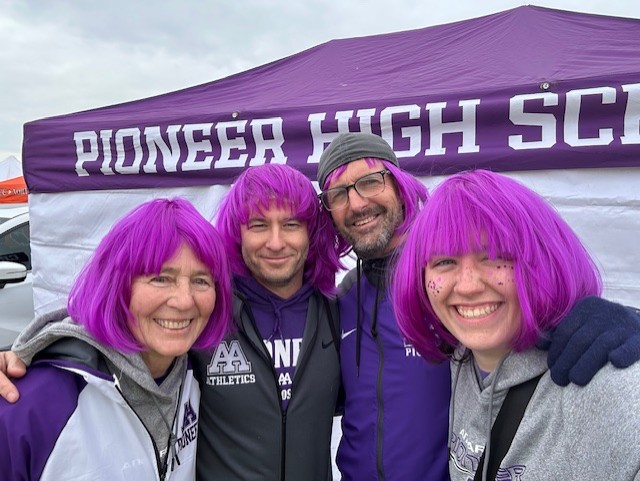
Team culture is our top priority. We try to treat everyone on the team the same. My favorite thing we do is give out an Athlete of the Meet award for each meet. This person is generally not the person who won a race or who scored the most points. This person had really good personal performance. We celebrate when someone breaks 30 minutes for the first time in cross country. We celebrate someone who breaks six minutes in the 1600 for the first time.
The other thing that we do is we have a circle at the beginning of each practice. In this circle, each athlete states her name and grade and then answers the question of the day. The question of the day varies from ‘What is your favorite vegetable?’ to ‘What is your favorite superhero?’ to ‘If you were an animal, what would you be?’ These questions are meant to be light and funny. We have each athlete state their name and grade so that everyone on the team learns everybody’s name. Partway through the season, we start having athletes go in the middle of the circle and try to name everyone on the team. This used to be fairly easy. Now that we have over 80 athletes on the track team, it gets pretty difficult!
For athletes who may not be contending for championships but are committed to improvement, how do you define and celebrate success?
We define success as self-improvement. We keep track of how each athlete does at each competition. If an athlete improves, we make sure to emphasize it at the first practice after the competition. We also acknowledge when someone runs more repeats in practice than they ever have, or who runs further than they ever have.
What advice do you give to runners who are transitioning from high school to collegiate running, both in terms of athletic preparation and life beyond the sport?
I think the biggest hurdle in jumping from high school running to collegiate running is the much greater competition at the next level. Most athletes who go on to compete in college are moving from being a big fish in a small pond in high school to a little fish in a big pond in college. It takes time to adjust to the new training and competition, but if they really want it, they can be successful.
Looking back at your coaching career, what do you hope your legacy will be, and what do you want former athletes to take with them long after they’ve finished running?
I hope that athletes who have come through our program leave with a sense that the experience was positive and enjoyable. Sports can be pretty intense, but I think they’re supposed to be fun too. I hope they learned that they can push themselves to do things that are hard and that they never thought they could do.
Be the first to comment