

Danielle Capitan, a German teacher at Pioneer and Huron High Schools, earned a statewide award for her work supporting language programs
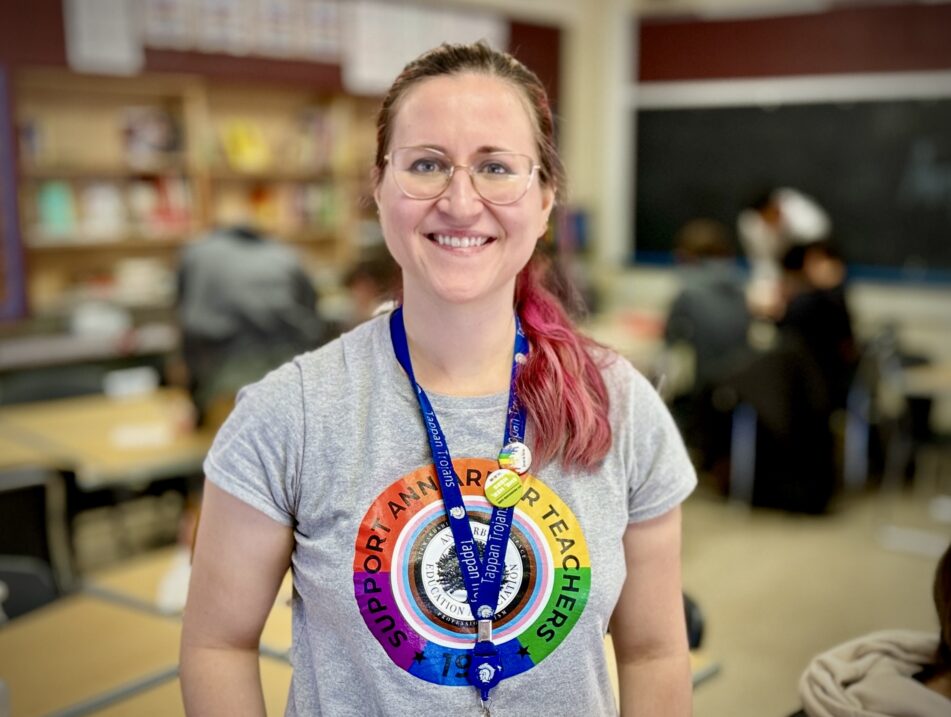
When Danielle Capitan received the Distinguished Service Award from the Michigan World Language Association at their annual conference in Lansing on October 24, her recognition was more than just an acknowledgment of her teaching. It was a celebration of her tireless advocacy for something she believes every student deserves.
“I’ve always wanted to dedicate myself to service in public schools, because I believe that every student deserves a holistic education where they can learn alongside their community peers,” Capitan says.
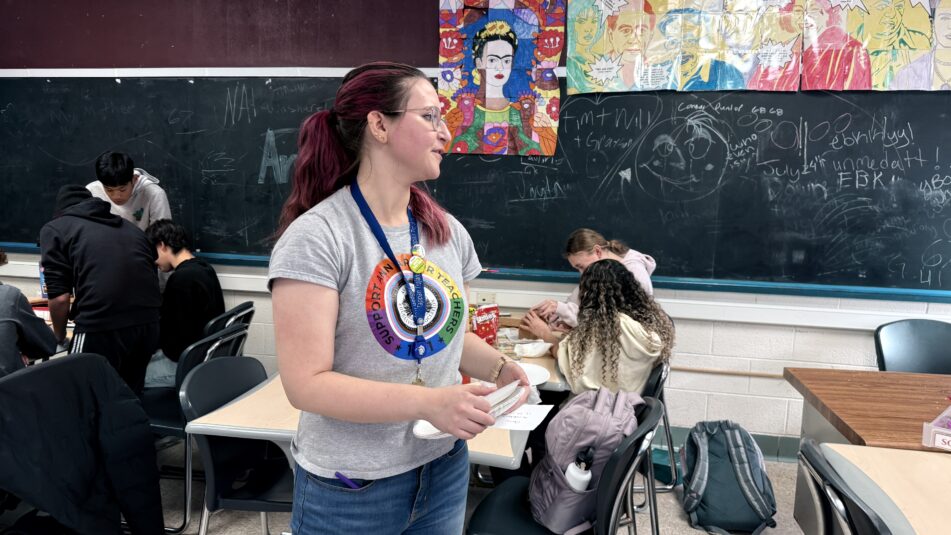
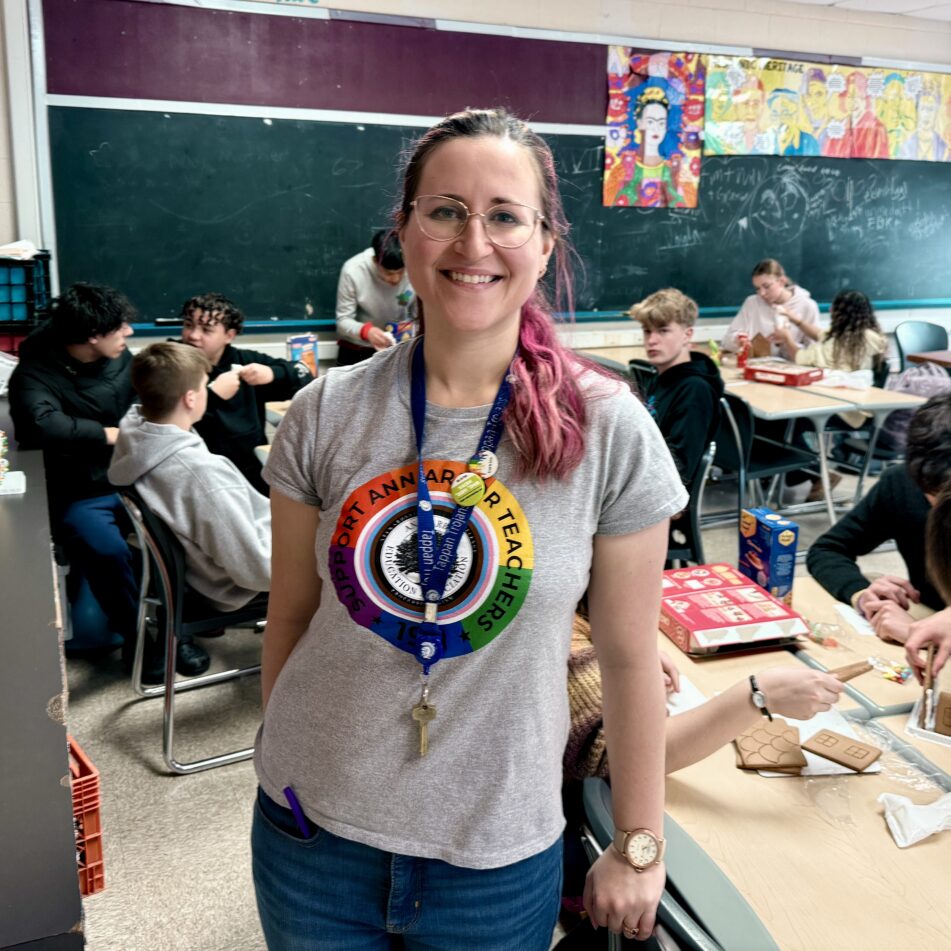
As a German teacher at both Pioneer and Huron High Schools, she has witnessed firsthand the challenges facing language programs across the state.
“I’ve attended conferences with teachers both statewide and nationally,” she says, “and the story is frequently the same: as austerity measures for school funding increase, electives are often one of the first things to be cut.”
The irony isn’t lost on her. Despite two levels of World Language being a graduation requirement in Michigan, these programs are still treated as expendable electives—a classification that Capitan finds troubling given what students actually gain in her classroom.
More than just vocabulary
For Capitan, teaching German isn’t simply about conjugating verbs or memorizing vocabulary.
“We teach essential communication skills,” she says. “Students in our classrooms learn how to respect cultures and traditions different from their own, as well as learning how to communicate across language barriers. These are essential skills in a global economy as well as on a personal, community level.”
Her passion for advocacy stems from watching her colleagues’ dedication. As she says: “I advocate for World Language because I watch my colleagues build programs and experiences to introduce students to worlds outside of their classrooms, and they are so amazing at what they do.”
A local history lesson
Ann Arbor’s connection to German language education runs deeper than many realize, Capitan says.
“A fun fact about German language programs is that many were implemented in the early days of public school because many communities across the United States spoke German and wanted their children to continue to learn German,” Capitan says. “Ann Arbor itself had German neighborhoods where people and businesses spoke only German.”
That changed when English-only policies took hold, making English instruction the default despite the reality that millions of students were and are multilingual. But Capitan sees her classroom as a space where this multilingual heritage can shine because they’re already quite masterful in their language learning skills. Those skills aren’t as frequently highlighted in English-only spaces, she says, which is why she enjoys the knowledge and experiences her students bring into the classroom.
Why German?
Having studied multiple languages at the university level, Capitan has found uses for all of them throughout her life. But German, she says, offers some unique opportunities for students.
Her program includes enriching field trips to the Chicago German holiday market, attendance at the University of Michigan’s German Day, and a three-week exchange program with sister schools in Tübingen, where students live with host families, attend German school, and experience authentic cultural immersion.
The practical benefits extend beyond high school.
“Germany offers low-cost/free tuition at highly-ranked universities as well as many language study abroad programs,” Capitan says. “Germany also has the fifth-largest economy in the world, where knowing even some German can provide students with future career opportunities. And knowing German is beneficial on transcripts for college admissions in addition to resumes for those interested in business and tech industries.”
Her message to students is straightforward: “I love teaching German and encourage students who are interested to give it a try.”
After nine years at Tappan Middle School, Capitan recently returned to the high school level.
“It’s been a bit of an adjustment moving from a middle-school space back to a high-school space, but I’m really enjoying seeing the students I once had in middle school and how much they’ve grown,” she says. “My colleagues are also incredibly supportive if I ever need anything.”
Fighting for funding
Beyond her classroom, Capitan’s advocacy work addresses the root of the problem: funding.
“The most impactful initiative I’ve been volunteering for at the state level has been the Invest in MI Kids initiative,” she says. “I, along with many of my colleagues, have been collecting signatures for a ballot initiative that will restore critical funding to public schools.”
Meanwhile, Capitan continues expanding her own expertise, and is currently enrolled in Western Michigan University’s Master’s program for Teaching English as a Second Language.
She encourages anyone interested to visit the Invest in MI Kids website and consider signing if they support the cause.
Be the first to comment