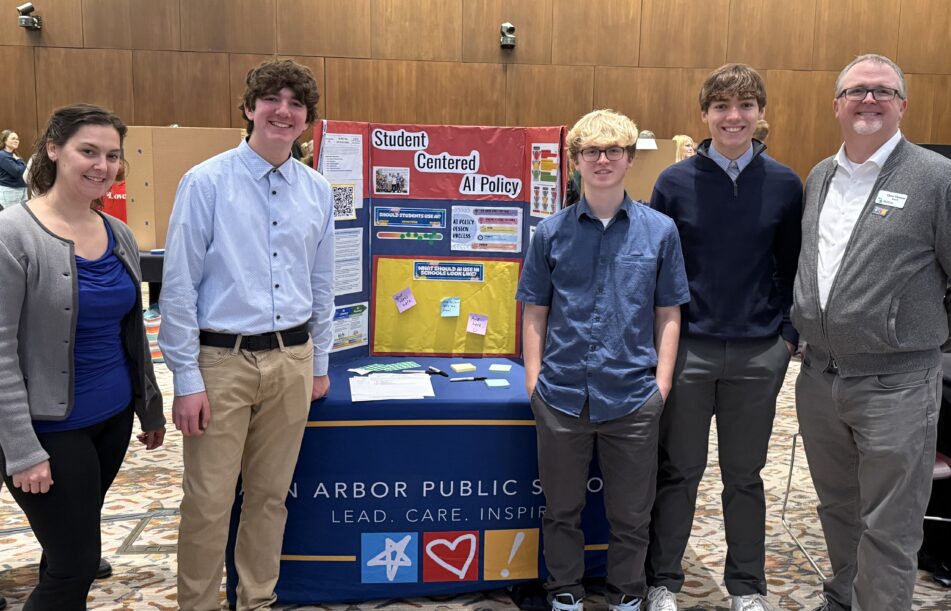
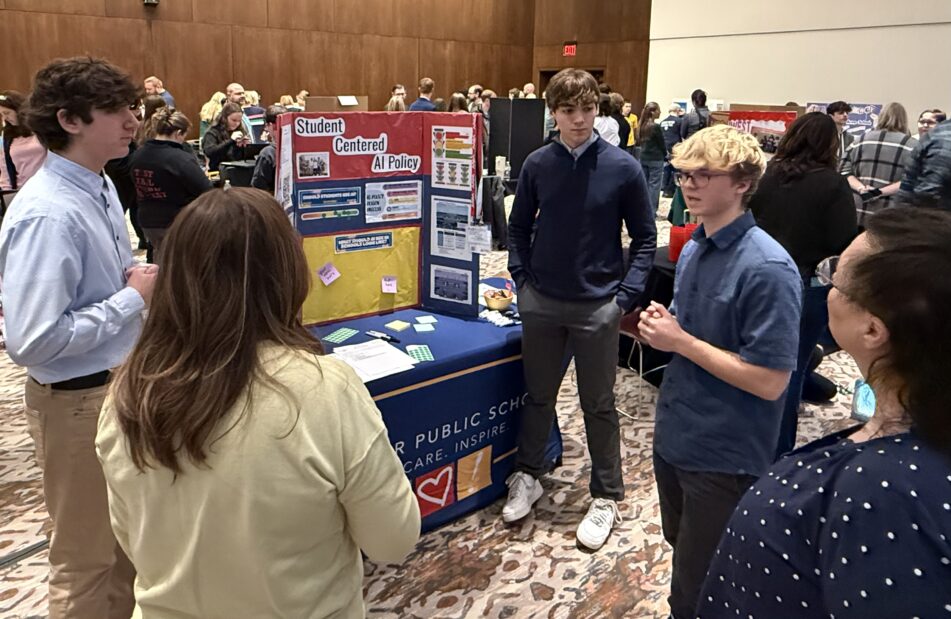
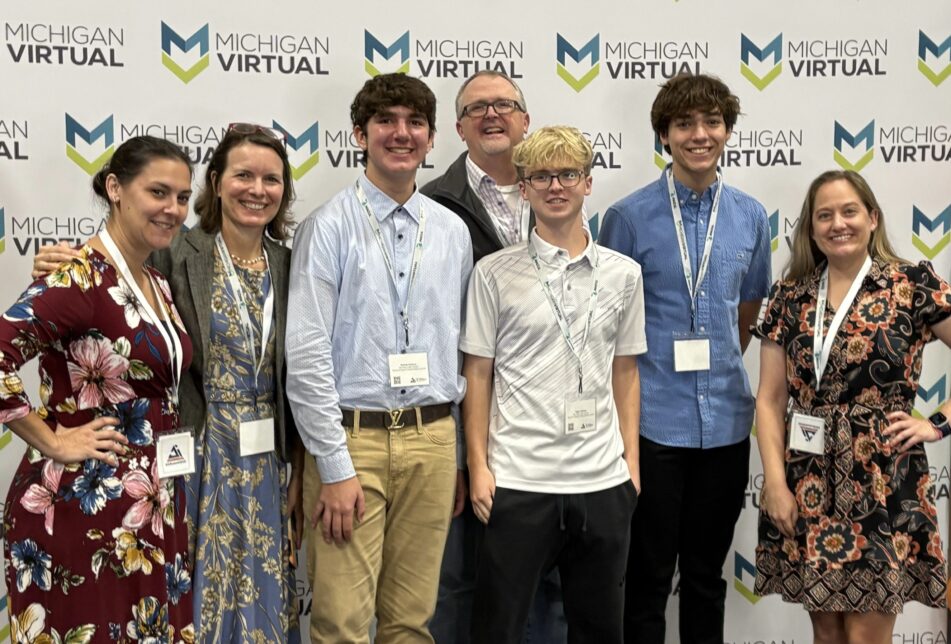
One of the most discussed topics in education in recent years is the use of Artificial Intelligence in classrooms. A pair of Huron 12th graders and a Skyline 11th grader got the chance to share their knowledge and experiences around developing the district’s draft AI Bill of Rights at the 2025 Student Technology Showcase at the Michigan State Capitol this week.
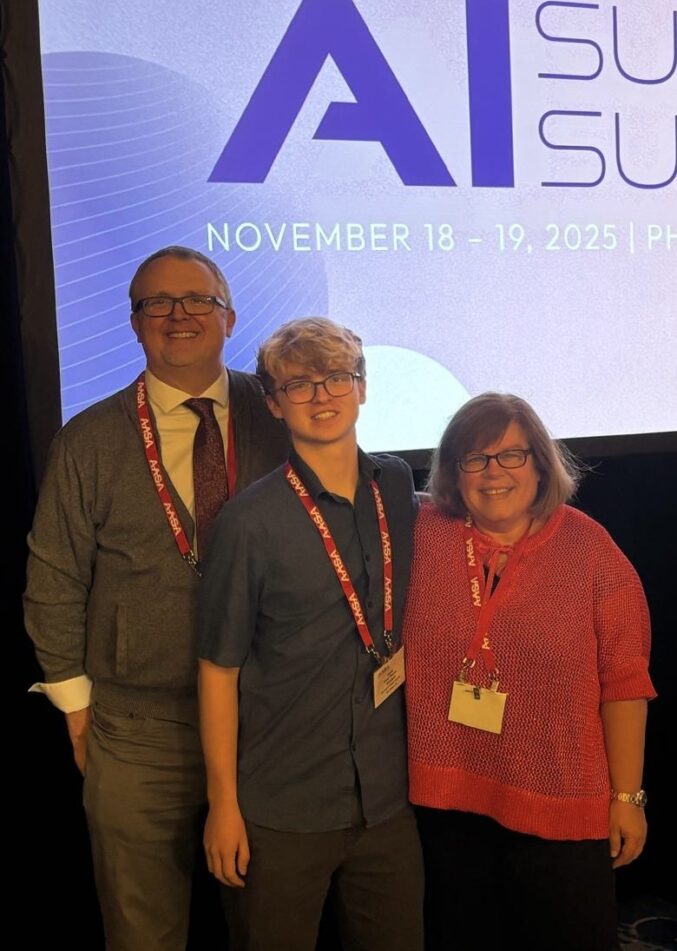
This fall, Huron’s Max Greineder and Isaac Thomas and Skyline’s Roman Gattuso have gotten the chance to talk with superintendents and other education leaders from across Michigan and across the country at several conferences. All three say it has been a great experience sharing what AAPS students developed and getting feedback from other districts. “We got to hear from so many different people across the state and I learned so much about new tools that existed that I didn’t even know existed,” says Greineder. “So both being able to speak and learn from other people at these conferences is super awesome.”
Scarlett Science teacher and AAPS Instructional Technology Consultant Chris Thomas has worked with students the last couple of years on developing this bill of rights. He says it’s a unique experience for high school students to be seen as experts as they are meeting with district leaders, teachers and elected officials and help shape policies for schools across the country. “They can share their expertise, their knowledge, their understanding, but also kind of dream it forward, as a public school kid in Ann Arbor, what AI literacy skills do we all need to build up, so they’re positioned for their future,” Thomas says.
The students say they’ve also gotten positive responses from AAPS teachers on the draft plan. They say the work over the last two years has helped clear up some of the gray area around when it is ok to use AI and areas that it is inappropriate for students and staff to use the technology. They also see student buy-in since it was developed with a student centered focus.
Greineder says the AI Bill of Rights includes examples that administrators and teachers might not have even known students were using. “We tried to sort of uncover those and put that in the document because we think if we can lay out some of the more productive uses that students have for brainstorming or for aggregation of resources, then those would be the ways that assignments would be most helped but not replaced by using AI,” he says.
While every school district is struggling with what to do with AI, AAPS is one of very few that have put students at the center of developing a policy to deal with the technology. The district’s work started with the White House sharing an AI Bill of Rights for schools back in 2022. This then led to individuals and small groups across the district spending time learning more about AI and surveys being sent to students. In 2023 students that responded to the survey with interest in diving deeper into creating a policy then began working on drafting the AAPS AI Bill of Rights.
The current plan is the seventh draft version of the AAPS AI Bill of Rights. Isaac Thomas highlights the policy is designed to evolve, just like AI does. “We like to think our policy does too, nothing is static as long as we keep developing this cycle of taking input and bringing it into this policy making we think it will keep improving with the pace of AI,” Thomas says.
Instructional Technology Consultant Kaytee Bellows agrees that the AAPS AI Bill of Rights is a living, breathing document with a work flow designed to stay current with AI advances. “We have to constantly keep reviewing what’s going on around us and make sure that our student’s privacy and safety are number one and as trends change as software changes so do we, so do our policies and so it has to be revisited at least yearly.”
Be the first to comment