Ann Arbor PTO Thrift Shop donates over $50K to PTOs, clubs, field trips and more

PTO Thrift shopper

The Ann Arbor PTO Thrift Shop is located at 2280 S. Industrial Highway. The shop sells furniture, clothing, books, home goods, electronics, craft supplies and more.

By Tara Cavanaugh 

The Ann Arbor PTO Thrift Shop’s mission is to support the schools. And three times each year, its support comes in the form of a small but valuable slip of paper: a check.

On Jan. 29 the shop distributed $50,020 total between all 33 of the Ann Arbor Public Schools (see comprehensive list below). The money supports enrichment opportunities for students in the form of field trips, sports clubs, academic supplies, camps and plenty more.

“It’s exciting to celebrate a great year in 2012 and immediately start another with this kind of vigorous funding,” said Ann Farnham, the shop’s executive director. ”What a couple of high notes for our shop and for our AAPS community.” Continue reading

Learning centers meet kindergarteners’ individual learning needs

By Tara Cavanaugh

Peek inside any kindergarten classroom in the Ann Arbor Public Schools, and you’ll likely see small groups of students working intensely at different tables. Whether they’re arranging letters or patterns of blocks, the 5-year-olds are clearly focused on their learning.

It’s called “center time,” and due to its wide variety of benefits, it’s one of the most popular learning strategies in kindergarten. Continue reading

PHOTOS: Halloween parties, parades at AAPS

By Tara Cavanaugh

Not all of the Ann Arbor Public Schools celebrate Halloween, but the ones that do are worth checking out. The students were especially creative with their costumes this year. One kid even carried his own head in a jar!

Slideshow photos were taken at Eberwhite, Burns Park, Pattengill and Logan elementary schools Oct. 31.


Blooming AAPS gardens buzz with life


By Tara Cavanaugh

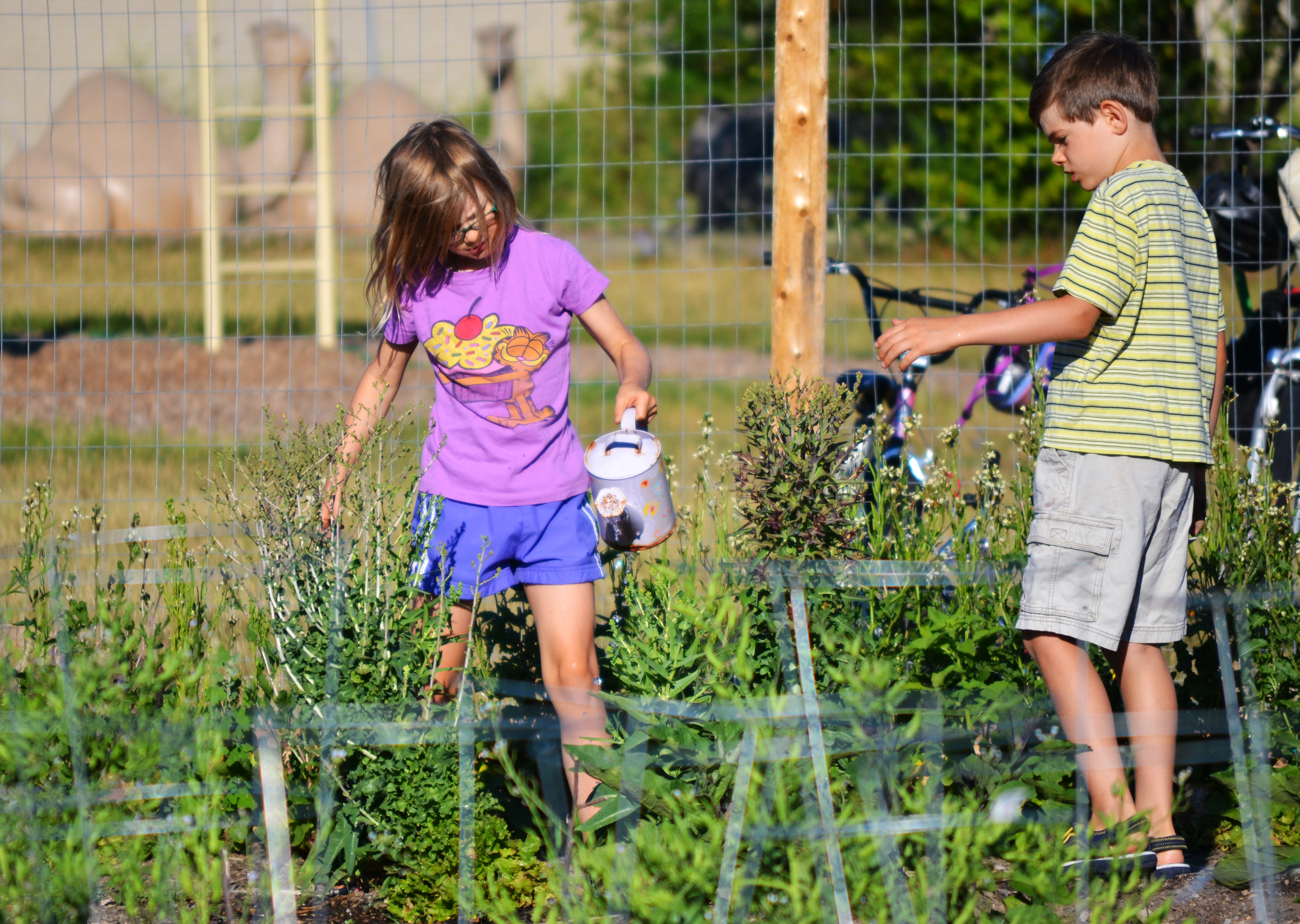
It’s smack in the middle of summer, in the middle of July, and our schools are still under a scalding sun. Playgrounds stand empty. Buildings are dormant. The bells haven’t rung for weeks.

But if you stop to really listen, you’ll hear gardens at the Ann Arbor Public Schools buzzing with life.  Continue reading

AAPS celebrates Bike to School Day

By Tara Cavanaugh

A parade of bike riders rolled in to Wines Elementary Wednesday morning. Tikes on tiny bikes with training wheels. Kids in bike buggies, enjoying the ride. Tandem bikes. Junior-sized mountain bikes. Grown-up sized bikes ridden by moms and dads.

The unusually high bike traffic was due to Bike to School Day, celebrated nationally for the first time this year on May 9. The event is sponsored by the National Center for Safe Routes to School, which also organizes Walk to School Day in October. Continue reading

It’s springtime in the Tappan Garden

Susan Baker's life science class works in the garden April 20.

By Tara Cavanaugh

You can learn a lot by playing in the dirt.

You can learn about starting seeds, pulling weeds, the life cycle and the compost pile. Now that spring is in full swing, Tappan Middle School students are learning all that and more at the Tappan Garden. Continue reading

Photos: AAPS celebrates March Reading Month

Children's author and illustrator Patricia Polacco shared the stories behind her books at Burns Park Elementary March 28.

Swinging hula dancers, a reading dog, and live storytelling from world-famous authors: our schools sure know how to make March Reading Month interesting.

But even though the month was filled with fun activities, there was plenty of good old-fashioned reading time too.

The AAPS News captured just a sliver of all the great Reading Month events. Check out the slideshow below to view the visits from author/illustrator Patricia Polacco, Colby the reading service dog, a 5,300 book donation to an orphanage across the globe, and a luau that happened the same day as the tornado. Continue reading

Sparking the love of language

Each lesson, the U-M student teacher selects elementary students to lead the class in song. These four third-graders led the class in singing the Spanish alphabet on Tuesday, March 6 at Bryant Park.

By Tara Cavanaugh

Twice a week, third and fourth grade classrooms at AAPS elementary schools make a transformation that changes everything: no English is allowed. Only Spanish.

The transformation is part of an educational partnership between AAPS and the University of Michigan. U-M students step into AAPS classrooms and give a 30 minute, Spanish-only lesson. The goal of the immersion lesson, called the Ann Arbor Language Partnership (or A2LP for short), is to give students a foundation for learning language skills.

Continue reading

Elementary classroom initiatives teach students to honor the Earth

District focuses on sustainability

EASE logoWhat: An Ann Arbor Public Schools program called EASE: Environmental Awareness and Sustainability Education began this school year. The four-year program is designed to audit energy use in all buildings and decrease district energy expenditures by $324,000 per year.
Details:
The EASE website is:  www.a2schools.org/ease. There is also a hot link to the site at the bottom of the district homepage www.a2schools.org.  Visit to view information about each school, energy audits done last fall and ongoing information about sustainability efforts.

•••••••••••••••••••••••••••••••••••••••••••••••••••••••••••••••••••••••••••••••••••••••••••••••••••••••••••

From AAPSNews Service

Related story: Lawton Elementary cleans up, recycles their lunchroom

Angell EcoClub

Tom Yaeger and members of the Angell Elementary School Ecology Club show their new compost bin on the school grounds.

Fifth-graders in Tom Yaeger’s Ecology Club at Angell Elementary are aiming to lessen their carbon footprint.

The 23 club members have the right idea: They’re finding ways to encourage sustainability, recycling and using fewer resources and spreading the word throughout their elementary school community.

It is one of many grass-roots sustainability programs going on in and around the Ann Arbor Public Schools. Although individual teachers create their own programs, they all tie nicely into a districtwide initiative: the EASE initiative – Environmental Awareness and Sustainability Education, which began this year.

EASE conducted audits of all buildings in the fall and offers ongoing information about sustainability efforts by individual school (www.a2schools.org/EASE.)

At Angell, the Ecology Club meets each Wednesday, members giving up their recess time to meet and about energy saving ideas, recycle used milk cartons from around the school and take cafeteria vegetable clippings out to a newly created compost pile.

“It starts training the whole school – It’s pretty cool,” said fifth-grade teacher Tom Yaeger, who has taught at Angell for 23 years and organized the club four years ago. About half of fifth-graders take part in the volunteer effort and Yaeger said most members come weekly. “A big part is empowering kids to know they can do something about it. That small steps do matter. It’s a powerful feeling they get.”

Students call it the “EcoClub” and this year, they have tackled three independent projects: Food improvement, energy and recycling/composting, which started this year. “They fill a 96-gallon (recycling) cart,” Yaeger said. “It fills up in four days, they do so much recycling.”

EcoClub member Tony explained about an energy contest held at the school this year. They made presentations to each classroom about energy consumption and where we get our energy. “We tried to teach the kids in the school to save energy,” he explained. After two weeks of the “Lights Out” campaign, the first-graders won. Winners got “reward bags:” recycled notebooks they made from reused paper and decorated covers in a padding press, and recycled pencils.

Addy is on the Food Improvement Committee. She explained that members did a silent survey in the cafeteria, seeing what types of foods students were selecting and what was thrown away. “Our goal is to have 50 percent of the kids make healthy choices,” she said.

Angell fifth-graders got involved with the club for a variety of reasons, from following the lead of friends and thinking it sounded like fun, to taking environmental issues seriously. “I’ve always been really interested in helping the environment,” Zoe said. “That’s why I joined the energy group.”

Teacher’s passion for sustainability transfers to students

At Burns Park Elementary, fifth-grade science teacher Sandy Kreger is passionate about the environment – so much so that she spent two years putting a green addition on her home.

Burns Park green

Fifth-graders at Burns Park Elementary in front of one of the boards holding their "green pledges" which were written as part of their sustainability unit created and taught by teacher Sandy Kreger.

She took a “green” high school unit she got at a workshop and modified it for her elementary students. The Burns Park fifth-graders learned where things are made, what is green and what they can do to be green. They took part in a life-size timeline of biodegradability of all types of items, learned about recycling and composting and did a poster project using old recycled sheets and natural materials – such as ketchup, mustard and berries – as paints.

They took green pledges as part of the process. “This year, I thought it would be really nice for them to take some responsibility,” Kreger said of the pledges. “This is a way they can make a difference.”

“It was wonderful – I could teach it all year,” she said of the unit, which enhanced the students’ regular, required lessons.  “Students felt like they had a voice – like they could do something about it. I try to concentrate on things they can really help to change.”

Kreger uses the Be Green retail store for materials – and used many items from the store when she did her own home-improvement project. During her project, she considered what she could do to involve students. She had a green builder come into her classroom and, when her project was completed, she invited her students and their families to her home at Halloween to see the addition.

“The biggest lesson I’ve learned is how I still have things to learn,” she noted. “I’m still learning how to reuse people’s stuff.”

Market Day: Burns Park 5th-graders learn about life as entrepreneurs

By Casey Hans
AAPSNews Service

A recession, you say? You’d never know the country has been in an economic slump by visiting Market Day at Ann Arbor’s Burns Park Elementary School.

It looks more like a stock market trading floor, as fifth graders market and peddle their handmade wares to staff, parents and other students who get to do some shopping with Burns Park dollars.

Market Day at Burns Park

Fifth-graders make smoothies as their product to sell during Market Day at Burns Park Elementary.

Fifth-graders learned all the ins-and-outs of business during an economics unit taught by Sharon Pryce.

“There’s a lot of buzz going on,” said parent Doug Forman, whose daughter was working in a booth selling hand-made robots. “They get a sense of what it takes to plan and run a store. It’s pretty neat.”

The optional Market Day has been going on at Burns Park for more than 10 years, and it is wildly popular, Pryce said. Some 58 of her 72 students took on the project, which teaches them soup-to-nuts skills of developing an entrepreneurial spirit and learning about the economy, the stock market and basic money management.

Students do all of their research and work on their products at home, on personal time.

“It’s a big thing here,” said Pryce, who was serving as banker, handing out between $10 and $20 of Burns Park dollars to each student to keep the economy moving. “I don’t push it a lot – it sells itself.”

Market Day at Burns Park

Students shop for a deal during the annual Market Day event. Products for the day are designed and created by fifth-graders, who learn about the economy and how to market their wares.

She said because many of the Burns Park parents are already entrepreneurs, it’s a natural for many students to pick up the concept of running a business.

Market Day at Burns Park

Face painting was one of the many businesses run by Burns Park fifth-graders.

This year’s Market Day had dozens of booths including bottle cap magnets (students went to Red Hawk, which donated the caps), fruit smoothies, colorful tennis shoes decorated with duct tape, a Harry Potter shop selling wands and spell books and even young artists doing face painting. Pryce said some students do raffles and others tried silent auctions this year to boost sales. One group of entrepreneurs recorded and sold their own CD.

“We didn’t think we’d sell this many,” said fifth-grader Grace, who was in business with classmate Bess selling the bottle cap magnets. Their trade secret: Grace explained that they put decorative materials and then filled them in with Modge Podge.

Students must tally their sales numbers and teams with the best sales earn a prize, Pryce said.  “They develop business plans, so I know what they’re doing, and we encourage them to be great recyclers and reuse materials,” Pryce said. Students worked individually or in groups of up to three.

Market Day at Burns Park

One team made and sold robots.

Pryce said the day is a spin-off of a yearlong mini-society program that was whittled down years ago due to increases in mandatory grade level content expectations from the state.

Casey Hans writes and edits this newsletter for the Ann Arbor Public Schools.
E-mail her or call 734-994-2090.

Carpenter Elementary blends writing and science in school club

Leslie Science and Nature Center is sponsor, partner

Related story below: Wolf Family Foundation and the LSNC teams with 3 Ann Arbor schools each year on student-driven projects

By Casey Hans
AAPSNews Service

Take one measure of science and mix well with writing. Add a hands-on activity and you have a class full of after-school fun.

It’s all part of the Leslie Science and Nature Center After-School Writing Club at Carpenter Elementary School, where students are excited about learning, thanks to a partnership with the center. Up to 20 students participate in the club, which brings students in grades three to five together once each week.

Carpenter after-school club

Students write about their science experience in the Carpenter After-School Writing Club, sponsored by the Leslie Science and Nature Center.

“I enjoy this so much – I just love my kids,” said Lauren LaRocca who coordinates the club with Jessie Maxwell. Both are program coordinators for the Leslie Center.

Maxwell said the program has been well received. “It increases their aptitude for science, which is one of their long-term goals,” she said.

This is the club’s fourth year at Carpenter and Principal Ron Collins said students are invited to participate in the fall through recommendations from teachers who think students will benefit from the writing exercises and science units. Many of the projects blend with the school’s curriculum units.

“This enables us to attack science and writing at the same time,” Collins said. “It gives them an area of interest that they want to write about. A lot of it carries on afterward.”

Collins said his school first got involved with the Leslie Science and Nature Center after experiencing programs at the school funded through the Wolf Family Foundation. These included planting a wildflower garden in front of the building and doing water sampling.

At one recent after-school club session, students were pretending to be human versions of water droplets as they moved from one form of water to another through stations set up in the classroom: rain, clouds, river, glaciers, oceans or lakes, soil, groundwater and plants. Students then had an assignment to write about their experience and shared their findings with classmates.

Part of the lesson included water evaporating into the clouds and how it comes back to Earth. “ … And then the clouds picked me up again and I went into the ocean,” explained one student in his narrative.

Other Ann Arbor schools also partner with the LSNC in a variety of ways. At Northside Elementary, the center helps with a weekly writing program and there is a weekly science program at Pittsfield Elementary. At Wines Elementary, there is an after-school geo-caching club and Burns Park Elementary partners with the center for a Discover Nature Night each April, where students enjoy hands-on activities and live animal presentations.

Family foundation and LSNC teams with 3 elementaries on student-driven projects

Carpenter Elementary is one of three schools in the district that is touched each year by the Wolf Family Foundation through the Leslie Science and Nature Center’s in-school program for students in grades 3-5. Northside and King also benefit from the program thanks to a substantial grant that the family funds each year.

river sampling

Ann Arbor students conduct river sampling as part of the Wolf Family Foundation-funded projects in 2008 through a partnership with the Leslie Science and Nature Center.

The foundation is based in Ohio, but family members are encouraged to do community service wherever they live – and grants are awarded based on that service. They fund projects all over the world.

In Ann Arbor, parent and retired physical education teacher Jody Linn first became involved with the Leslie Center as a liaison for the Ann Arbor Public Schools Community Education and Recreation Department. Her interest carried over to service on the Leslie Center board, where she subsequently saw the benefit of having the center partner with the school district.

“I thought about my passion – and that’s kids,” said Linn, about why she got involved and proposed the programs for the Leslie Center. “I wanted to find a way to create an ‘aha’ moment. I like the Leslie Science and Nature Center because it’s a hands-on learning experience. You involve the teachers, build it into the curriculum and make it interdisciplinary.”

Linn said she is pleased to see the center creating a bond with students and teachers and believes the program has raised environmental awareness and built an interest in science.

The programs started with a $5,000 grant, which has expanded to about $10,000 each year. Money is funneled through the Leslie Center and benefits Ann Arbor students directly.

Each year, participating students do a culminating activity that they design as part of the Wolf Family Foundation-funded program. The program has funded such activities as river testing, analyzing the health of rivers and creating rain gardens, among others.

Carpenter native garden

Carpenter Elementary School students work on a native plant garden as part of the Wolf Family Foundation-funded 2009 projects through a partnership with the Leslie Science and Nature Center. (Photos courtesy, The Leslie Science and Nature Center)

Some of the most recent projects include: designing reusable water bottles and pins to promote water conservation at Carpenter, an annual Earth Day celebration at King Elementary and a river cleanup day at Northside Elementary. In previous years, Northside made videos for the Millers Creek Film Festival and created books for their reading buddies and Carpenter created “Save our River” T-shirts and planted a native plant garden outside of the school.

“Students get the interactive experience for three years in a row,” said Amanda Lodge, education director for the Leslie center who coordinates the programs with Linn. “It builds these connections with their schools.”

The program currently touches 40 classrooms and between 500-600 students each year, and most of those students are involved with the program over multiple years.

Linn said she is happy to continue recommending the program each year, and is always looking for ways to work with the LSNC staff to make them better. “We’re reviewing the program. How do we pay it forward?” she said. “How do we reach out beyond where we are now?”

Ann Arbor physician pleased to see ‘favorite teacher’ get top post

From AAPSNews Service

Dr. Eric Straka

Dr. Eric Straka – Pleased to see his former teacher come to Ann Arbor.

Dr. Patricia Green

Dr. Patricia Green – New superintendent recalls her former student and his fine work.

It is a small world, indeed, for Ann Arbor physician Dr. Eric Straka.

Straka was pleased to hear the news about Dr. Patricia Green, the newly selected superintendent for the Ann Arbor Public Schools, as he was a sixth-grade student of Green’s in Maryland – and she was his favorite teacher.

“She was the best teacher I ever had,” said Straka, an internal medicine physician who practices in Washtenaw and western Wayne counties. “She was really serious about teaching and really cared about the students’ learning. I still have vivid memories of her class.”

Green was hired by the district on Saturday, March 5, following finalist interviews by the Ann Arbor Board of Education. The community was also able to hear the incoming superintendent and another finalist candidate at a Friday night forum the evening before the decision.

After Green’s appointment was announced and reported upon through local media, Straka posted in a thread after an AnnArbor.com story, sending along a brief note of welcome, and noting the teacher-student connection: “… I think the board made a GREAT decision to hire you and I hope you enjoy living here. I look forward to seeing you around town,” he said in part of his post.

Straka was in Green’s class at Buckingham Elementary School in Bowie, Maryland during the 1977-78 school year, where he recalls astronomy and space as a big focus of her science teaching. He recalls “a lot of reading, book reports and quite a bit of artwork. She was such an energetic teacher.”

Straka is with the primary care physicians practice, Partners in Internal Medicine. He has been practicing medicine since 1996 and is a clinical instructor at St. Joseph Mercy Hospital and an adjunct clinical associate at the University of Michigan.

Green said she remembers Straka well and did not realize that he had landed in Ann Arbor and was practicing medicine here.

“Eric was such a terrific student who always wanted to do his best … I knew he had a tremendous future ahead of him,” Green said.  She recalled the sixth-grade space science projects the year when Straka and his classmates incorporated research, scientific theories and artistic expression.

“Eric’s work stood out and was so excellent that I asked him if I could keep some of it as a ‘sample’ to share with future 6th grade classes and with other teachers during professional development days,” she said.

Fifteen years after having Green as a teacher, Straka was doing his residency at the University of California, San Francisco when his mother saw an item in The Washington Post about one of Green’s career promotions and sent it to her son. He sent Green a note of congratulations and within two weeks “I got this huge package in the mail with all of my old artwork in it – and it was in pristine condition.”

Green recalled the time equally well.

“Eric sent me an announcement that he had graduated medical school and told me that his love of science went all the way back to our sixth-grade class,” Green said. “For a teacher, there is nothing better than that kind of compliment. I was so excited, I packed up all the projects he had made and shipped them off to him as I felt it was time they were reunited with their creator.

“Little did I know our paths would cross again someday here in Ann Arbor. I am thrilled,” she added.

Straka said this special teacher touched his life. “She made me a better student,” he recalled. “She was challenging and tough, but she really cared about the kids. I think Ann Arbor is lucky to have her.”

Straka is married to Gianna Lete and they have three children in the Ann Arbor Public Schools: one attends Tappan Middle School and two got to Burns Park Elementary School.

Burns Park Players presents ‘How to Succeed in Business …’

February performances to benefit Ann Arbor Public Schools students

From the Burns Park Players

The Burns Park Players gets ahead again this season with Frank Loesser, Jack Weinstock, Willie Gilbert, and Abe Burrows’s classic musical “How to Succeed in Business Without Really Trying.”

Burns Park Players

The Burns Park Players presents "How to Succeed in Business Without Really Trying." (Photo courtesy, Myra Klarman and the Burns Park Players)

With a cast and crew of 170, the annual Burns Park Players production raises money for the Ann Arbor Public Schools and involves dozens of residents from around Burns Park Elementary School.

Performances will be at 7:30 p.m. on Friday, Feb. 4; Saturday, Feb. 5; Thursday, Feb. 10; and Friday, Feb. 11. and at  4 p.m. on Saturday, Feb 12. All shows are at the Tappan Middle School Auditorium, 2251 E. Stadium Blvd., Ann Arbor.  The final dress rehearsal is also open to the public on Thursday, Feb. 3; rehearsal performance begins at 7:30.

Ticket sales begin at 10 a.m. on Wednesday, Jan.19. Reserved seating tickets are available for $15 at Morgan and York Market, 1928 Packard, Ann Arbor, or at the door one hour before the show. Premium seating tickets (which include reserved parking) are available for $30.  For information on purchasing premium tickets, call Ken Kollman at 734-478-0449.

Tickets for the dress rehearsal are $5 and available at the door only, beginning at 7 p.m.

Originally produced on Broadway in 1961, “How to Succeed …” ran for 1,417 performances and won seven Tony Awards.  In 1995 a revival starring Matthew Broderick and Megan Mullally ran for 548 performances, and a new revival is slated to open in March, 2011, starring Daniel Radcliffe.  Its songs, with music and lyrics written by Frank Loesser, include such hits as “I Believe in You” and “Brotherhood of Man.”

As the show opens in its New York setting, window washer J. Pierpont Finch happens upon the book “How to Succeed in Business Without Really Trying” and, following its instructions, lands a job in the mailroom and begins to work his way up the corporate ladder of WWWC.  Thanks to the book, Finch is rapidly promoted, outsmarts Bud Frump, and even secures secretary Rosemary Pilkington’s love.  But when his major advertising campaign goes awry, not even his trusty book can save him.

Community members from the Burns Park area are involved with the production ranging in age from 6 to 91.  Featured performers include Caroline Huntoon, Jeffrey Post, Ben Cohen, Lisa Harris, Fred Hall, Aviva Simonte, Talia Glass and Joel Swanson.

Longtime Detroit-area air personality Dick Purtan will make a special voice appearance.  And, in keeping with Burns Park Players tradition, more than 100 students from Burns Park Elementary School also are featured in the cast.

As in years past, proceeds from this show will benefit performing arts in the Ann Arbor Public Schools. Since its inception, the Burns Park Players has contributed more than $245,000 to the district and its students. Past contributions have included:

  • Ann Arbor Rec & Ed scholarship support for performing arts and camps,
  • Financial support for Ann Arbor Public Schools Educational Foundation Teacher Grants fund and
  • $5,000 per year to support private instrumental music lessons provided by Ann Arbor School for the Performing Arts for talented middle school students who could not otherwise afford them.

Directing this year’s production is Mike Mosallam, the music director is Eric Lofstrom and choreographers are Mike Mosallam and Christie Schauder.  The musical is produced by Debi Haller, Kathy Koehler and Sara Meingast.

The Burns Park Players was formed in 1984 by a small group of parents looking for a way to raise money to send their Burns Park Elementary School children to camp. Since that time, the group has grown into an active and unique community theater company that has maintained it original commitment to family-oriented musical productions.

To find out more about the group, visit www.burnsparkplayers.org.

Eat this up: School gardens featured as learning tool

Learn more about how Ann Arbor youngsters spend outdoor time learning in school gardens.

Student-made garden markers for the Burns Park School Garden.

Marianne Rzepka’s June 20 “Seeds & Stems” column in The Ann Arbor Chronicle takes readers to three Ann Arbor Public Schools school gardens: Ann Arbor Open @ Mack, Burns Park and Bryant elementary schools. “There’s a lot to learn from growing a garden, and a lot of Ann Arbor’s schools are finding that out,” her column begins. Click here to visit the site and read the full story.

Rzepka, a former reporter for The Ann Arbor News and Detroit Free Press, writes her gardening column regularly for The Chronicle. She lives in Ann Arbor.

The AAPSNews also featured Burns Park and Northside elementary gardens in an article. Click here for that story.

Gardens are outdoor classrooms, a chance to learn about nutrition

By Casey Hans
AAPSNews Service

Tucked behind Burns Park Elementary School is a sunny spot that was a paved playground, but now is filled with activity of a different sort as students, parents and teachers dig in to create the school’s first garden project.

Take a peek around the corner.

Burns Park student teacher Lauren Yoder shows a student how to measure the soil temperature as part of a lesson in the school's new garden. A grant from the AAPS Educatiional Foundation is helping to purchase compost and fencing materials for the plot.

Instead of jumping rope and playing catch, students are working, playing and learning in piles of compost. They are planting seeds, mulching paths and learning about weather and gardening.

Instructing in the Burns Park School Garden on a sunny spring afternoon are parents Lynda Norton and Emily Hastie as well as Burns Park student teacher Lauren Yoder. The trio has set up learning stations, with students rotating between digging trenches and moving mulch and compost, planting pea plants and seeds and either journaling or painting hand-made signs for garden crops.

The garden plot is a huge 50 feet by 100 feet and was created when the school underwent renovations and a building addition on the south side as part of the district’s voter-approved Bond and Sinking Fund, leaving a beautiful, flat area with southern exposure.

The Burns Park community got to work last fall. “There were a few people interested in (creating) a garden,” said Norton, who co-chairs the garden effort with Hastie. “It was perfect timing, a perfect location.”

“I would love to see every school have a garden,” Hastie added.

Some 30 people participated in the planning process; about a dozen have been actively involved starting the garden this year. Students planted strawberries and herbs last fall and are working in the garden this spring planting peas, salad greens and vegetables and learning about weather patterns and healthy eating.

Norton said Burns Park parents have been generous with donations of money, plants, mulch, trailers and their time to help the project. Ann Arbor’s Downtown Home and Garden store donated many tools, a wheelbarrow and other needed items for students need to get to work.

“This dark soil here is excellent compost … it has great food in it for the plants,” Hastie told a group of second-graders who were getting ready to move buckets loaded with compost to prepare a planting bed.

Burns Park students move mulch to prepare beds for planting salad vegetables.

Hastie and Norton, PTO president and master gardener, are devoting their time to teaching students the basics of gardening as part of the all-school project. With much input from parents and teachers, Norton has developed a plan for the garden, which includes sections for each grade where students can plant, harvest and learn.

The project has received grant funding from the PTO Golden Apple as well as a recent award from the Ann Arbor Public Schools Educational Foundation, which has allowed them to order several truckloads of compost, some mulch and install a fence around the garden’s perimeter.

Hastie said teaching about good food and healthy eating is a goal of the garden and she shared the Burns Park School Garden project mission: “The BP school garden will be an outdoor classroom that teaches students about the source of food, promotes good nutritional food choices, fosters a love of nature and creates rich educational experiences for years to come.”

Burns Park teacher Faith Chen recently brought her second graders to the garden on a beautiful spring day, where they planted both pea seedlings that were started in the classroom as well as pea seeds; they will compare the growth patterns of the two plants as the season progresses. Chen said her students are learning about life cycles and have learned about trees and plants and are starting a unit on butterflies – which all ties in neatly to the school garden.

Kindergarteners will plan a sunflower “house” in one corner of the garden and first-graders have created bean tepees. Older students are planting corn, lettuce, kohlrabi, broccoli, and carrots. “We’ll be able to harvest them in June and make a big salad before you head off to middle school,” Hastie told fifth-graders who were planting lettuce seeds.

An overall centerpiece to the garden will be a pergola on which perennial grape vines will be trained, Norton said.

Students are invited out twice a week to work in the garden and organizers said students can volunteer time on Thursdays during lunch hour to help keep the garden shipshape.

Not only are students learning, but adults are, as well. Although she is a master gardener, Norton said “I’ve never done much vegetable gardening, so I’m learning.” And Hastie has “always wanted to garden, so this is great for me.”

Parent and Burns Park PTO President Lynda Norton helps students plant some lettuce seeds in the school's new garden.

Another Ann Arbor school garden project at Northside Elementary School also was funded this spring through AAPSEF grant. Kindergarten teachers Winnie Chang and Jan Smith said work is just getting under way on the garden to get compost delivered and start work so that planting can begin the first week of May.

The 20- by 23-foot garden is being organized by an interested group of Northside parents.

They plan to start involving younger students, eventually including the entire school once they get going.  The Educational Foundation grant will be used for plants, compost, seeds, trowels and “everything we would need to do this garden,” Chang said.

“We’re also doing some extra planting too, so we can sell some things and help the garden sustain itself,” Smith said, with perhaps herbs and annuals.

Chang said a Northside parent is setting up a blog Web page where photos and discussion about the garden can occur. Also special at Northside site is a greenhouse that has been on site for many years, allowing organizers to store plants before they go in the ground.

Casey Hans edits this newsletter for The Ann Arbor Public Schools. E-mail her or call her at 734-994-2090 (internal ext. 51228.)